
Last updated October 30, 2026
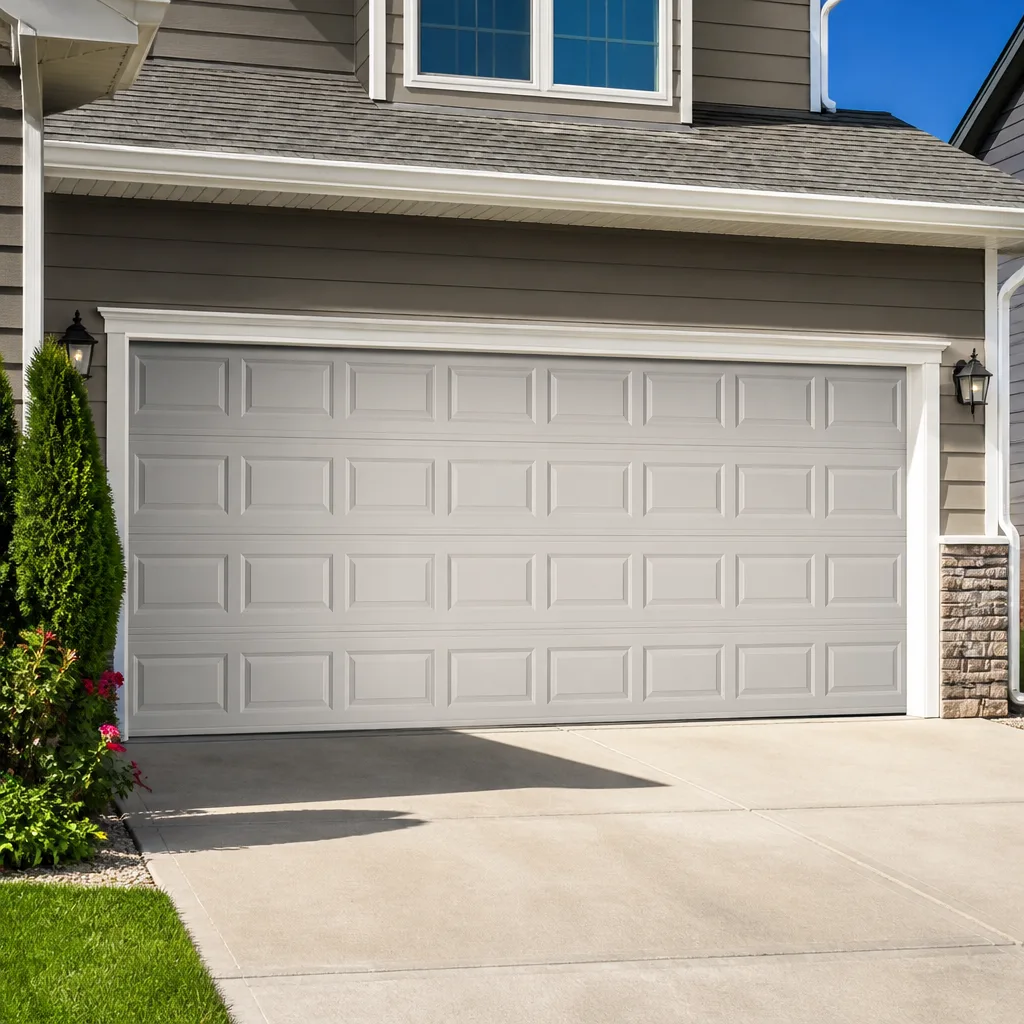 Raised-panel steel
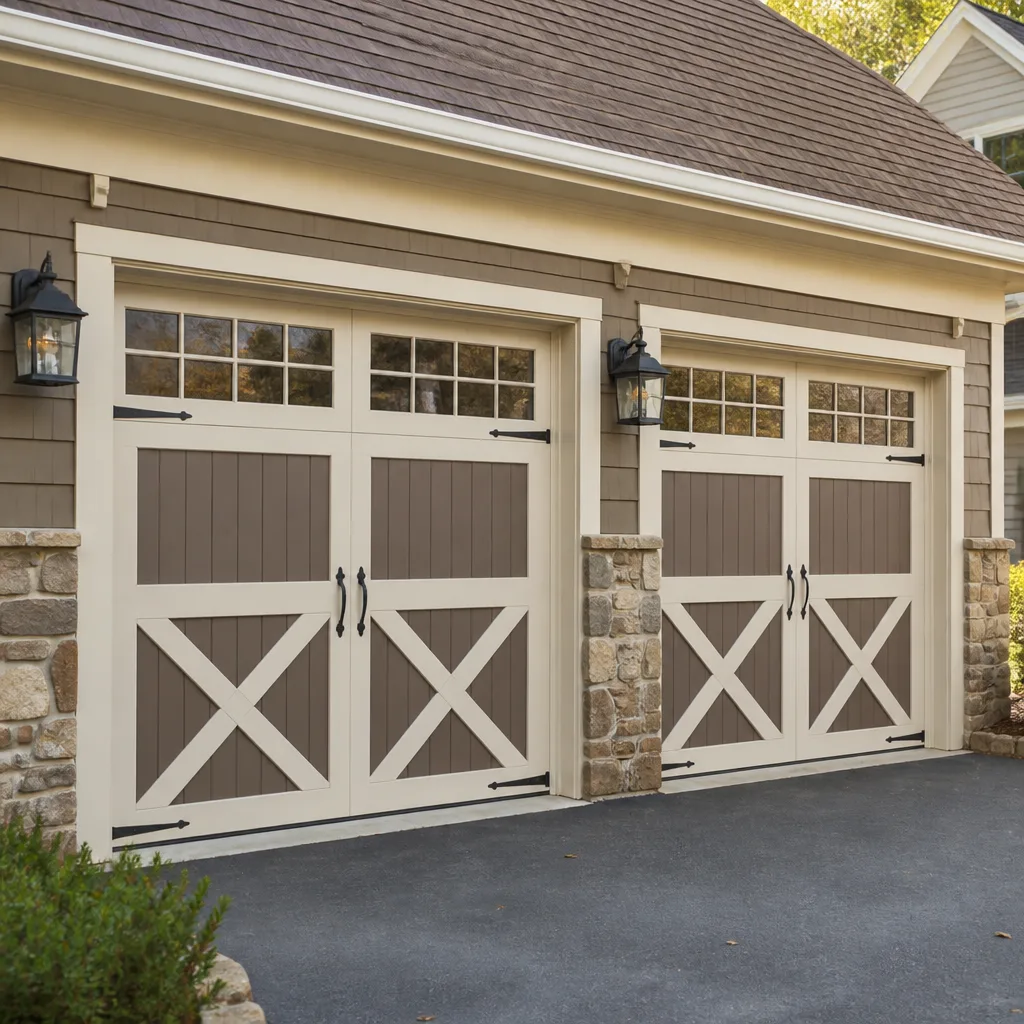 Carriage house
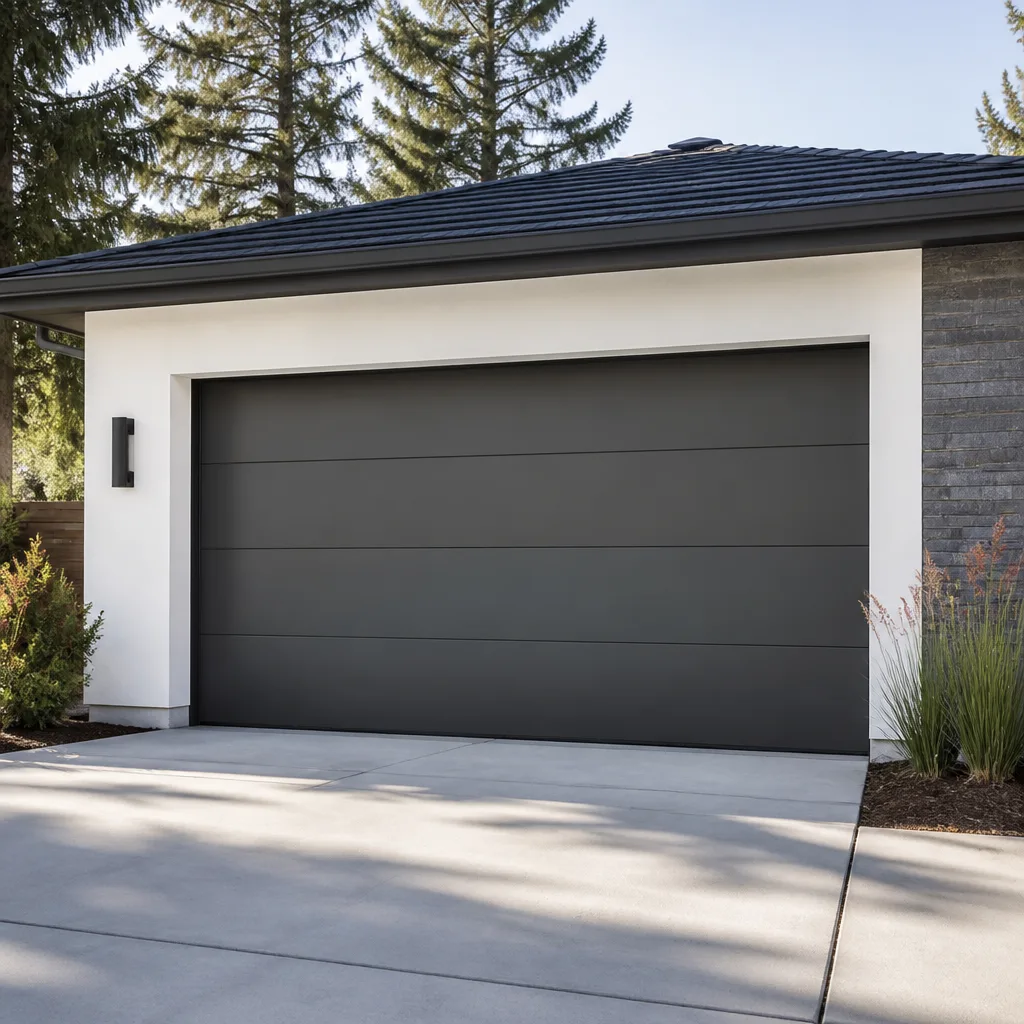 Modern flush
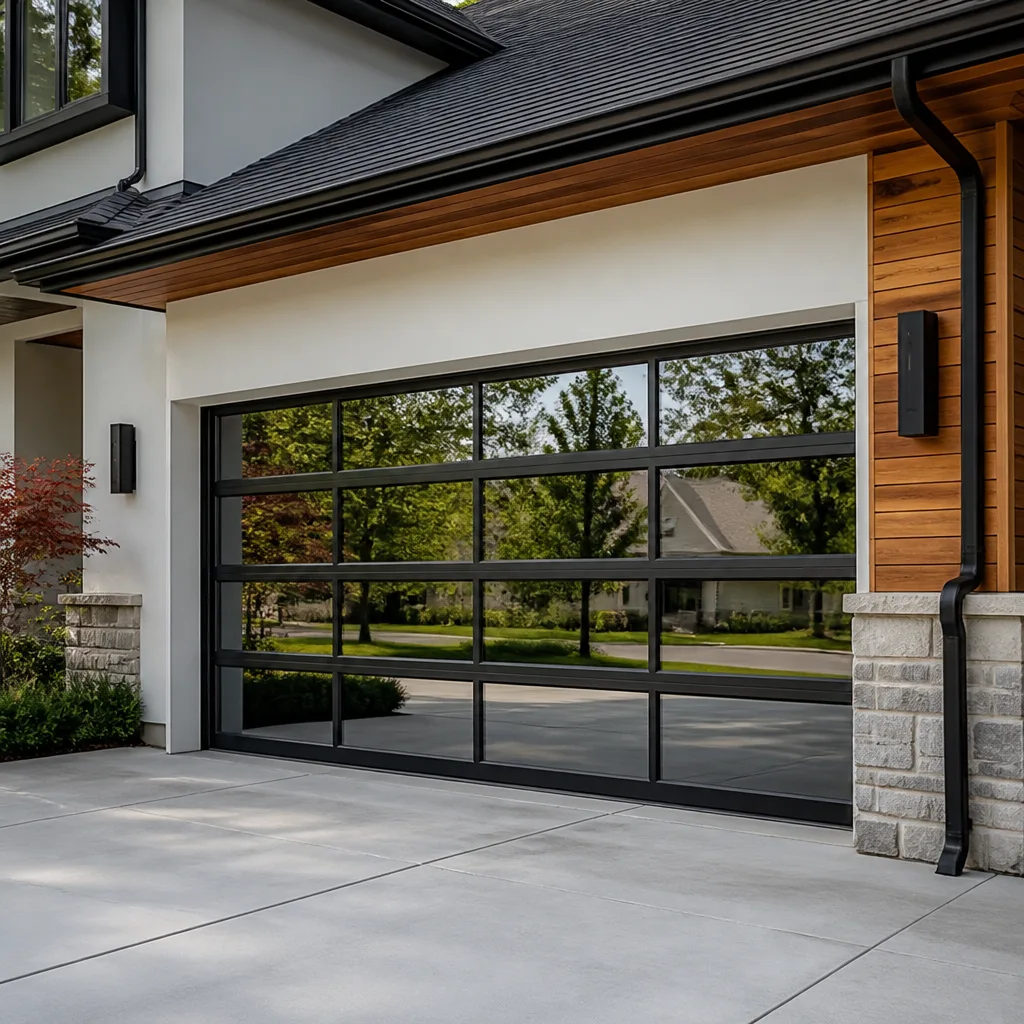 Full-view glass
 LiftMaster openers
 Chamberlain openers
Full 25-point door and opener safety check with every visit - springs, cables, rollers, tracks, and your LiftMaster or Chamberlain opener included
You get a price before we start. It does not change when the truck arrives.
Get your free estimateGarage Door Repair Maintenance Checklist for Miami Homeowners
A torsion spring rated for 10,000 cycles in a dry, temperate climate will corrode and fail years earlier when exposed to Miami’s salt air, humidity that rarely drops below 70 percent, and summer heat that pushes garage interiors past 120 degrees. Most garage door maintenance guides are written for national averages, which means they miss the failure patterns that South Florida accelerates. This checklist is calibrated to what actually happens to garage doors in Miami, not what happens to them in Ohio. You’ll learn what to inspect monthly, what to lubricate and with what, and which warning signs mean you should call a technician before a small problem becomes a spring failure or a snapped cable.
Styles & brands we work with
Quick Answer
A Miami garage door needs monthly lubrication of rollers, hinges, and springs with a silicone-based lubricant; quarterly inspection of bottom seals, tracks, and cables for salt-air corrosion; and semi-annual testing of opener force sensitivity. Most homeowners can handle lubrication and visual checks themselves, but spring inspection, cable replacement, and track realignment should always go to a trained professional. In Miami’s climate, skipping monthly lubrication during the summer months is the number one cause of premature roller and bearing wear.
Table of Contents
- Monthly Lubrication: The Miami Schedule
- Salt-Air Corrosion: What to Look For Before Rust Appears
- Bottom Seal and Weatherstripping: UV, Rain, and Flood Checks
- Spring and Cable Inspection: Heat Expansion and Thermal Stress
- Opener Sensitivity Testing After Summer Heat
- Track Alignment and Roller Wear in Miami’s Humidity
- A Season-by-Season Checklist for Miami Homeowners
- Common Mistakes to Avoid
- When to Call a Professional
- Frequently Asked Questions
- The Bottom Line
Monthly Lubrication: The Miami Schedule
National maintenance guides typically recommend lubricating garage door components twice a year. That guidance fails in Miami. Our technicians see doors in neighborhoods from Kendall to Coral Gables that need monthly attention during the humid season, which here runs from roughly April through November. Humidity accelerates the breakdown of petroleum-based lubricants while attracting dust and sand that turns lubricant into grinding paste. In the dry winter months, a bimonthly schedule often suffices. In summer, monthly is the floor.
Here’s the lubrication routine we recommend for Miami conditions:
- Use a silicone-based spray lubricant, not WD-40. WD-40 is a solvent and water displacer, not a long-term lubricant. In Miami’s humidity, it evaporates within weeks and leaves metal components exposed. A heavy-duty silicone spray or a product specifically marketed for garage doors, like 3-IN-ONE garage door lubricant or Blaster garage door lubricant, holds up far better.
- Apply to rollers, hinges, and both torsion springs. Work from one side to the other, wiping away excess. Pooled lubricant attracts dirt, and in Miami, dirt includes salt and fine beach sand if you live near the coast.
- Do not lubricate the tracks. Tracks should stay dry. Lubricated tracks cause rollers to slide instead of roll, which flattens roller bearings and increases resistance on the opener.
- Lubricate the opener chain or screw drive if applicable. Belt-drive openers from LiftMaster or Chamberlain need no lubrication, but chain drives do. Check with your opener’s manual, or during a garage door opener repair in Miami, we can set the correct maintenance baseline for your specific unit.
If you hear grinding or squealing between lubrication cycles, don’t double down on more lubricant. That sound typically signals worn roller bearings or a failing hinge pin, not dryness. Lubrication masks the symptom temporarily and the underlying part continues to degrade. In our experience on garage door repair in Miami, homeowners who catch bearing noise early spend far less than those who wait until a roller seizes and drags the door out of alignment.
Salt-Air Corrosion: What to Look For Before Rust Appears
Rust is what you see after corrosion has been underway for months. In Miami, the problem is worse near Biscayne Bay and the coast because airborne salt accelerates electrochemical corrosion on steel and even on some aluminum alloys. If you live east of US-1, your garage door hardware lives in a salt-spray environment all year. The first visible signs are not red rust but white or gray powdery deposits on galvanized hardware, bronze-toned discoloration on springs, and dull, cloudy patches on cables. By the time red rust appears, the component has usually lost meaningful structural integrity.
Inspect these components every three months:
- Torsion spring coils. Look for white oxidation, flaking, or thin spots. A spring that shows visible corrosion is closer to the end of its cycle life than one that’s clean, regardless of its age. Most residential torsion springs are rated for 7,000 to 10,000 cycles. Salt corrosion cuts that rating because rust creates micro-pits that become fracture initiation points.
- Lift cables. Cables are strands of high-carbon steel wire. When individual strands begin to fray, the cable looks fuzzy. In salt air, fraying often starts where the cable wraps around the bottom bracket, which is also where water collects during Miami’s rainstorms. If you see broken strands, do not try to repair the cable yourself. Cables are under the same tension as springs and can cause serious injury when they release.
- Hinge pins and roller stems. Galvanized hinges last longer, but even they fail in a salt environment once the plating wears. Look for rust-colored weep stains at the hinge knuckles, which indicate the pin is corroding from the inside.
- Fastener heads. Lag screws, carriage bolts, and track bolts. Surface rust here is less urgent than on springs or cables, but corroded fasteners are harder to remove later if the door ever needs service, and they can loosen as thermal cycles work them back and forth.
One tactic that works well in Miami: apply a light coat of silicone spray to cables and springs during your monthly lubrication. Silicone doesn’t provide the same corrosion protection as a dedicated inhibitor like Boeshield T-9, but it creates a moisture barrier without attracting grit the way grease does. We’ve also seen homeowners in Coconut Grove and Key Biscayne install a small dehumidifier in the garage, which noticeably slows corrosion on exposed hardware. The controller is set to keep relative humidity below 60 percent. It works, though it adds a modest electric load in a room that’s already hot.
Bottom Seal and Weatherstripping: UV, Rain, and Flood Checks
Miami’s two biggest threats to garage door seals are not the same as in most other markets. There’s no freeze-thaw cycle here, so seals rarely crack from cold. The damage comes from year-round ultraviolet radiation and from heavy rain events that can dump several inches of water in an afternoon, sometimes against the base of your garage door. A degraded bottom seal admits water, debris, and in coastal neighborhoods, wind-driven salt spray that accelerates every other corrosion problem on this list.
Here’s what to check:
- The bottom rubber seal (astragal). Look at it in the daytime with the door closed. If you can see daylight under the door or if the rubber looks flattened, cracked, or brittle, it’s time to replace it. Miami UV breaks down EPDM rubber faster than nearly any other factor. Inspect it quarterly.
- The seal channel. On many doors, including models from Amarr and Clopay, the bottom seal slides into an aluminum or plastic retainer channel on the bottom panel. If the channel is bent or corroded, a new seal won’t seat correctly. We often replace both seal and retainer together on doors that are more than five years old.
- Side and top weatherstripping. The vinyl or PVC strips that run along the door’s sides and header keep out rain, debris, and insects. In Miami, these also keep out flying termites during swarming season and help hold cooled air in an air-conditioned garage. Look for peeling, cracking, or gaps where the strip no longer contacts the door.
- Flood line awareness. If your home sits in a zone that saw water during Hurricane Irma or a king tide event, your garage slab may slope toward the door. In those cases, even a perfect bottom seal won’t keep water out during standing water situations. The right fix is often a taller seal profile or a threshold plate, not a thicker bead of caulk.
Seals are a low-cost part. The labor to clean up water damage in a garage is not. Replacing a bottom seal on a 16-foot door in Miami typically runs $90 to $180 parts and labor, depending on seal type and whether the retainer also needs replacement. We quote that price before any work begins, so there are no surprises after the fact. For new door pricing, garage door installation in Miami includes upgraded bottom seals rated for high-UV and high-water exposure as a standard recommendation, not an upsell.
Spring and Cable Inspection: Heat Expansion and Thermal Stress
Miami’s heat does something most homeowners never think about: it expands metal. A typical 16-foot torsion spring will measurably change length as garage temperature swings from 72 degrees on a January night to 120 degrees on an August afternoon. That expansion and contraction cycles the metal thousands of times per year. It’s not the primary reason springs fail, but it means that a spring that’s marginally stressed in winter becomes more stressed in summer, and a cable that’s tight in winter can be overtight in August.
Safety note before we continue: torsion springs and lift cables are under high tension at all times on most door systems. Even a door that’s fully open stores hundreds of pounds of force in the springs. If you suspect a spring is worn or a cable is frayed, do not adjust, remove, or “test” these components yourself. The video part of this conversation ends there, but the real-world risk of a suddenly released spring or cable is severe, including crush injuries, lacerations, and worse. Call a professional for any spring or cable work, period.
Here’s what you can visually check without touching anything:
- Look for a visible gap in the torsion spring. When a torsion spring breaks, it’s unmistakable: a clean break with a visible gap between coils, usually accompanied by a loud bang from the garage. If the door makes that sound and then won’t lift, the spring is broken. Do not use the opener; attempting to lift a door with a broken spring strains the opener and can permanently damage it.
- Check whether the door is balanced. Disconnect the opener by pulling the red emergency release handle, then manually lift the door about halfway and let go. A properly balanced door stays in place. If it drops, the springs are losing tension or nearing failure. If it rises, the springs are over-tensioned, which is more common in summer heat when metal has expanded. Either condition means a technician should re-balance the system.
- Inspect cable tension at the bottom brackets. Look at where the cables attach to the bottom corners of the door. Both cables should be taut. If one is loose or if the cable runs off the pulley edge, the door is not square or the spring tension is uneven. Operating the door in this condition can snap the cable.
- Listen for popping or creaking during operation. A rhythmic creak from the spring area during door movement often means the spring coils are binding, a condition accelerated by corrosion between coils. The fix is usually spring replacement, not a spray of lubricant.
We’ve replaced torsion springs in Miami homes that were rated for 10,000 cycles but failed at 6,000 because salt corrosion had introduced pitting on the spring surface. That’s not a product defect. It’s the coastal environment doing what it does. The countermeasure is more frequent inspection: quarterly in salt-exposed zones, semi-annually elsewhere in Miami. On any garage door repair in Miami, we inspect all four spring mounting points, not just the springs themselves, because loose center brackets cause the spring to shift during operation and uneven wear is a failure trigger.
Opener Sensitivity Testing After Summer Heat
Garage door openers use a force-sensitivity setting to determine how much resistance triggers the auto-reverse safety feature. When your opener was installed or last calibrated, the door was moving smoothly and the opener was in a particular ambient temperature. After a full Miami summer, two things change: heat expansion makes tracks and panels slightly wider, and humidity changes the coefficient of friction on rollers and hinges. The result is that an opener calibrated in February may have too little reverse sensitivity by September, which is a safety issue because the opener won’t reverse when it encounters an obstruction. Or it may have too much sensitivity and reverse every time the door moves through a slightly tight spot in the track.
Test your opener’s safety reverse at least twice a year, ideally in early fall after the hottest months:
- Test the auto-reverse mechanism. Place a 2×4 piece of wood flat on the ground in the center of the door opening, close the door using the opener, and watch what happens. The door should contact the wood and reverse within two seconds. If it doesn’t, stop using the opener and call for service immediately. This is a critical safety feature that protects children and pets.
- Check the photoelectric sensors. The sending and receiving sensors on either side of the door track, usually 4 to 6 inches above the floor, must be aligned and unobstructed. In Miami garages, sensors get bumped by bikes, get coated with dust from construction, or get shifted by the constant expansion and contraction of the door track. Clean the lenses with a soft cloth and verify the small indicator lights are solid, not blinking.
- Check manual operation from the wall button. If the door moves more slowly than it did six months ago, that’s not normal aging; it’s increased resistance or a weakening opener. A slow door compounds wear on every other component because loaded cycles last longer, and heat generation in the opener motor increases with each cycle. The fix may be as simple as re-lubricating, or it may mean opener replacement.
- Verify smart features if you have them. If your LiftMaster operates through myQ or a Genie unit connects through Aladdin, check that the app controls the door correctly, that Wi-Fi connectivity is stable, and that scheduled alerts are working. Smart openers are particularly sensitive to power fluctuations, which are common in Miami’s storm season. Many openers store their force-sensitivity calibration in non-volatile memory, but if the unit has power-cycled repeatedly during summer storms, re-verifying the auto-reverse is a prudent extra step for safety.
Opener calibration is one part of the system where being brand-aware matters. A Chamberlain belt-drive opener calibrates differently from a Genie screw-drive, and a Craftsman unit from the late 2000s has different sensitivity adjustment procedures than a current LiftMaster. On garage door opener repair in Miami, we work across all these brands, so we adjust to manufacturer specifications rather than a generic setting. For Kingsway, eight brands means exactly that: LiftMaster, Chamberlain, Genie, Craftsman, Raynor, Clopay, Amarr, and Wayne Dalton all have their own service and adjustment criteria, and the right adjustment is the manufacturer’s adjustment, applied to your specific unit.
Track Alignment and Roller Wear in Miami’s Humidity
Garage door tracks are steel or aluminum channels that guide the rollers. In Miami’s humid environment, track fasteners slowly pull out of the walls or ceiling as the door cycles, the structure settles, and the wood for the studs shrinks and swells with humidity changes. When tracks get even half an inch out of parallel, rollers start to bind. Binding rollers wear flat on one side, then the door begins to shake, then a roller pops out of the track, and suddenly you have a garage door that’s stuck at an angle.
Here’s how to catch track problems before that happens:
- Eyeball the horizontal and vertical tracks. Stand inside the garage and look down the length of each track. They should be perfectly straight and parallel to the other side. If one track bows in or out, or if one side is visibly higher, the track brackets have shifted.
- Listen for a consistent rattle or thump in the same spot. A thump that always occurs at the same point in the door’s travel usually means a roller is hitting a track gap or a misaligned splice. The farther the door travels, the louder the problem becomes over time.
- Check the rollers. Steel rollers with ball bearings, typically rated for 10,000 to 15,000 cycles, show wear as visible wobble or a grinding sound. Nylon rollers wear quietly, which is preferred in attached garages where noise travels into living space. Rollers are inexpensive to replace, and Miami humidity is hard on unsealed bearings. If your rollers are more than seven years old and the door is loud, replacement usually quiets the door substantially.
- Check the mounting brackets. L-brackets and jamb brackets attach the tracks to the wall. Look for movement at the bracket-to-wall connection or elongated holes where the lag screw has shifted. In older Miami homes with concrete-block walls, lag screws can loosen if the hole was not originally filled with the right anchor. Retightening is a simple fix when caught early; a stripped anchor requires re-drilling and a new fastener.
If your door is banging hard against the open or closed position stops, that’s not just noisy, it’s a track-alignment indicator. The door should coast to its open limit with a soft bump, not a slam. A slam means the travel limit is set too aggressively or the door has shifted off level. As with opener sensitivity, the specific correction varies by brand. A Wayne Dalton torque-master system behaves differently from a standard torsion setup on an Amarr door, and the right fix starts with knowing which system you have. That’s the advantage of a company that works on what you have rather than what’s easiest to sell.
A Season-by-Season Checklist for Miami Homeowners
Miami has two real seasons: hot-wet and warm-dry. The maintenance calendar should follow that rhythm, not the four seasons used in national guides. Here’s the complete year at a glance.
Summer Season (May through October): The Hot-Wet Months
This is the stress period for springs, rollers, and opener electronics.
- Monthly: Lubricate rollers, hinges, and springs with silicone spray. Wipe away excess.
- Monthly: Listen for new rattles, squeaks, or changes in the door’s travel speed. Changes indicate developing resistance.
- Quarterly: Inspect cables, springs, and hinges for corrosion signs with a flashlight.
- Before and after major storms: Check the bottom seal and side weatherstripping for water intrusion. Run the door once after the storm to make sure nothing shifted.
- After thunderstorm season begins: Test the opener’s auto-reverse with the 2×4 method. A lightning strike or power surge can scramble opener calibration.
Winter Season (November through April): The Warm-Dry Months
Lower humidity means slower corrosion, but this is the season when salt deposits dry out and become concentrated on metal surfaces.
- Bimonthly: Lubrication is generally enough in the dry season, though homes within a quarter mile of the bay or ocean should stay on a monthly schedule.
- Quarterly: Wipe down exposed metal hardware with a clean dry cloth to remove salt film that would otherwise attract moisture during the next humid cycle. Then reapply light silicone to cables and springs.
- Late winter: Perform the door-balance test described in the spring section. Co
oler temperatures are when a marginal spring gives its first real warning because it has the least thermal assistance.
- Whenever you have a run of cool nights: Check opener sensitivity, since a door that operates smoothly in dry, 68-degree air may encounter more resistance when humidity returns in spring. Fine-tuning in the dry season prevents rude surprises later.
Print this page or save it to your phone. The consistency is the difference between a door that lasts 20 years and one that needs spring replacement every five because a cable finally saw too much salt. Kingsway Garage Door uses this exact seasonal cadence when servicing doors across Miami from Aventura to Cutler Bay, and from Doral east to the beaches. The pattern is consistent: the more rigorously homeowners stick to the wet-season schedule, the fewer openers they replace and the less they spend on garage door repair in Miami over the long run.
Common Mistakes to Avoid
- Using WD-40 as a garage door lubricant. It’s a solvent, not a lasting lubricant. In Miami’s humidity, it attracts moisture and washes away quickly, leaving components drier than before. Use a dedicated silicone spray or garage-door-specific lubricant.
- Lubricating the tracks. Tracks get slippery, rollers slide instead of rolling, and wear accelerates. Anyone who tells you to lubricate tracks is following an outdated hardware-store routine. Tracks need to be clean and dry, nothing else.
- Waiting for visible rust before addressing corrosion. By the time red rust forms on a spring or cable, the component has lost meaningful strength. In Miami’s salt air, check for white powder, dullness, and pitting as the early warning signs. The further east you live, the sooner those signs appear.
- Disconnecting the opener and manually forcing a door that won’t move. If the door doesn’t lift with moderate manual effort, something is binding. Forcing it can bend panels, break a cable, or jerk a roller out of the track. Stop, inspect, and call if you can’t identify the cause safely.
- Ignoring a slow door. A door that moves noticeably slower than it did last season is telling you something: the opener is failing, the rollers are binding, or the door is out of balance. All three conditions get worse with continued use, and the opener is always the most expensive component to replace.
- Adjusting spring tension based on a YouTube video. Torsion springs store enough energy to break bones or cause life-threatening injuries when they release. Even adjusting a set-screw type spring requires proper winding bars, masking, and a second person. This is one of those repairs where the $150 service call is always cheaper than the ER visit.
- Assuming a new door can’t have seal problems. UV degradation in Miami starts on day one, not year five. Check the bottom seal on a brand-new garage door installation in Miami within the first six months. If it’s already cracking, either the seal was a low-grade compound or direct afternoon sun is hitting the door for more hours than the manufacturer assumed.
When to Call a Professional
Call a technician if the door makes a loud bang and then refuses to open, if you see frayed lift cables, if the door fails the balance test, if the opener doesn’t auto-reverse on the 2×4 test, or if a roller has visibly come off the track. These are not maintenance items. They’re failure conditions, and operating the door in any of these states risks further damage to the opener, the panels, or a person.
Call before the failure point if you see significant corrosion on springs or cables, if the door is rubbing the track hard enough to leave metal shavings, or if you’ve had the same issue twice in six months. A recurring issue is a diagnostic clue: the first fix treated a symptom, not the cause. Kingsway Garage Door offers free estimates in Miami. Call (866) 282-5541 and we’ll tell you what’s actually wrong and what it costs to fix before any work starts. You always know the number before we touch a tool.
Frequently Asked Questions
In Miami’s climate, a garage door should be lubricated monthly from May through October and bimonthly in the dry season, with a full inspection twice a year. Professional inspection is recommended annually, or semi-annually for homes within a quarter mile of Biscayne Bay or the ocean. Call (866) 282-5541 for a free maintenance inspection and we’ll assess your specific door and location.
A heavy-duty silicone spray or a garage-door-specific lubricant like 3-IN-ONE or Blaster works best in Miami because silicone resists humidity without attracting grit, sand, and salt the way petroleum grease does. Avoid WD-40, which evaporates too quickly to protect components. Apply to rollers, hinges, and springs only, never to the tracks.
Look for white powdery oxidation on spring coils, a door that drops when manually opened halfway, increasing noise as the door moves, or visible gaps in the spring itself. These signs indicate the spring is near the end of its cycle life and should be replaced before it breaks. Spring inspection and replacement is a professional job, not a DIY project, due to the high tension involved.
Yes. Airborne salt from Biscayne Bay and the Atlantic accelerates corrosion of steel springs, cables, and hinges, especially in homes east of US-1 or within a quarter mile of the water. Corrosion creates micro-pits in spring steel that become fracture points, reducing the expected cycle life of a torsion spring. Coastal Miami homeowners should inspect hardware quarterly and maintain monthly lubrication year-round. We regularly see premature spring failures in Key Biscayne, Coconut Grove, and Brickell that would not occur in Doral or Kendall.
A professional inspection and lubrication service in Miami typically runs $75 to $150 per visit, depending on door size, opener type, and whether adjustments are needed. Bottom seal replacement typically adds $90 to $180. These prices should always be quoted before work begins. Call (866) 282-5541 for a free estimate on any garage door maintenance in Miami, and we’ll give you an exact number before we send anyone out.
Heat expansion makes tracks and panels slightly wider in Miami summer, while humidity increases friction on rollers and hinges. That combination raises the opening force enough to trigger the opener’s safety reverse even when nothing is in the way. The fix is usually a sensitivity recalibration and lubrication, though it can also indicate the tracks need realignment. If adjusting sensitivity doesn’t solve it, have a technician check the track geometry and roller condition.
The Bottom Line
Garage door maintenance in Miami succeeds or fails on three variables: silicone, salt awareness, and seasonal consistency. Lubricate monthly during the hot-wet season, annually replace any bottom seal showing UV cracks or compression, inspect hardware for powdery corrosion before rust appears, and test the opener’s auto-reverse twice a year. Every one of these items is cheap compared with the cost of ignoring them: a snapped cable takes out a panel, a broken spring destroys an opener, and a misaligned track trashes four rollers in a month. This checklist is what our own technicians follow when they work on doors across Miami. It’s not a national template with a few local city names sprinkled in. If you’d rather have experienced eyes on the hardware, Kingsway Garage Door home is one call away at (866) 282-5541. Our technicians work on what you have, across eight major brands, and we quote every repair before any work starts. That’s the right fix, not the easiest upsell.
Written by the team at Kingsway Garage Door, serving Miami since 2015.
See the difference
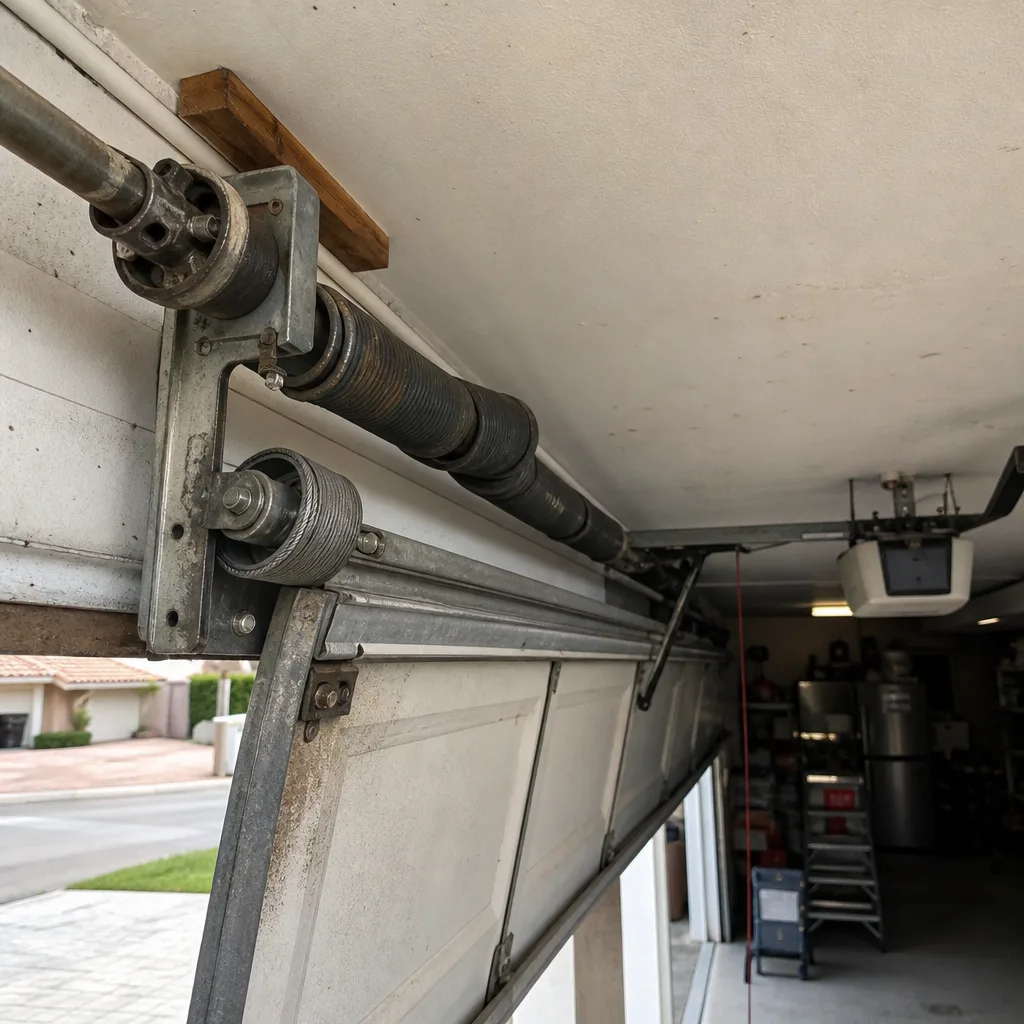 Before
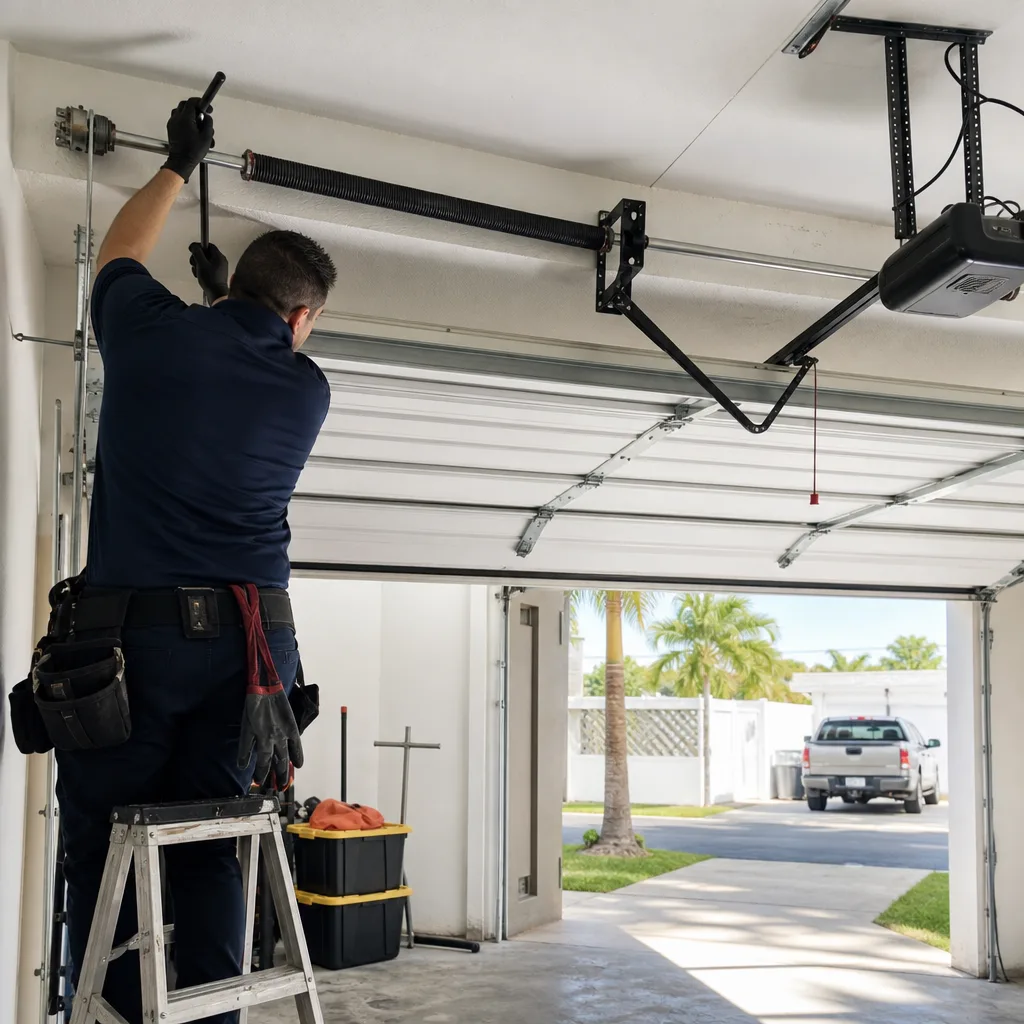 After
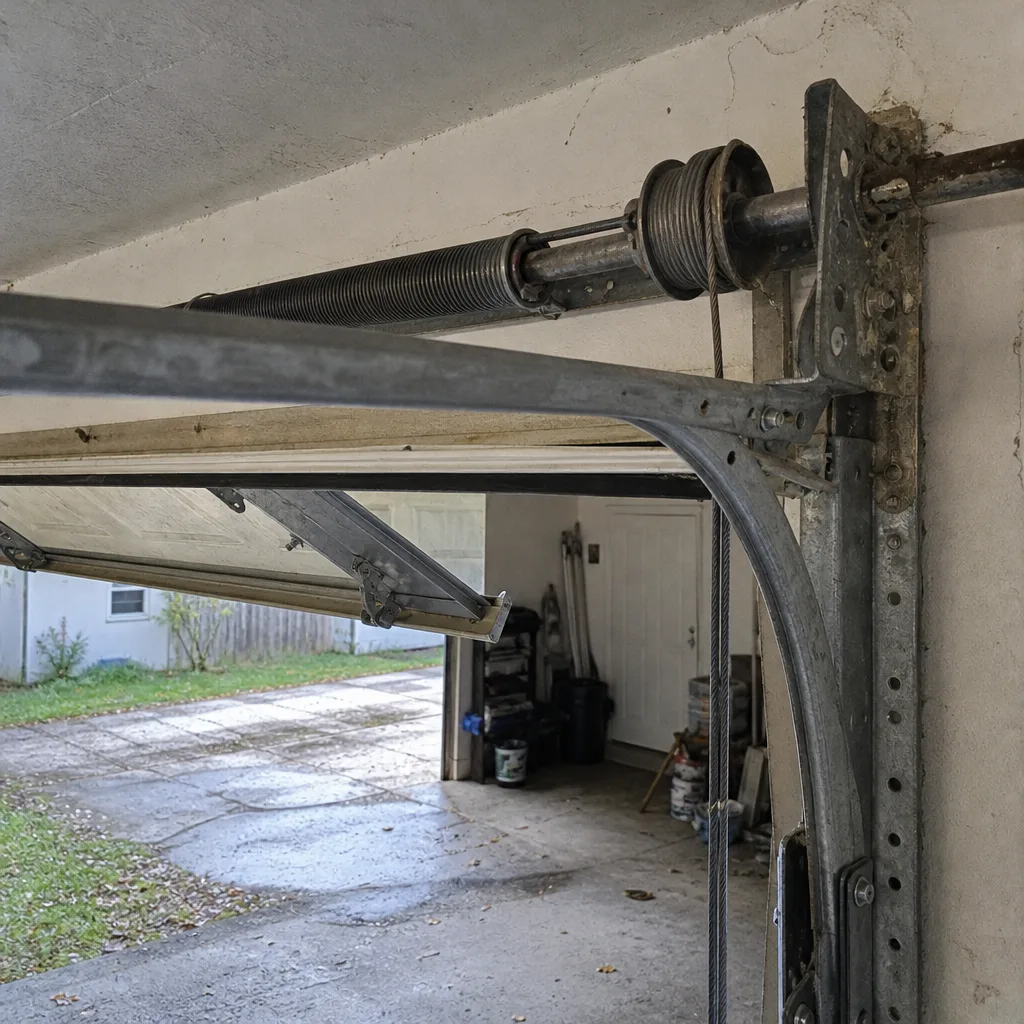 Before
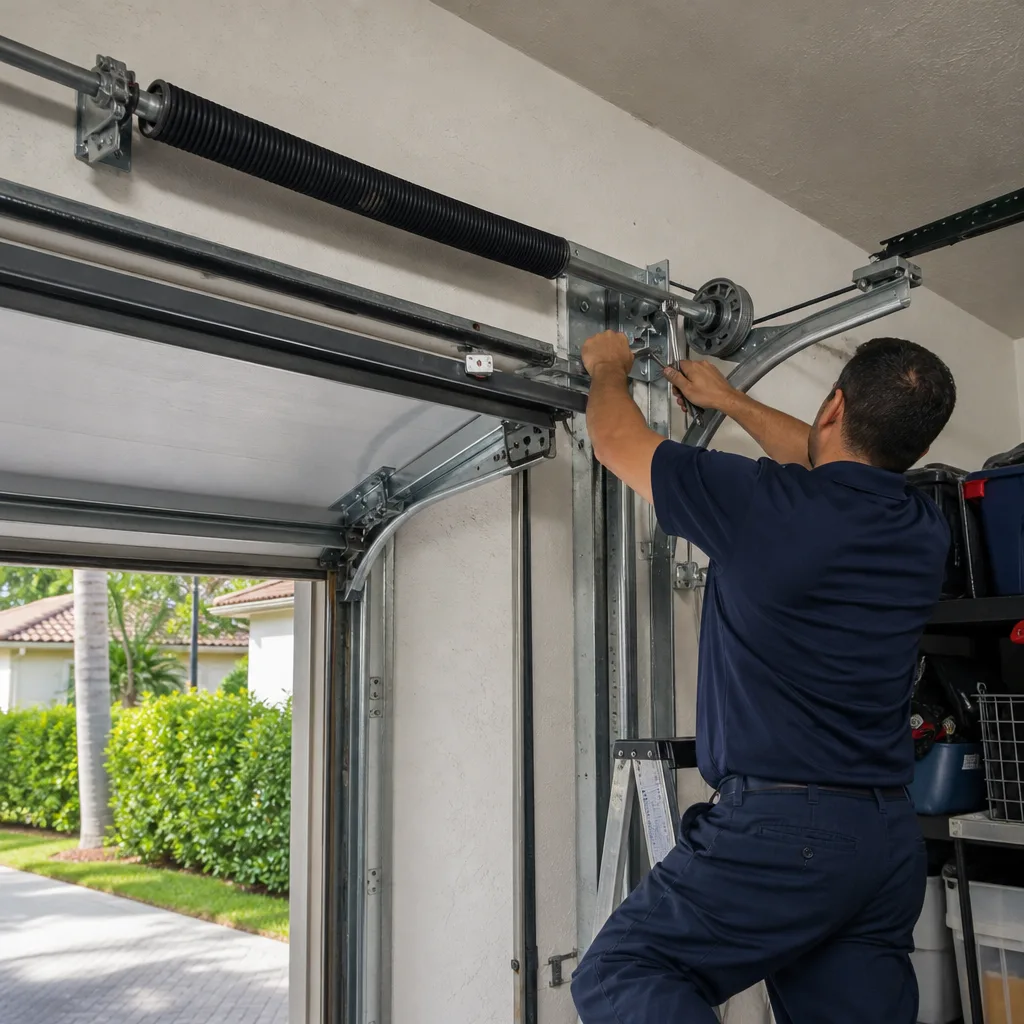 After
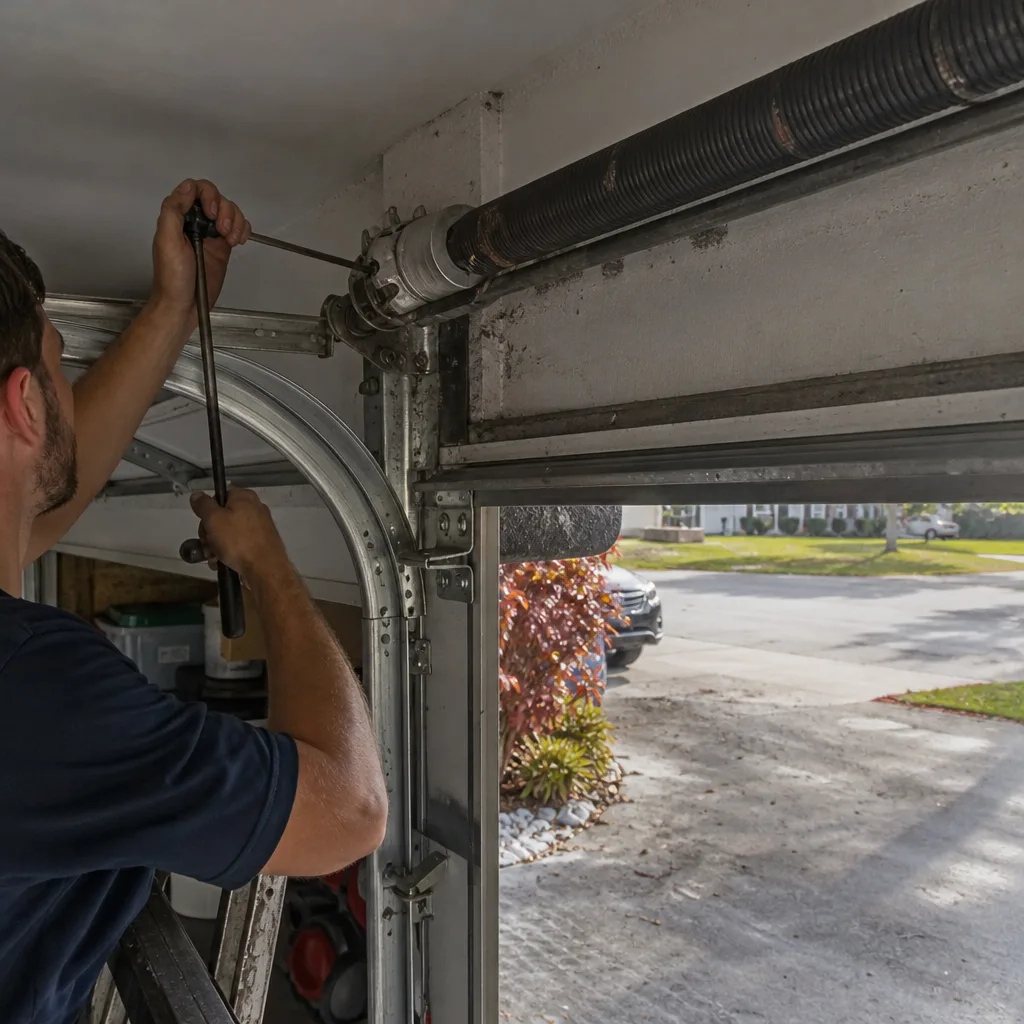 Before
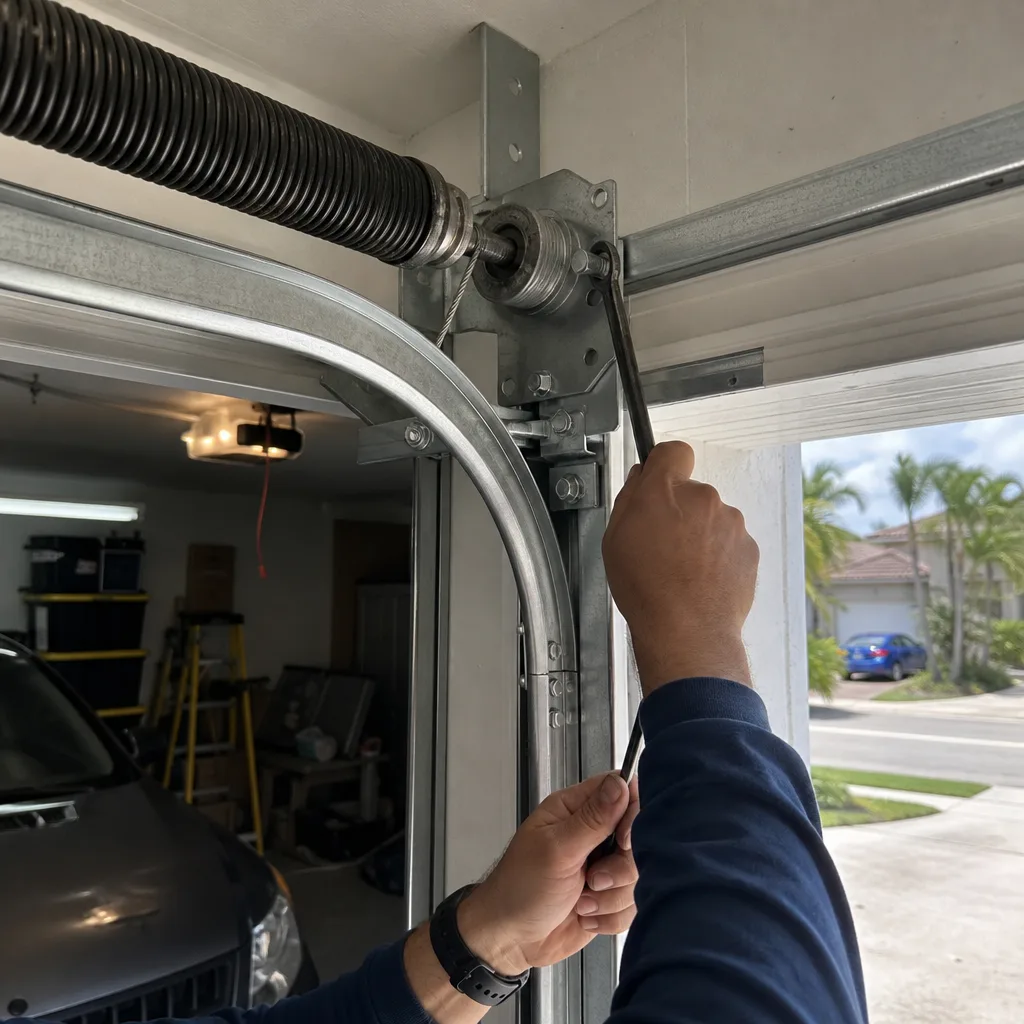 After