Last updated October 30, 2026
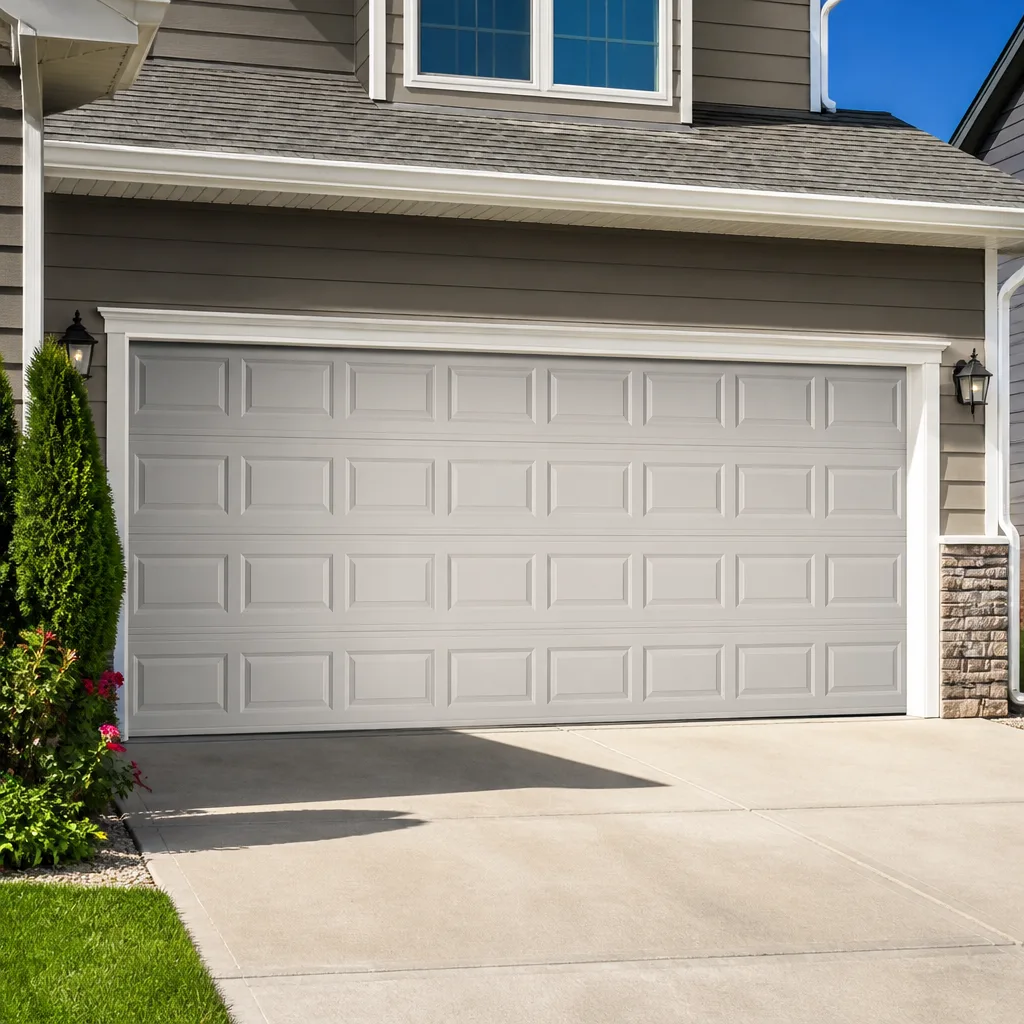 Raised-panel steel
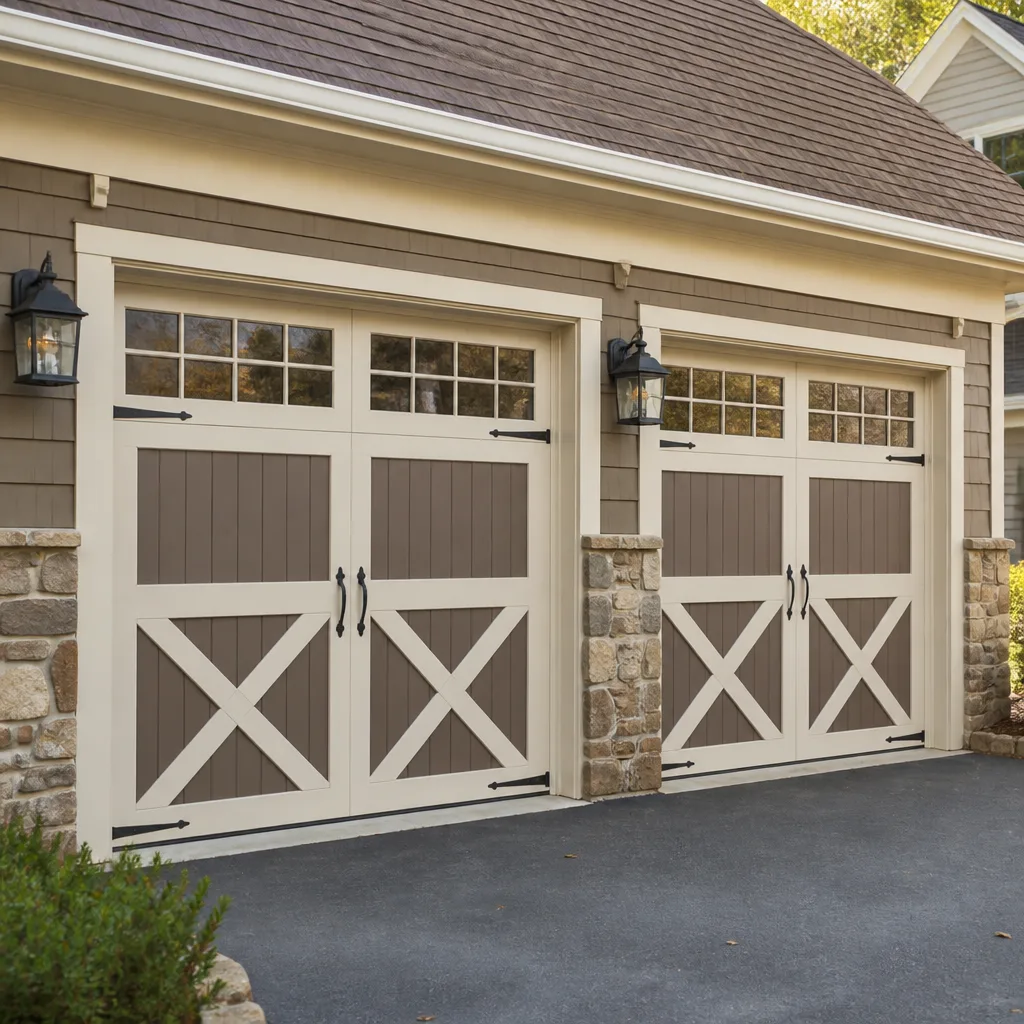 Carriage house
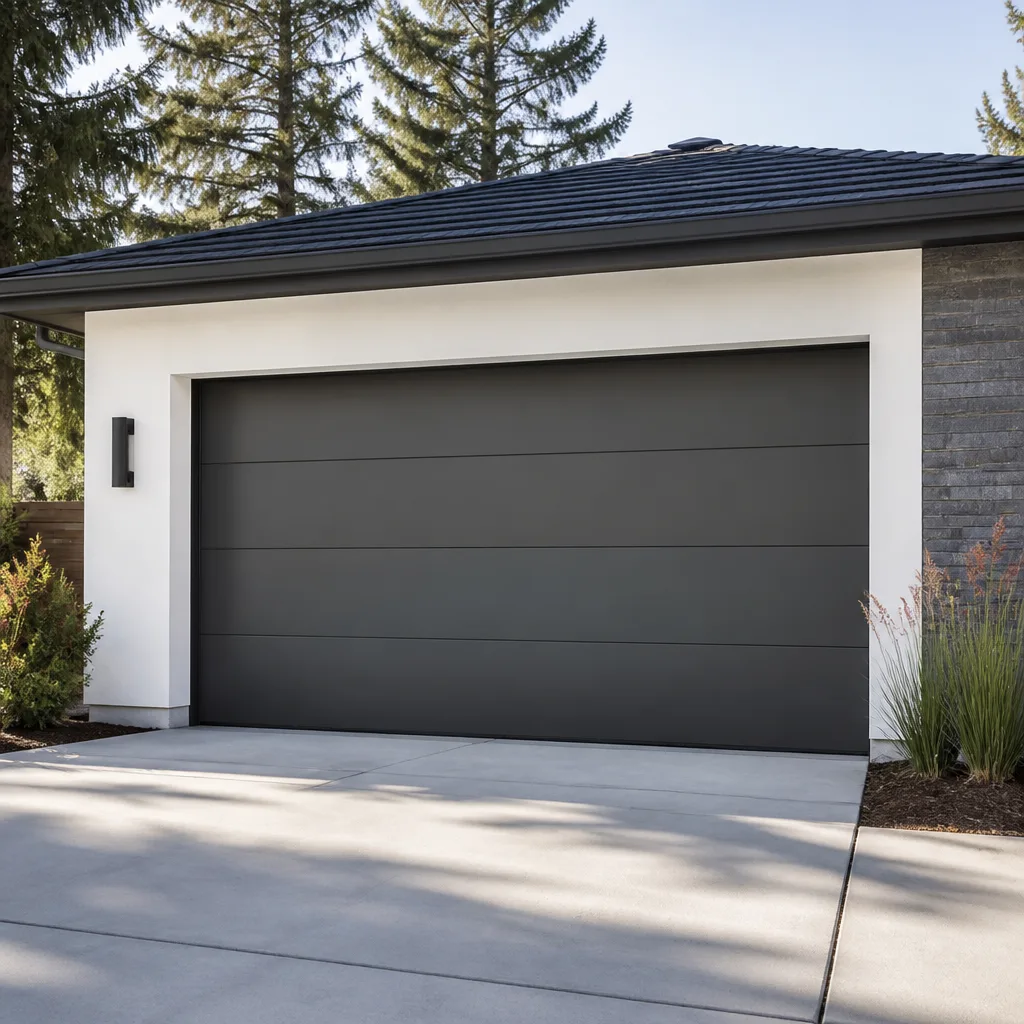 Modern flush
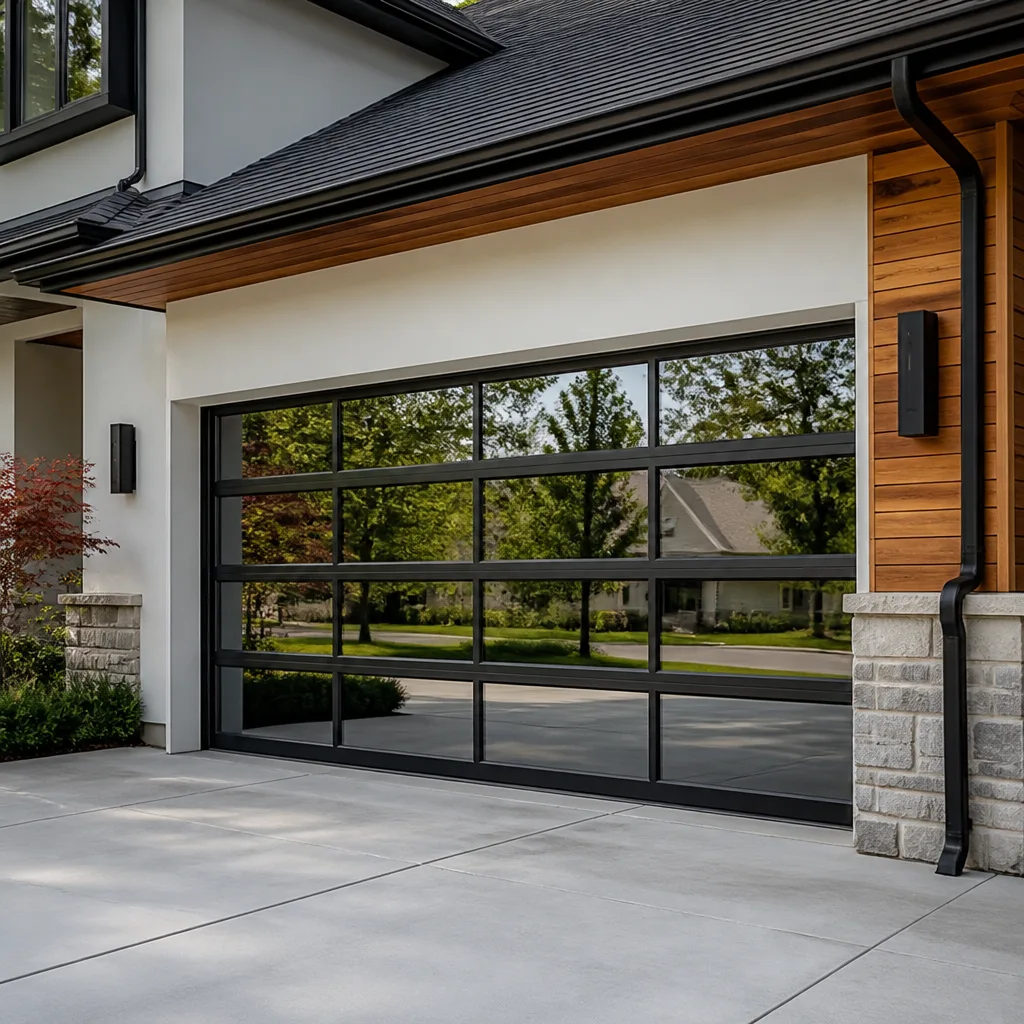 Full-view glass
 LiftMaster openers
 Chamberlain openers
Full 25-point door and opener safety check with every visit - springs, cables, rollers, tracks, and your LiftMaster or Chamberlain opener included
You get a price before we start. It does not change when the truck arrives.
Get your free estimateGarage Door Warning Signs: A Miami Homeowner’s Reference Guide
Here’s something most Miami homeowners don’t realize until it’s too late: your garage door almost never fails without warning. It telegraphs trouble for weeks, sometimes months, through sounds, movements, and visible wear patterns that most people dismiss as normal aging. In Miami’s specific environment, those signals are more pronounced than in drier climates. Salt air accelerates metal fatigue. Humidity penetrates seals and corrodes components from the inside out. And the intense summer sun warps materials in ways that create cascading failures. This guide maps the specific warning signs that matter in Miami, what they mean, and which ones demand immediate attention versus which can wait for a scheduled visit. For more guides & resources, see our full blog.
Styles & brands we work with
Quick Answer
The most common garage door warning signs in Miami are grinding or squealing noises during operation (often indicating spring or roller corrosion from humidity), slow or uneven movement (frequently caused by track misalignment from soil settlement), visible rust on springs and cables, and opener behavior changes like hesitation or reversal. Any of these signs means the system is communicating a developing problem. Addressing it early typically costs a fraction of what you’ll pay for emergency repair after a full failure.
Table of Contents
- Sound-Based Diagnostics: What Your Garage Door Is Telling You
- Visual Corrosion Patterns: Where to Look First in Coastal Environments
- Slow or Uneven Movement: Track Alignment and Miami’s Soil Settlement
- Opener Behavior Changes: Heat-Stressed Logic Boards vs. Mechanical Issues
- Bottom Seal Gaps: Weatherstrip Wear vs. Frame Warping from Moisture
- Spring Failure: The Most Dangerous Warning Sign
- Common Mistakes to Avoid
- When to Call a Professional
- Frequently Asked Questions
- The Bottom Line
Sound-Based Diagnostics: What Your Garage Door Is Telling You
A grinding noise during opening sounds like a hardware problem. In Miami’s humidity, it’s often the first sign of a corroding spring that’s weeks away from snapping under full load, a different repair entirely and a more urgent one. Sound is the earliest and most reliable diagnostic tool you have. Every noise your garage door makes corresponds to a specific mechanical condition, and in South Florida’s climate, those conditions develop faster and follow different patterns than what you’d see in Phoenix or Denver.
Here’s what we listen for when a Miami homeowner calls us about noise:
- Squealing (high-pitched, consistent): Nearly always roller bearings or hinges losing lubrication. In Miami, this isn’t just a dry-metal issue. Humidity works its way into bearing seals, displaces the original grease, and leaves behind a water-oil emulsion that accelerates wear. A door that squeals for months will eventually produce metal shavings visible on the track.
- Grinding (low, rough, sounds like gravel): This is the one we take most seriously. Grinding often means a torsion spring’s internal coils are rubbing against each other because corrosion has roughened the metal surface. Once a spring starts grinding, it’s not a question of if it breaks. It’s a question of when. In Miami, we see this most often on doors installed more than seven years ago without spring maintenance.
- Popping or snapping (sudden, sharp): A single pop when the door moves usually indicates a roller catching on a rough track section, often where salt air has caused pitting. Multiple pops in sequence often mean corroded spring coils binding and releasing. This is a precursor to spring failure.
- Rattling (loose, metallic): Rattling is loose hardware, usually bolts or brackets that have worked free through vibration. In coastal Miami, we also see rattling that comes from rust-eaten washers that no longer grip. Loose hardware accelerates wear on every other component because the door loses its precise alignment.
The key distinction Miami homeowners need to understand: a squealing door in a dry climate usually just needs lubrication. A squealing door in Miami has likely already absorbed moisture into the moving parts, and lubrication alone may only mask the problem for a few weeks. If you’re hearing any of these sounds regularly, the diagnostic question isn’t “what’s loose,” it’s “what has corrosion already started to compromise?”
Our team at Kingsway Garage Door works across eight major brands including LiftMaster, Chamberlain, Genie, Clopay, Amarr, Wayne Dalton, Craftsman, and Raynor. That matters because sound profiles are not universal. A Genie opener paired with an Amarr door produces different noise signatures than a Chamberlain opener on a Wayne Dalton door. Knowing how each brand behaves under Miami conditions helps us pinpoint the source faster. You can learn more about how we approach these systems on our Garage Door Repair in Miami page.
Visual Corrosion Patterns: Where to Look First in Coastal Environments
You don’t need to be a technician to spot corrosion. You need to know where to look and what separates cosmetic surface rust from structural compromise. In Miami, the distinction matters more than in almost any other U.S. market because salt-laden air from the Atlantic and Biscayne Bay reaches homes miles inland, and the humidity keeps metal damp around the clock. A steel component in Miami can begin showing meaningful rust within 18 to 24 months of installation if it’s not properly coated or maintained.
Here’s the order we inspect when evaluating corrosion on a Miami garage door, from most critical to least:
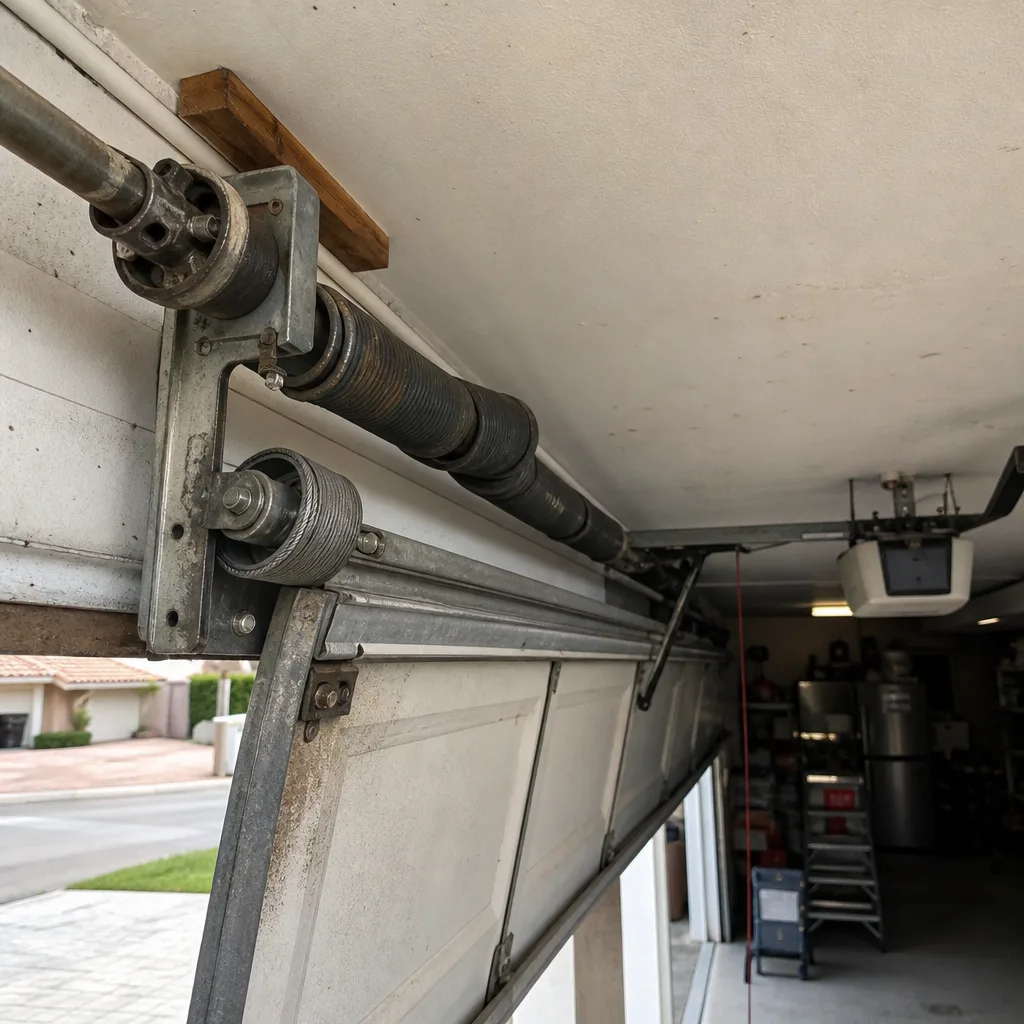
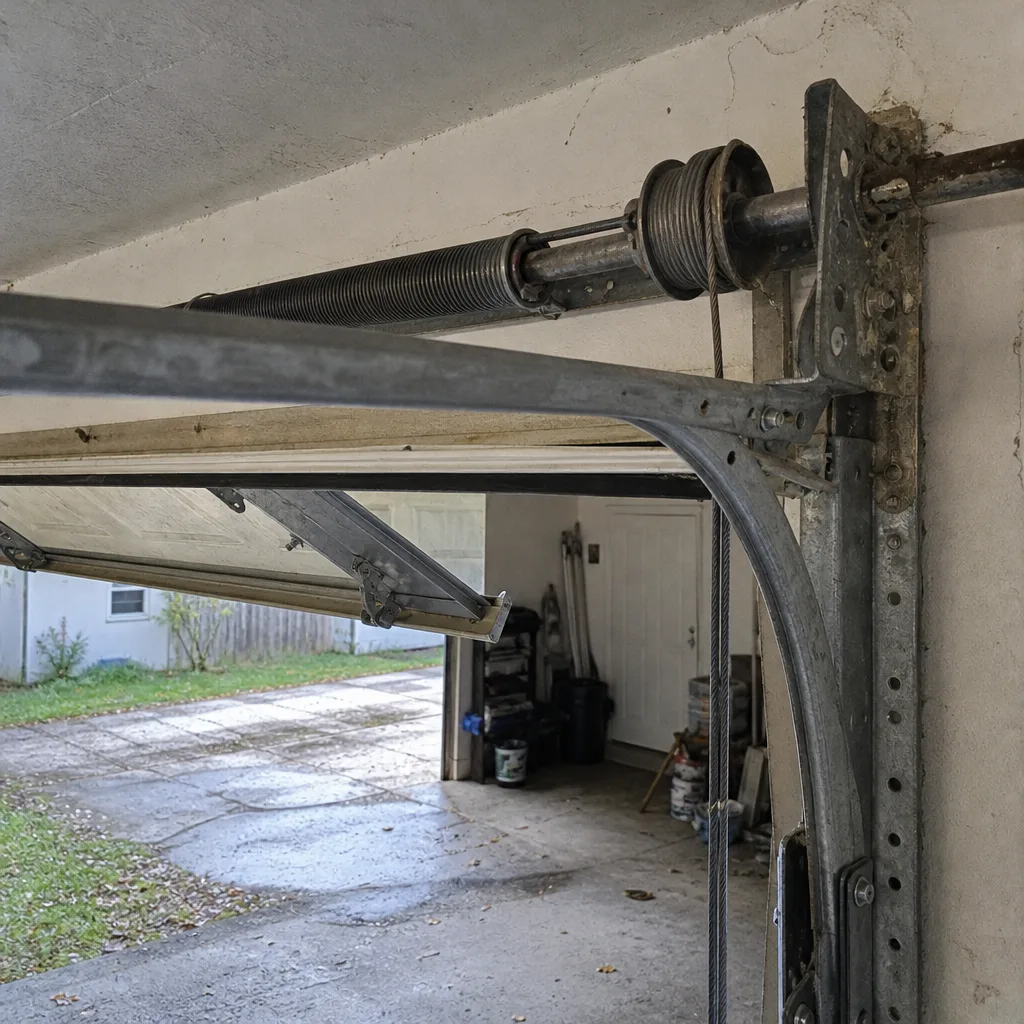
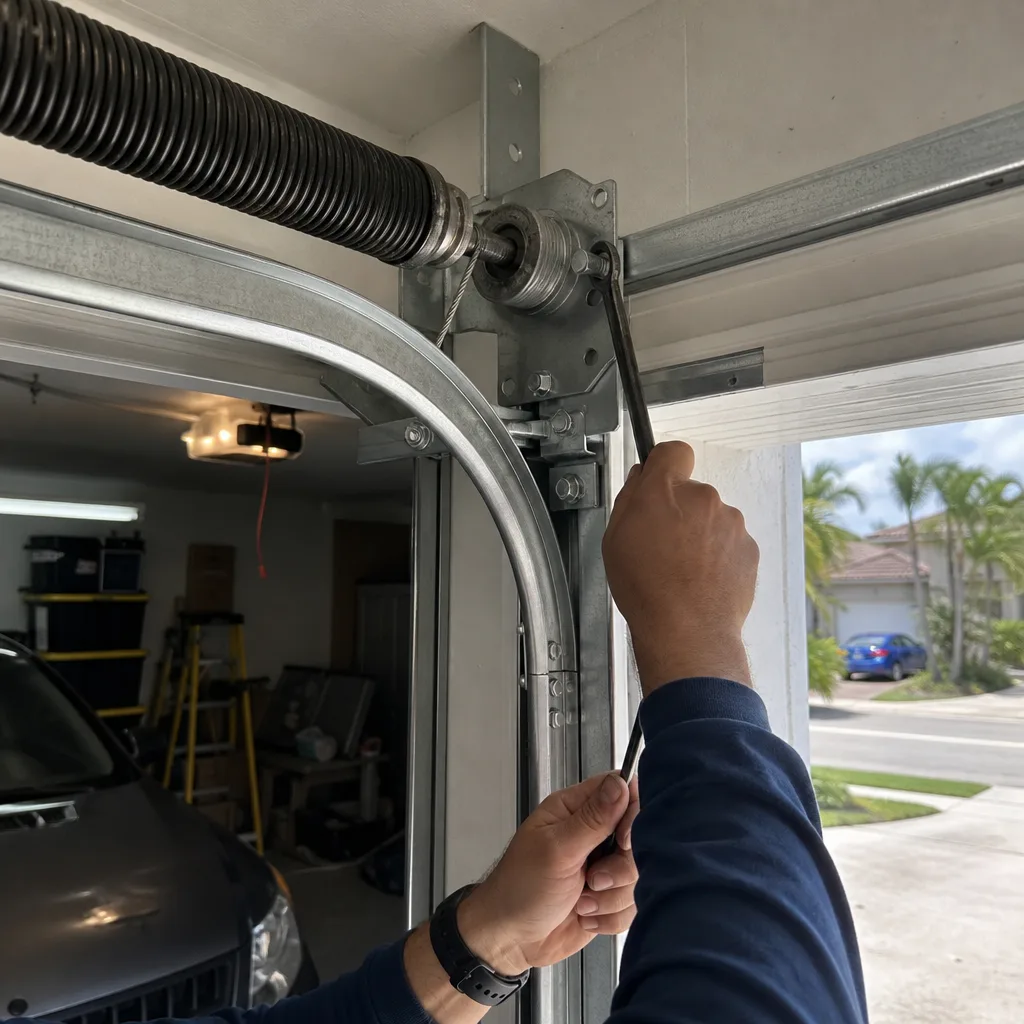
- Torsion springs (above the door opening): Look for orange-brown patches, flaking, or pitting. Surface rust here is serious because the spring’s strength depends on smooth, unbroken metal. Pitting creates stress concentration points. A corroded torsion spring under tension is a genuine safety hazard, not a cosmetic issue.
- Lift cables (running up both sides): Fraying is the emergency sign. But before fraying, you’ll see individual wire strands dulling, darkening, or showing rust dust. In Miami, cables degrade faster than springs because they’re exposed and they’re under constant tension. A snapped cable drops the door’s full weight onto whatever is beneath it.
- Bottom brackets (where cables attach at the bottom corners): These sit closest to ground moisture and get hit by rain splash during Miami’s afternoon downpours. Rust on bottom brackets weakens the anchor point for the entire lifting system. If you see rust here, check the cable attachment immediately.
- Rollers and hinges: Rust on these accelerates wear but is less dangerous than spring or cable corrosion. Nylon rollers with rusting steel bearings still need replacement, but this is routine maintenance rather than an emergency.
- Track surfaces: Light rust on the track is common and often harmless. Pitting, however, creates friction points that cause the door to bind. Tracks on Miami homes within a mile of the coast often need replacement at the 10 to 15 year mark even when the door panels are fine.
One pattern we see regularly in neighborhoods like Coconut Grove, Coral Gables, and Key Biscayne: doors that look fine from the street but have significant spring corrosion hidden behind the header. The front of the spring faces the driveway and gets some air circulation. The back side, pressed against the wall, traps moisture. If you’re checking your own door, run your hand (carefully, without touching the spring itself) along the underside and back side of the torsion spring. That’s where Miami’s climate does its worst work.
Slow or Uneven Movement: Track Alignment and Miami’s Soil Settlement
When a garage door starts moving slower on one side, or pauses partway up, most homeowners blame the opener. Often the opener is fine and the real problem is track alignment. In Miami specifically, soil settlement plays a role that homeowners in other regions don’t contend with. South Florida sits on limestone and sandy soils that shift with water table changes, especially during and after hurricane season. That movement transfers through the concrete slab and into the garage door frame and tracks.
Here’s how to tell if your uneven movement is a track issue versus an opener issue:
- Watch the gap between door and track on both sides: If one side has noticeably more daylight showing, that track has drifted. Settlement is the usual culprit in Miami homes built on slab foundations more than 20 years old.
- Listen for scraping during the last two feet of travel: Track misalignment often shows up at the bottom of the cycle because that’s where the vertical track meets the horizontal curve. Misalignment there produces a distinct metallic scrape.
- Check for visible gaps at the top corners when the door is closed: If one corner lets in light while the other seals tight, the door itself has shifted relative to the frame. This can warp panels over time and will eventually strain the opener motor.
- Test the door manually (pull the emergency release): A properly balanced door should lift smoothly with one hand and hold position at around waist height. If it’s heavy on one side or wants to drop, you have a balance or alignment issue, not an opener issue.
Track alignment problems compound quickly. A door that binds slightly on one side forces the opener to work harder, which shortens the opener’s lifespan. It also places uneven load on springs, which can cause premature spring failure. In our experience serving Miami homeowners, track realignment done early is one of the least expensive repairs we perform, often under $200. The same problem ignored for six months can lead to a failed spring, a burned-out opener motor, and a door that won’t open at all.
If you’re noticing uneven movement and your opener is a Chamberlain, LiftMaster, or Raynor unit, the good news is that modern opener motors have thermal overload protection that prevents catastrophic burnout. The bad news is that the underlying alignment problem remains. For opener-specific diagnostic information, see our Garage Door Opener Repair in Miami page.
Opener Behavior Changes: Heat-Stressed Logic Boards vs. Mechanical Issues
Miami garages get brutally hot. Even attached garages routinely reach 110 to 120 degrees Fahrenheit from May through September. That heat does something specific to garage door openers: it accelerates degradation of the logic board, the circuit board that controls motor function, remote communication, and safety sensor logic. When a Miami homeowner tells us their opener “acts possessed,” heat is the first thing we check.
Here’s how to distinguish a heat-stressed opener from a mechanical door problem:
Heat-stressed logic board symptoms:
- Opener responds to the wall button but not the remote, or works sporadically with the remote
- Door reverses immediately after touching the floor for no apparent reason
- Opener runs for a second and stops, or starts and stops erratically
- Remote range drops dramatically, especially in the afternoon heat
- The opener beeps or clicks without moving the door
These symptoms point to logic-board degradation because they’re inconsistent and unrelated to door movement. A mechanical problem, by contrast, is consistent: the door binds in the same spot every time, or makes the same noise every cycle, or struggles with the same portion of travel.
For Miami homeowners with smart-home openers, we look at the Wi-Fi module separately. Genie openers with Aladdin Connect and Chamberlain or LiftMaster units with myQ rely on small wireless chips that sit in the same hot enclosure as the logic board. Heat-stressed Wi-Fi modules produce a specific symptom profile: the opener works fine from the wall button and the original remote, but the app shows “offline” or fails to connect. This is a communications failure, not a mechanical one. Replacing the logic board or the Wi-Fi module is a repair we handle regularly, and it’s almost always less expensive than replacing the entire opener.
One more Miami-specific opener consideration: power surges. South Florida’s afternoon thunderstorms produce frequent, brief outages and voltage spikes. A single surge can damage logic-board components even when the opener still runs. If your opener’s behavior changed after a storm, surge damage is the likely cause. We recommend a dedicated surge protector for any garage door opener in Miami, particularly for Genie and Chamberlain smart openers that have more sensitive electronics than basic models.
Bottom Seal Gaps: Weatherstrip Wear vs. Frame Warping from Moisture
The rubber strip along the bottom of your garage door does more than keep out rain. In Miami, it also controls humidity, insects, dust, and the fine silt that blows through during dry-season winds. When that seal starts letting in daylight, water, or dirt, you need to know whether you’re dealing with a simple weatherstrip replacement or a structural moisture problem.
Here’s how to tell the difference:
Weatherstrip wear (simple fix):
- The rubber is cracked, brittle, flattened, or has visible gaps where it’s pulled away from the door bottom
- Gaps appear evenly along the width of the door, not just on one side
- The door itself sits level and closes fully against the floor
- Water enters only during heavy rain with wind driving it against the door
This is normal wear. Miami’s heat and ozone levels degrade rubber weatherstripping faster than most climates, and replacement every three to five years is common. The part is inexpensive, and we typically handle it as a quick job during a regular maintenance visit.
Frame warping or moisture intrusion (structural issue):
- Gaps appear on one side only, or shape shifts as the door closes
- The door no longer sits flush against the opening even when fully closed
- You see water staining or wood rot on the garage door frame, particularly at the bottom corners
- The gap at the bottom seal changes seasonally, wider in summer wet season
- Cracks appear in the concrete floor near the door opening
In Miami homes built before the 1990s, wooden door frames are common, and sustained humidity causes expansion and rot. Once the frame loses dimensional stability, no weatherstrip will seal properly because the opening itself has changed shape. This is a more involved repair, sometimes requiring frame reinforcement or modification before a new door can be installed.
For homeowners considering a full door replacement due to repeated sealing issues, Miami’s climate makes insulated doors the practical choice regardless of whether your garage is air-conditioned. Insulated Clopay and Amarr doors reduce heat transfer into the garage, which also means less thermal expansion stress on the door itself. For replacement options, visit our Garage Door Installation in Miami page.
Spring Failure: The Most Dangerous Warning Sign
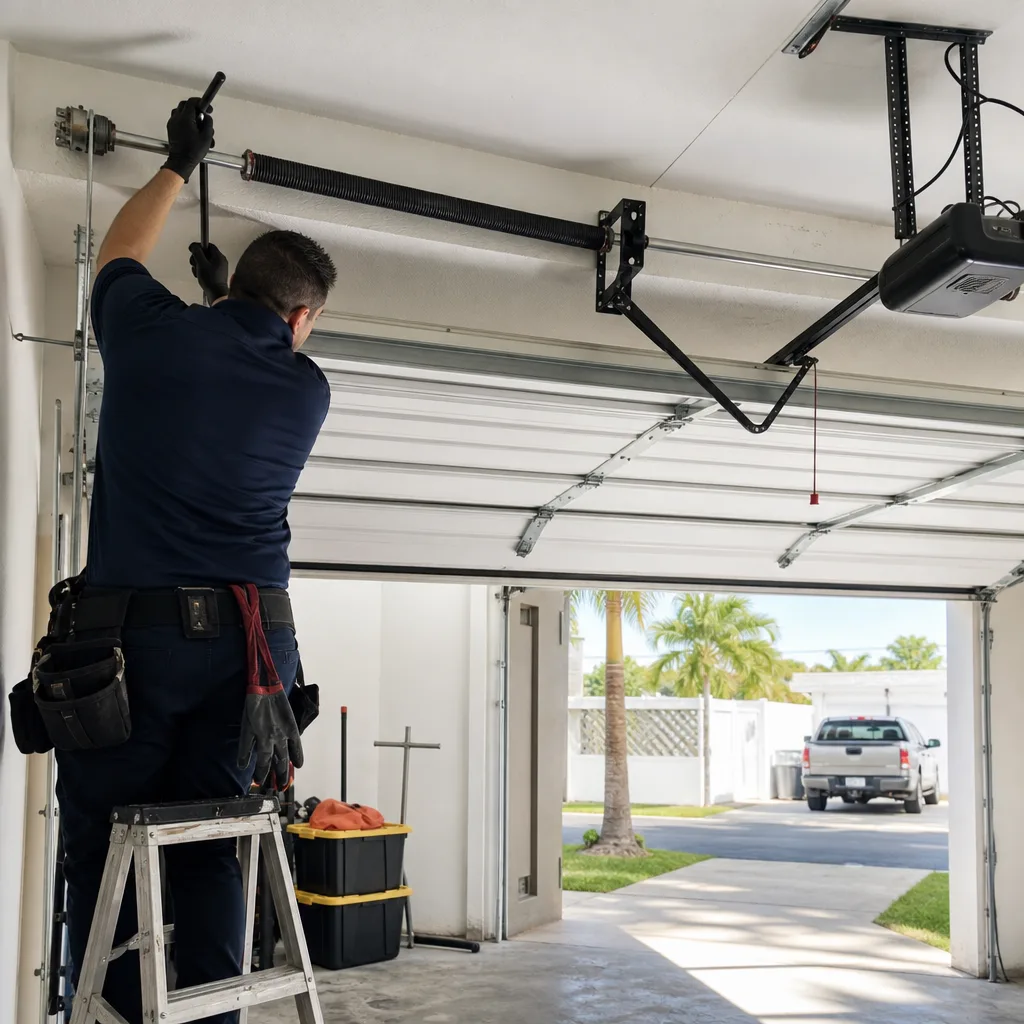
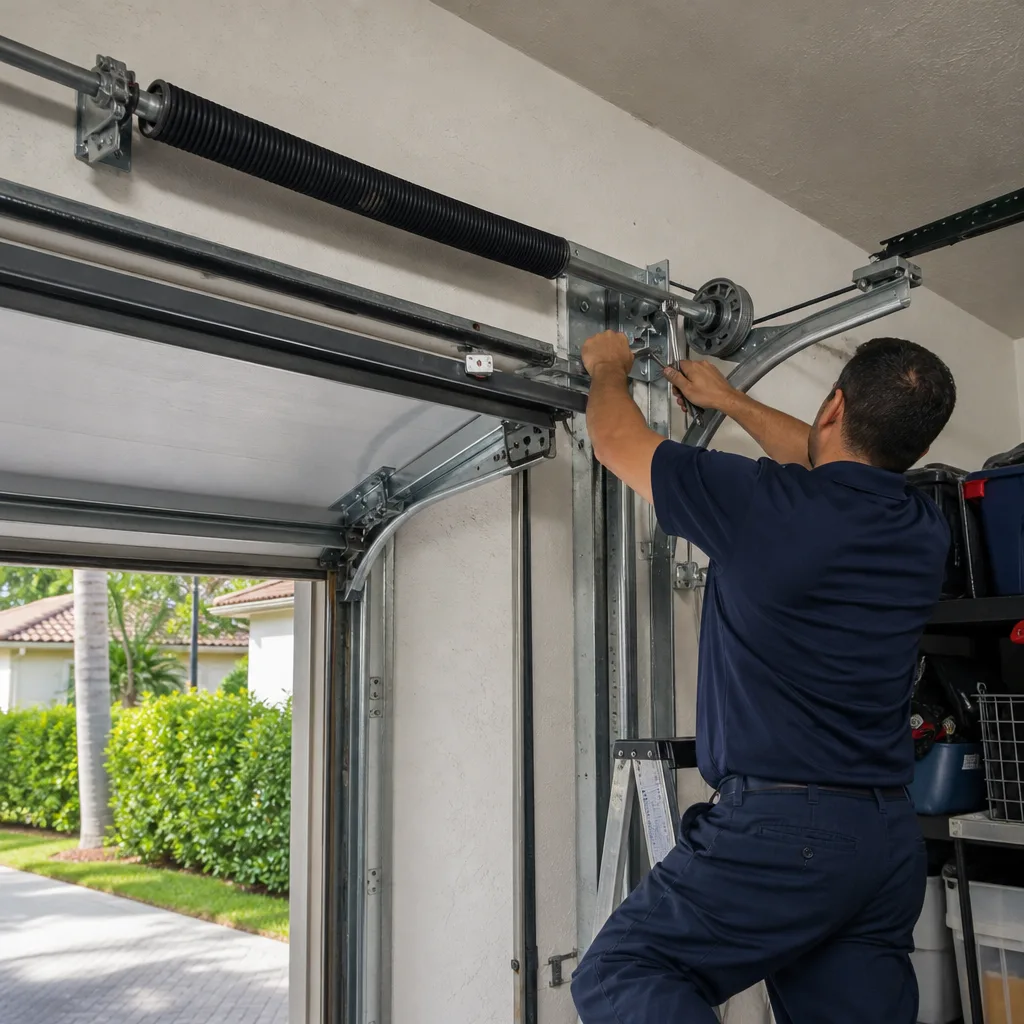
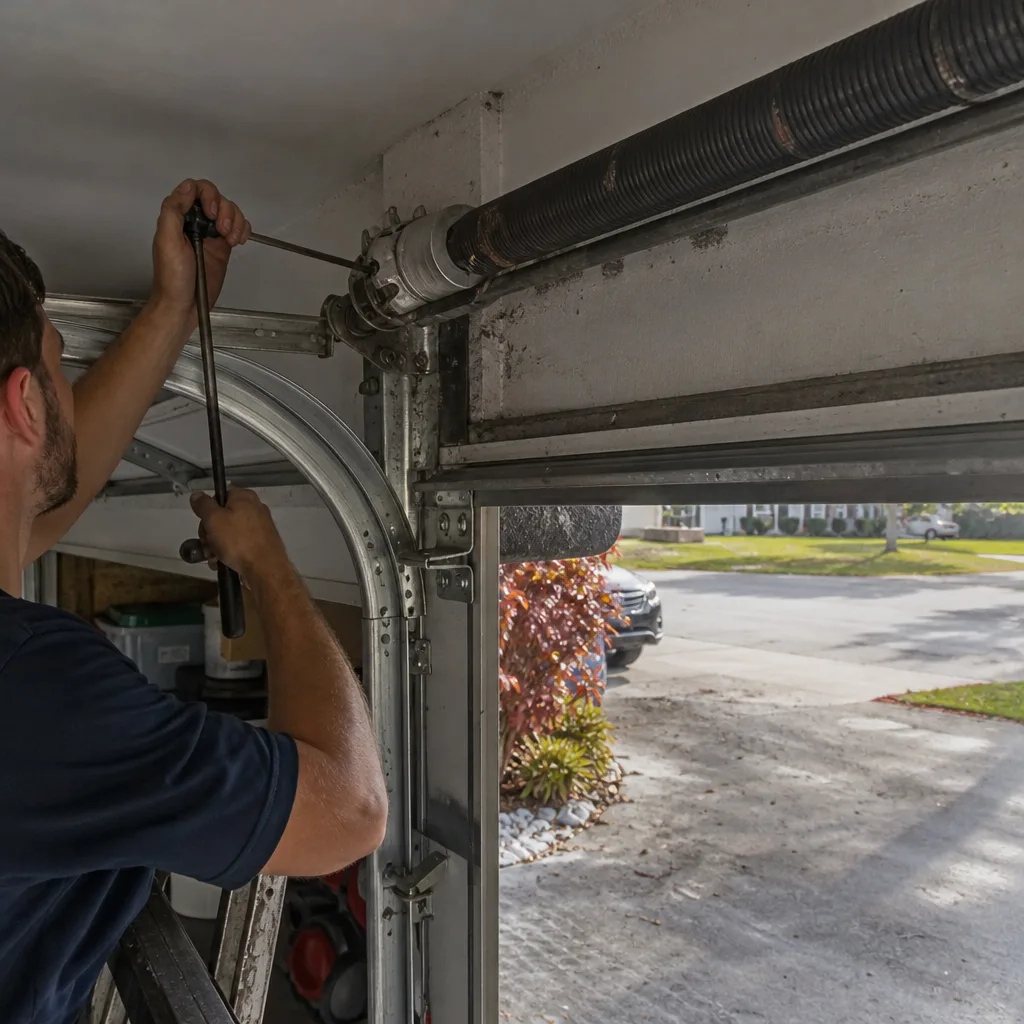
Every garage door with a torsion spring system stores an enormous amount of mechanical energy. A standard residential torsion spring under full tension holds roughly the same kinetic potential as the door’s full weight, typically 130 to 300 pounds depending on the door. When a spring snaps, that energy releases instantly. In our experience across Miami, spring failures follow a pattern, and the warning signs are identifiable.
Warning signs that a torsion spring is approaching failure:
- Visible rust or pitting on the spring coils (discussed above in the corrosion section)
- A gap that appears in the spring itself, visible when the door is closed (the spring should be one continuous coil with no separation)
- Grinding or popping sounds during operation that started recently
- The door becoming noticeably heavier when operated manually
- The door’s balance shifting over a period of weeks, with one side dropping faster
When a torsion spring breaks in Miami, it usually happens while the door is in motion. The sound is like a gunshot, sharp and loud enough that neighbors have reported hearing it from across the street. If this happens to you, the immediate priority is safety: do not attempt to open the door manually, and do not stand under the door while it’s in the raised position. A door with one broken spring is supported only by the remaining spring and the opener’s rail lock, neither of which is designed to hold that load long-term.
Spring repair is absolutely not a DIY job. The tension involved can cause serious injury or death if released improperly. Every Miami homeowner should know this. At Kingsway Garage Door, we replace springs in pairs by default, because when one spring fails, the other has experienced identical fatigue and load cycles and will fail soon after. We quote the full price before any work starts, so you know exactly what the repair costs.
Common Mistakes to Avoid
- Lubricating a corroding spring instead of replacing it: Spray lubricant on a rust-pitted spring masks the grinding sound temporarily. It does not restore the metal’s structural integrity. The spring continues to weaken, and you lose the audible warning that told you something was wrong.
- Ignoring a squealing door because “it’s always done that”: In Miami’s humidity, sustained squealing means bearings are breaking down. What was a $50 roller replacement becomes a $400 track and roller job when worn bearings scar the track surface.
- Tightening loose hardware without checking for corrosion behind it: Rusted washers and bolts that have lost their grip will come loose again within weeks. Replacing corroded hardware is the actual fix. Tightening alone just buys time.
- Replacing the opener before diagnosing the door: Many Miami homeowners buy a new Chamberlain or Genie opener because their door “won’t open right,” when the real issue is a binding door caused by track misalignment or spring fatigue. The new opener will struggle against the same mechanical problem and will fail prematurely.
- Waiting until hurricane season to check the door: Miami’s storm season is exactly when you want your garage door working properly. A door that can’t open during a post-storm power outage with a failed opener means a car trapped inside. Mid-spring maintenance visits are far more reliable than September emergency calls.
- Assuming a new garage door is sealed for life: Even quality doors from Clopay, Amarr, or Raynor need weatherstrip replacement within a few years in Miami’s climate. The door panels might last 20 years. The rubber components will not.
When to Call a Professional
Some garage door issues are genuinely safe to address as a homeowner: tightening visible bolts, wiping down tracks, replacing remote batteries. Most are not. If you notice any of the specific warning signs in this guide, including grinding sounds, visible spring corrosion, uneven movement, or erratic opener behavior, the time to call is before the failure, not after. A repair visit costs less than an emergency call and takes a fraction of the time. Kingsway Garage Door offers free estimates in Miami, call (866) 282-5541, and you’ll get an experienced technician who can tell you exactly what’s wrong and what it costs before any work begins.
Frequently Asked Questions
Corrosion-related spring failure is the single most common problem we see in Miami, driven by the combination of salt air, high humidity, and year-round warm temperatures that accelerate metal fatigue. Spring failure typically presents first as grinding or popping sounds during operation, followed by the door becoming visibly heavier when operated manually.
Annual inspections are sufficient for most Miami homes, though homes within one mile of the coast benefit from twice-yearly checks due to accelerated salt-air corrosion. See our Seasonal Garage Door Care for Miami: Year-Round Homeowner’s Guide for a full maintenance calendar. The ideal time for inspection is late winter or early spring, before humidity peaks and before hurricane season begins.
You can lubricate a squealing door yourself using a silicone-based lubricant on rollers, hinges, and the spring. If the squealing returns within a few weeks, or if the sound changes to grinding or popping, corrosion is the underlying problem and professional assessment is required. Do not attempt to disassemble or adjust any spring component, as torsion springs store dangerous mechanical energy.
Basic garage door repair in Miami typically ranges from $150 for minor adjustments and hardware replacement to $300 to $500 for spring replacement, which is the most common significant repair. If you’re weighing brands, our Choosing the Right Garage Door Brand: A Buyer’s Guide for Miami can help. Opener logic-board replacements typically run $200 to $400 depending on brand and model. Kingsway Garage Door provides exact quotes before any work starts, call (866) 282-5541 for a free estimate.
Intermittent opener function in Miami is most often caused by heat-stressed logic boards, which degrade faster in garages that reach 110 degrees or more for months at a time. The second most common cause is power surge damage from South Florida thunderstorms. Both conditions produce inconsistent behavior, unlike mechanical issues which are consistent every cycle.
Yes. Rust on a torsion spring creates pitting and stress points that weaken the metal and can lead to sudden failure. A snapping torsion spring releases energy equivalent to hundreds of pounds of force and can cause serious injury to anyone nearby. Any visible rust on springs warrants professional assessment immediately.
No. Track misalignment is repairable in most cases and does not require door replacement. The track can be realigned and reinforced, and underlying causes like soil settlement or loose mounting hardware can be addressed. Door replacement is only necessary when the door itself has warped or its panels have been damaged by prolonged misalignment.
The Bottom Line
Your Miami garage door speaks to you constantly, through sounds, movements, and visible wear. The skill is in understanding what it’s saying. A squeal means bearings are failing. A grind means a spring is corroding. Uneven movement means track alignment has drifted. Erratic opener behavior means heat or surge damage to electronics. Every one of these warnings is fixable, and every one is cheaper to fix before failure than after. Miami’s climate punishes garage doors harder than most of the country, but it also punishes them predictably. If you hear something, see something, or notice your door behaving differently, call (866) 282-5541. We’ll diagnose it properly, quote it honestly, and fix it right, the first time.
Written by the team at Kingsway Garage Door home, serving Miami since 2015.
See the difference
 Before
 After
 Before
 After
 Before
 After