Last updated October 30, 2026
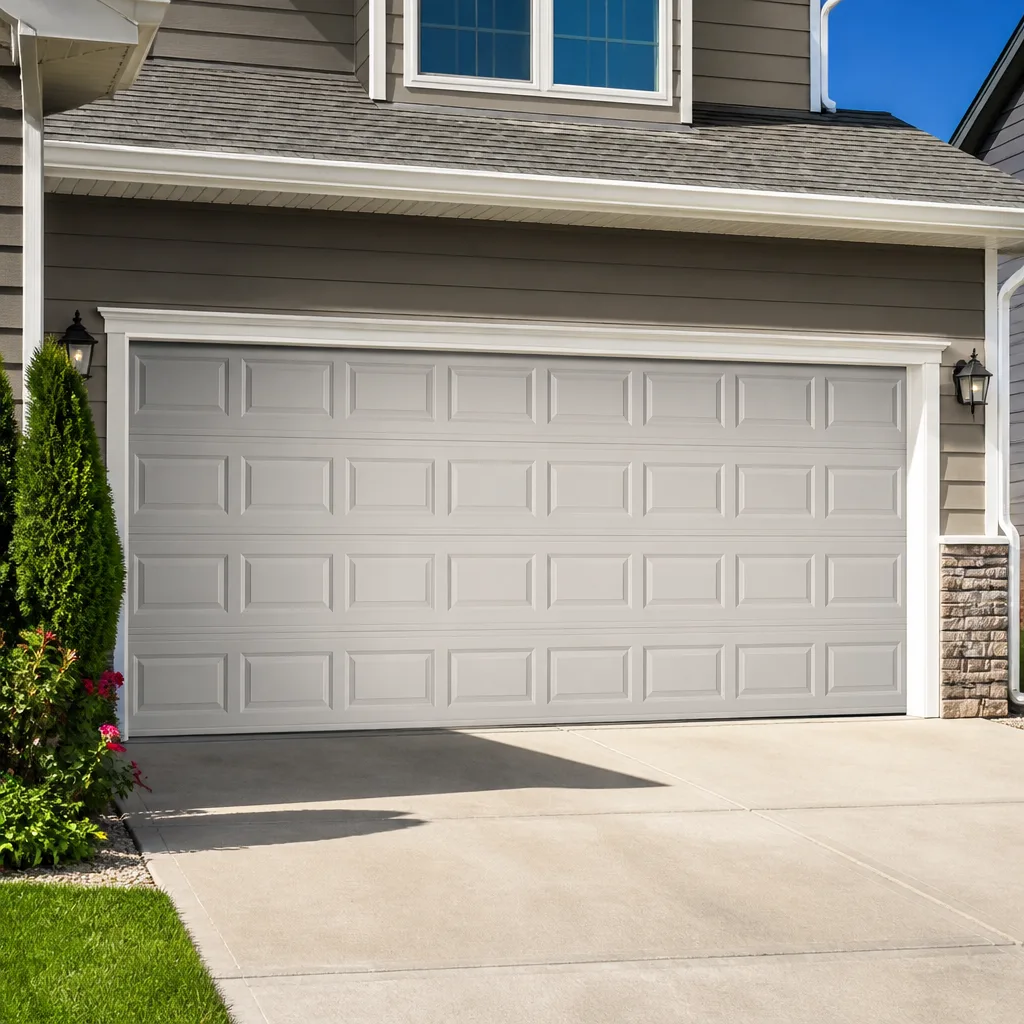 Raised-panel steel
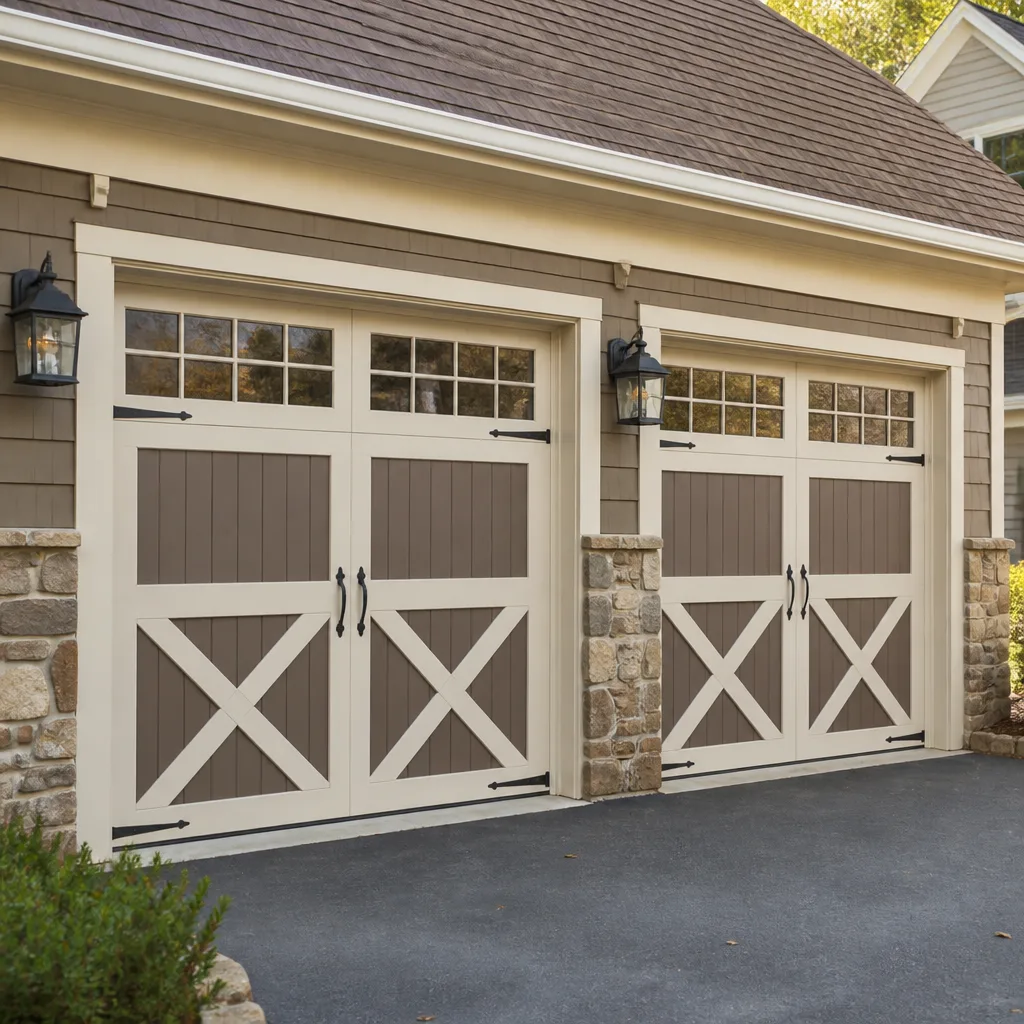 Carriage house
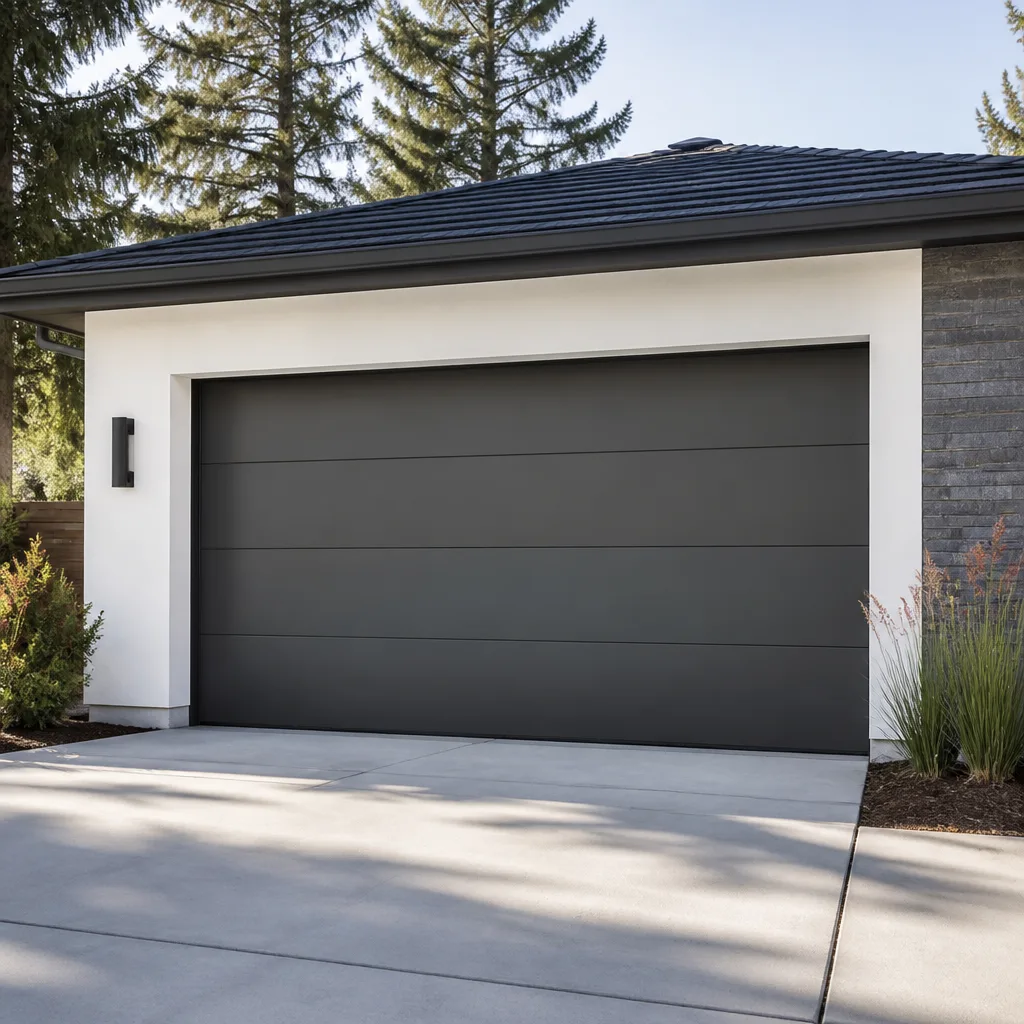 Modern flush
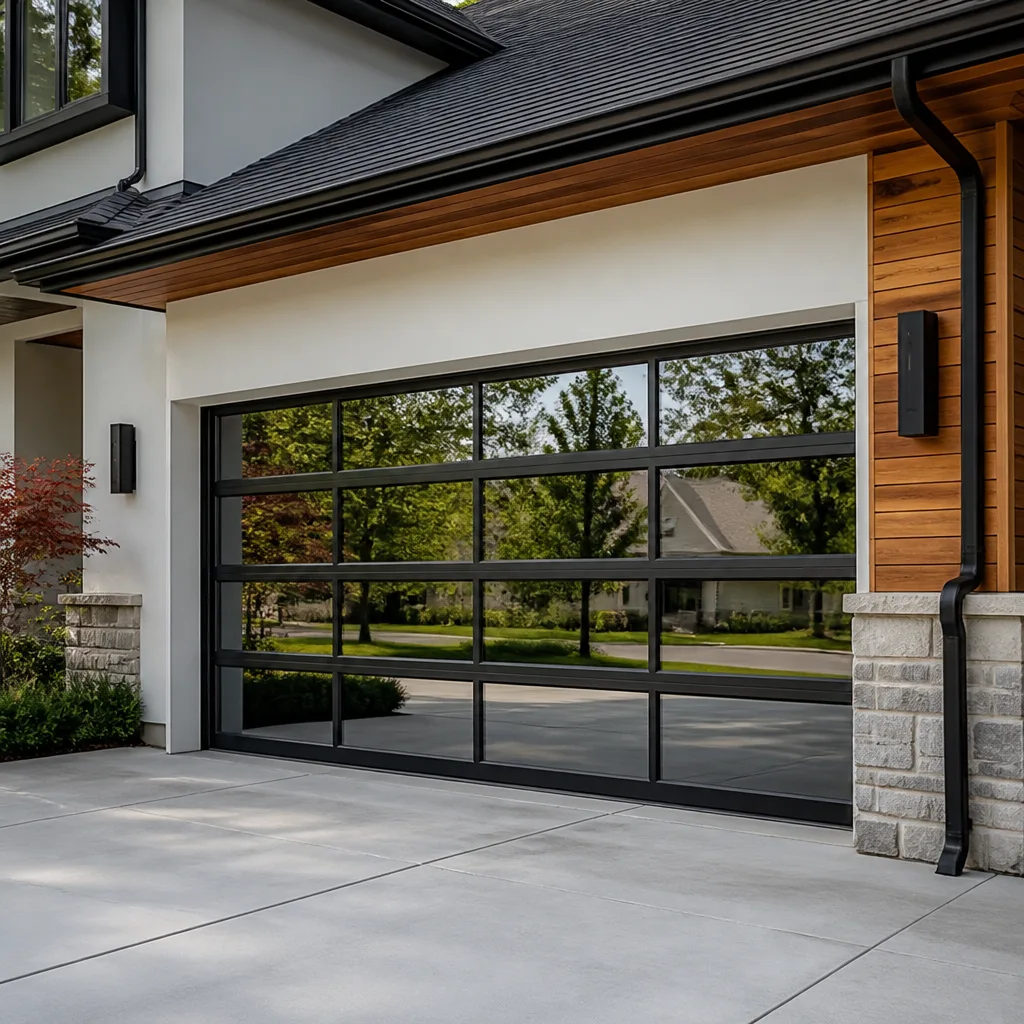 Full-view glass
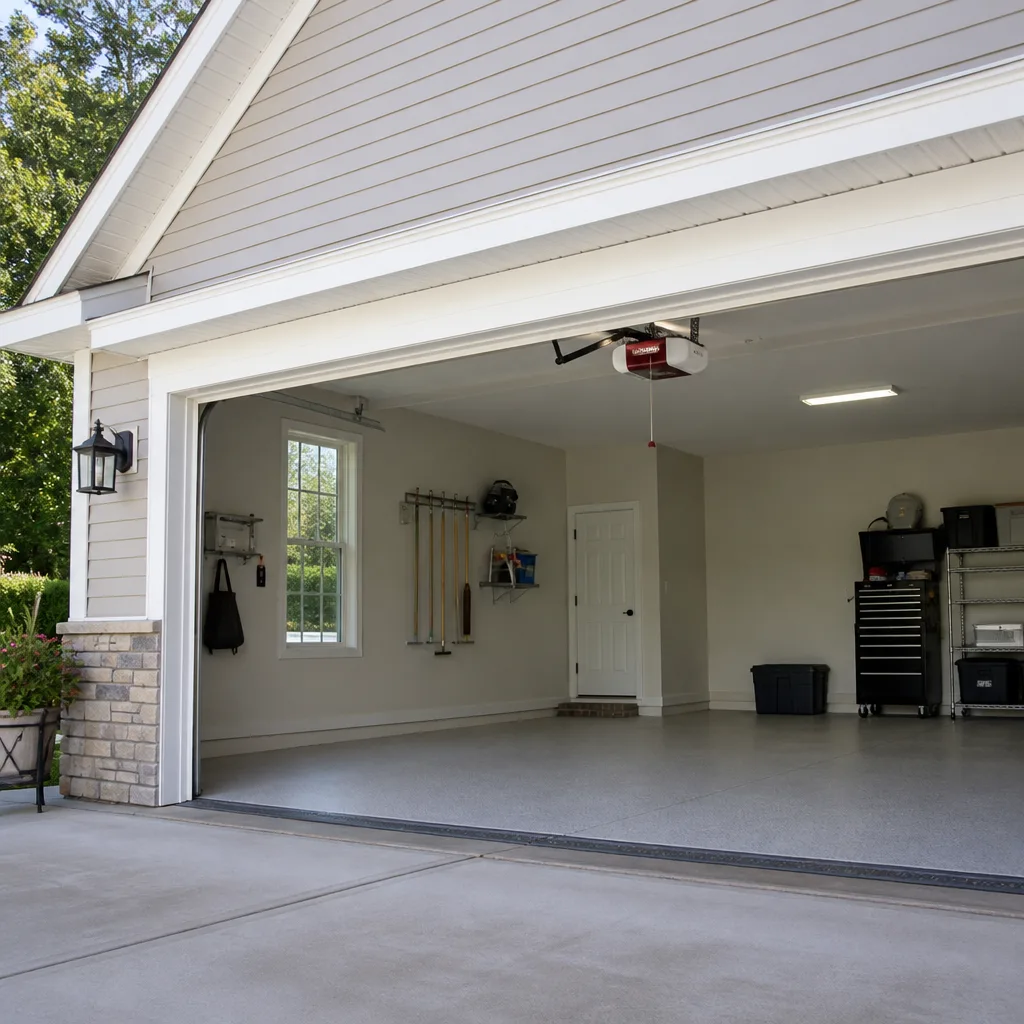 LiftMaster openers
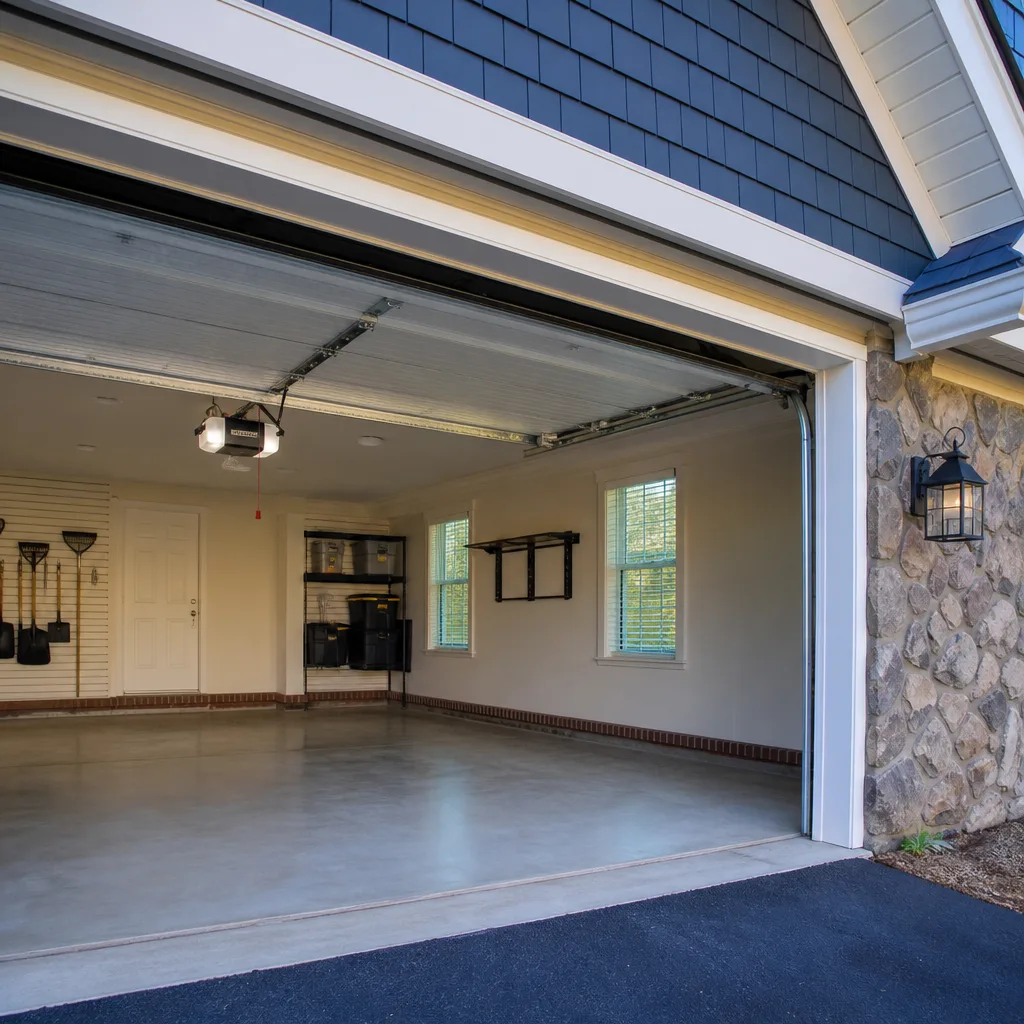 Chamberlain openers
Full 25-point door and opener safety check with every visit - springs, cables, rollers, tracks, and your LiftMaster or Chamberlain opener included
You get a price before we start. It does not change when the truck arrives.
Get your free estimateThe Complete Garage Door Repair Guide for Miami Homeowners
A torsion spring rated for 10,000 cycles in a Chicago climate can fail in under five years in Coral Gables. Not because it was cheap. Not because it was installed wrong. Because nobody accounted for the salt. Miami’s garage doors don’t age on the timeline printed in manufacturer manuals. They age on Miami’s timeline, which is faster, less forgiving, and driven by three forces that mainland guides barely mention: salt air, hurricane-season humidity, and relentless thermal cycling that cooks hardware from February through November. This guide covers what actually breaks, why it breaks sooner here, and what to do about it before your door fails at the worst possible moment.
Quick Answer
Garage door repair in Miami is a climate-specific discipline. The most common failures we see are torsion spring breaks, corroded cables, seized rollers, and opener logic-board failures caused by humidity and power surges. Homeowners can safely handle lubrication, weatherstrip replacement, and visual inspections, but spring, cable, and opener motor work requires a trained technician. Expect spring replacement to run $180-$340 for a standard single door and cable replacement $150-$250, with same-day service generally available for spring failures.
Styles & brands we work with
Table of Contents
- Why Miami’s Climate Changes Everything About Garage Door Repair
- Torsion Springs and Cables: The Parts That Fail First in South Florida
- Rollers, Hinges, and Tracks: Salt Corrosion and the Lubrication Myth
- Garage Door Openers in Miami: Humidity, Power, and Smart-Home Integration
- Hurricane-Rated Hardware: What Storm Season Actually Stresses
- DIY Repair vs. Professional Service: Where Miami Draws the Line
- Documenting Your Door System Before It Fails
- A Miami-Specific Maintenance Schedule Most Manuals Don’t Give You
Why Miami’s Climate Changes Everything About Garage Door Repair
Most garage door maintenance guidance is written for dry, temperate climates. Garage door repair in Miami operates under different physics. The air here carries salt from the Atlantic and Biscayne Bay. That salt settles on metal components and, combined with humidity that routinely exceeds 80 percent, creates a low-grade corrosion environment that runs year-round. A galvanized spring that would last a decade in Ohio starts showing surface oxidation within eighteen months in Coconut Grove or Key Biscayne.
Then there’s the heat. Garage interiors in Miami regularly exceed 110°F during summer afternoons, especially on west-facing doors in neighborhoods like Westchester or Doral. That heat cycling expands and contracts metal continuously. Springs lose tension incrementally. Cable strands work against each other. Lubricant breaks down faster than the can says it should. The result is a wear pattern that doesn’t match any mainland schedule, which is why generic advice often falls short here.
What this means practically: a homeowner who follows a standard maintenance timeline is already behind schedule. A door that gets inspected every two years in Miami has effectively gone four years in climate-equivalent wear. The fix isn’t complicated. It’s recognizing that Miami maintenance is a different cadence, not an optional upgrade.
- Salt air accelerates oxidation on springs, cables, hinges, and track hardware, especially within two miles of the coast.
- Humidity corrodes electrical connections in opener units and can cause circuit-board failures that have nothing to do with mechanical wear.
- Heat cycling stresses spring steel and loosens hardware through repeated expansion and contraction.
- Hurricane winds test the structural bracing and reinforcement that most doors never need elsewhere.
Torsion Springs and Cables: The Parts That Fail First in South Florida
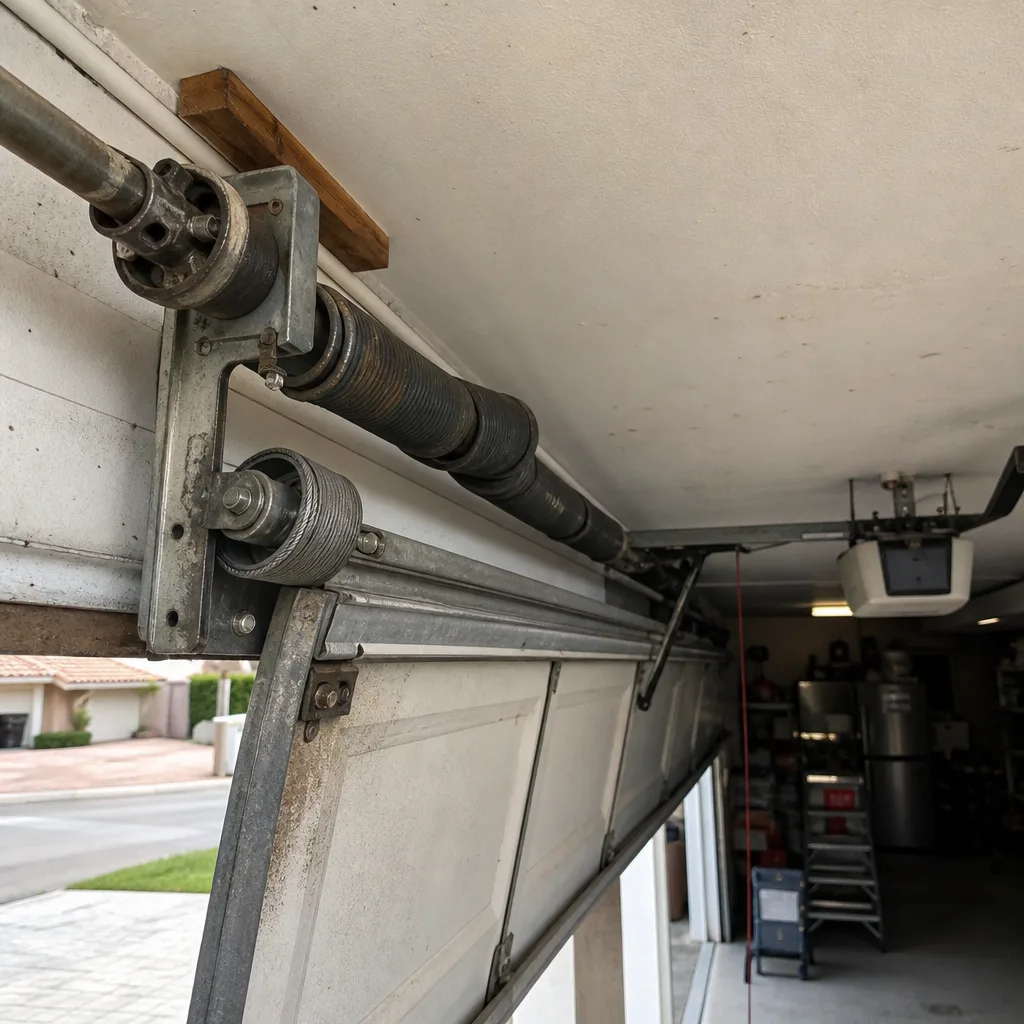
Torsion springs do the heavy lifting. They counterbalance the door’s weight so that a motor, or your arm, only moves a fraction of the actual load. In Miami, they fail earlier than anywhere else in the continental US. The reason is corrosion pitting on the spring coil surface, which creates stress concentrators. Each cycle of the door flexes those pitted points until fatigue cracking begins. A spring rated for 10,000 cycles in manufacturer testing can snap at 3,000 to 5,000 cycles in a coastal Miami zip code.
Cables fail on a parallel timeline. The cables are wrapped around drums and under constant tension. When individual strands corrode and fray, they don’t break all at once. They start shedding one strand at a time until the remaining strands carry more load than they’re rated for. Homeowners in Miami should visually inspect lift cables every three months, looking for rust discoloration, fuzzy strands, or kinks near the bottom bracket. Catching a frayed cable before it snaps is the difference between a planned repair and a door that slams unevenly into its tracks.
What does repair actually cost in Miami? Here’s what we quote daily:
- Single torsion spring replacement: $180-$280 depending on spring size and door weight
- Double spring replacement (both sides): $280-$390
- Cable replacement (pair): $150-$250 including adjustment
- Spring and cable combination: $300-$480 for full re-tensioning
- Same-day spring replacement: generally available for standard-size doors
One Miami-specific note: if you have a Wayne Dalton or Amarr door with a torquemaster-style spring system housed inside a tube, the repair approach differs from traditional exposed torsion springs. Not every technician carries torquemaster parts, so before you schedule, confirm the tech works on your specific hardware. We carry parts for both conventional and torquemaster systems because Miami has plenty of both.
Rollers, Hinges, and Tracks: Salt Corrosion and the Lubrication Myth
The most common misinformation we hear involves lubrication. Homeowners read a generic forum post that says to grease the rollers twice a year. In Miami, that advice causes problems. Heavy grease attracts salt and sand. It becomes an abrasive paste that grinds down nylon rollers and scores metal tracks. What works in dry climates actively accelerates wear here.
The correct lubricant for Miami conditions is a dry-film silicone or PTFE spray on hinges and roller bearings, not a grease. Nylon rollers don’t need lubrication on the rolling surface at all, only on the bearings if they’re sealed-bearing style. Metal rollers should be cleaned with a wire brush to remove salt accumulation before any lubrication is applied. This is a ten-minute task that prevents the grinding noise and jerky movement that force rollers to be replaced years early.
Hinges are the other quiet failure point. Standard hinges are stamped steel. In Miami they rust progressively from the inside out, especially in the lower sections that catch more splash and humidity from the slab. When hinges corrode, the door sections start flexing independently instead of moving as a unit. You’ll hear it as a creak that gets worse, and you’ll see it as uneven gaps between panels. Replacement hinges are inexpensive, but the labor to swap all hinges and re-align the door is best done by someone who can see the whole picture.
- Inspect rollers every three months. Look for flat spots on nylon rollers, wobble in the bearing, or rust growth on metal roller stems.
- Clean before lubricating. Salt residue must come off first. A dry cloth and light wire brushing works on hardware.
- Use dry-film lubricant only. Silicone or PTFE spray on hinge pins and metal-to-metal pivot points. Never white lithium grease or WD-40.
- Check track alignment twice a year. Salt expansion and thermal cycling can shift track brackets slightly. A 1/8-inch misalignment becomes a binding point that stresses every component above it.
Garage Door Openers in Miami: Humidity, Power, and Smart-Home Integration
Garage door opener failures in Miami fall into patterns that are easy to predict once you know what to look for. The most common issue is not the motor, but the logic board. Humidity penetrates the opener housing through ventilation slots and condenses on circuit boards during the daily temperature swing. Corrosion across board traces causes intermittent failures: the door opens sometimes but not others, the remote range shrinks, or the wall button stops responding. These aren’t motor failures. They’re Miami humidity failures.
The second most common opener issue is surge damage. Miami’s thunderstorm season brings frequent power flickers and surges. Opener logic boards are sensitive to voltage spikes, especially on Genie and Craftsman units with older power supply designs. A whole-home surge protector helps, but the best protection is a surge suppressor installed at the outlet where the opener plugs in.
On the smart-home side, we work extensively with LiftMaster and Chamberlain myQ systems, as well as Genie Aladdin setups. The most frequent issues are Wi-Fi disconnections (often caused by router placement relative to the metal door and opener housing) and firmware that hasn’t been updated since installation. Before calling for service on a smart opener that won’t connect, check whether your router moved, your Wi-Fi password changed, or your opener’s firmware has been pending for months.
We handle garage door opener repair in Miami across all major brands, focusing on diagnosing the actual failure rather than replacing the unit by default. A Genie that loses its travel limits needs a limit-switch adjustment, not a new opener. Our garage door opener repair service in Miami covers the full range of motor, board, and smart-integration issues.
Hurricane-Rated Hardware: What Storm Season Actually Stresses
If your garage door carries a Miami-Dade NOA (Notice of Acceptance) or Florida Product Approval for wind load, it was built to survive a specific storm scenario. But that rating applies to the door as a system, and the system includes parts that wear. Hurricane-rated doors use heavier gauge track, more reinforcement struts, and stronger fasteners. Those components interact with springs, cables, and rollers in ways that change the wear profile.
Post-storm, the inspection most homeowners skip is the strut-to-panel connection. Wind pressure flexes the door face, which transfers force through the struts into the panel screws. Over time, those screw holes wallow out. After a near-miss or direct hit, check each strut for movement, each screw for tightness, and the track brackets where they anchor to the jamb. A door that held during the storm may need bracket re-anchoring before the next one.
The second post-storm concern is cable seating. High wind can cause momentary cable slack on one side if the door flexes enough. When the door settles, the cable can seat improperly on the drum, creating uneven lift geometry. This shows up as a door that opens slightly crooked or hesitates on one side. Left uncorrected, the cable will eventually shred or pop completely.
- After any severe storm, run the door through one full open-close cycle and watch both sides evenly.
- Check reinforcement struts for loosening along their full length. A bolt that has backed off 1/4 inch is already failing.
- Inspect the bottom weatherstrip and panel corners for wind-driven debris that may have wedged into running hardware.
- Test the manual release with the door closed. Hurricane hardware can bind after flexing, and you need to know the door will release if power’s out.
DIY Repair vs. Professional Service: Where Miami Draws the Line
Some garage door tasks are genuinely homeowner-appropriate. Others carry physical risk that no amount of forum reading eliminates. The dividing line in Miami isn’t about skill; it’s about stored energy and load-bearing hardware.
Safe for most homeowners:
- Lubricating hinges and rollers with the correct dry-film product
- Replacing the bottom weatherstrip (a $20 part that prevents standing water intrusion during Miami’s rainy season)
- Cleaning photo-eye sensors with a soft dry cloth
- Tightening visible bolts on track brackets (but not the ones that hold spring hardware)
- Testing balance by disconnecting the opener and manually lifting the door to shoulder height
Not safe for DIY, period:
- Torsion spring replacement or adjustment. The stored energy in a wound spring is enough to sever fingers or fracture bone. This is the one repair where the danger is immediate and unforgiving.
- Cable replacement. Cables run under tension through pulleys. A cable that slips during improper removal becomes a whipping steel line.
- Track realignment that requires loosening the track base. A misaligned door under spring tension can come off its rollers and fall.
- Opener motor replacement or any work that involves the controller board. Electrical plus mechanical interlock is not a weekend project.
Miami building code adds another layer. If your door carries a Miami-Dade NOA, any structural modification must maintain the original approval conditions. A homeowner who self-installs a different spring spec or removes a strut has technically invalidated the door’s wind rating, which matters for insurance purposes after the next storm. Professional repair on certified doors keeps the system within its approved configuration.
For the full scope of what we diagnose and repair, see our Garage Door Repair in Miami page. If your door is older and you’re weighing repair versus replacement, our Garage Door Installation in Miami service can walk you through what makes sense for your home and budget.
Documenting Your Door System Before It Fails
The worst time to discover you don’t know your spring specs is the morning after a hurricane, when every supplier in Miami is backlogged and you’re calling around trying to describe a part you’ve never looked at. Sourcing parts in South Florida after a storm is a different logistics problem than in other markets. The technicians who carry parts on their trucks get called first. The ones who have to order parts wait in line with everyone else.
What to document, today, while your door works:
- Brand and model of the door. Look for a label on the inside of the bottom panel or on the end stile. Clopay, Amarr, Wayne Dalton, and Raynor all label differently, but every manufacturer puts identification somewhere on the section faces.
- Spring specifications. Torsion springs have color-coded cones and wire diameter stamped or painted on the coil. Write down the wire size, inside diameter, length, and the color if it’s visible. A photo with a tape measure next to the spring is better than notes.
- Opener brand and model number. This is on the opener motor housing. LiftMaster, Chamberlain, Genie, and Craftsman all have model plates. Note whether it’s belt, chain, or screw drive.
- Door dimensions and weight. Measure width and height. If you can find the weight in the original paperwork, record it. Spring selection depends on weight, not just size.
- Photo of the entire track system from inside the garage, showing how the door mounts to the jambs. Post-storm repairs often require matching existing hardware geometry.
Keep this information in a note on your phone or a printed sheet taped to the garage wall. When your door fails, you’ll be able to tell any technician exactly what you have, which means faster diagnosis and no second trip for parts. In Miami’s post-storm repair economy, that preparation is worth real money.
A Miami-Specific Maintenance Schedule Most Manuals Don’t Give You
Manufacturer maintenance schedules assume a temperate climate. Ignore them. Here’s the cadence that works for Miami conditions, based on what we’ve adjusted over years of repairing doors from Aventura to Homestead:
Every Three Months
- Wipe down cables and inspect for rust discoloration or fraying strands
- Check all hinges for rust growth, especially the bottom two sections
- Lubricate hinge pins and roller bearings with dry-film silicone only
- Test the auto-reverse function by placing a roll of paper towels under the closing door
- Clean photo-eye sensor lenses
Every Six Months
- Run the door through a full cycle and listen for grinding, popping, or hesitation
- Check track brackets for loosening at the wall and ceiling connection points
- Inspect the bottom weatherstrip for cracking, pulling away, or standing water intrusion marks
- Test manual release operation with the door closed
- Examine all visible bolts on the door sections and struts
Annually
- Have a professional inspect spring tension and cable seating
- Check opener travel limits and force settings
- Inspect any reinforcement struts for screw wallowing or panel flex
- Test smart-home connectivity and update opener firmware
- Clean the opener’s internal surfaces with compressed air to remove accumulated salt dust
This schedule is more aggressive than national recommendations, and Miami earns every extra inspection. Salt doesn’t take vacations. Humidity doesn’t check the calendar.
Common Mistakes to Avoid
- Using the wrong lubricant. White lithium grease and WD-40 are the two most common mistakes we see in Miami garages. Grease traps salt and sand; WD-40 washes away existing lubricant and leaves bare metal exposed to humidity. Dry-film silicone or PTFE only.
- Ignoring a noisy door because it still opens. That grinding or popping sound is metal telling you something’s wearing unevenly. In Miami, a popping spring is often days from a snap, not months.
- Painting over rust without treating it. Cosmetic paint traps moisture against the metal and accelerates corrosion underneath. Hinges and brackets need rust conversion treatment or replacement, not cover-up.
- Assuming hurricane-rated means maintenance-free. An NOA door still has springs, cables, and rollers that wear. The rating covers wind load, not corrosion resistance.
- Replacing the opener when the door itself is the problem. A door with worn rollers or failing springs will burn out a new opener motor quickly. Diagnose the door first, then the opener.
- Waiting until the door fails completely to look for a repair company. Post-storm demand in Miami means wait times. Knowing who you’ll call before you need them is a logistics advantage, not just convenience.
See the difference
 Before
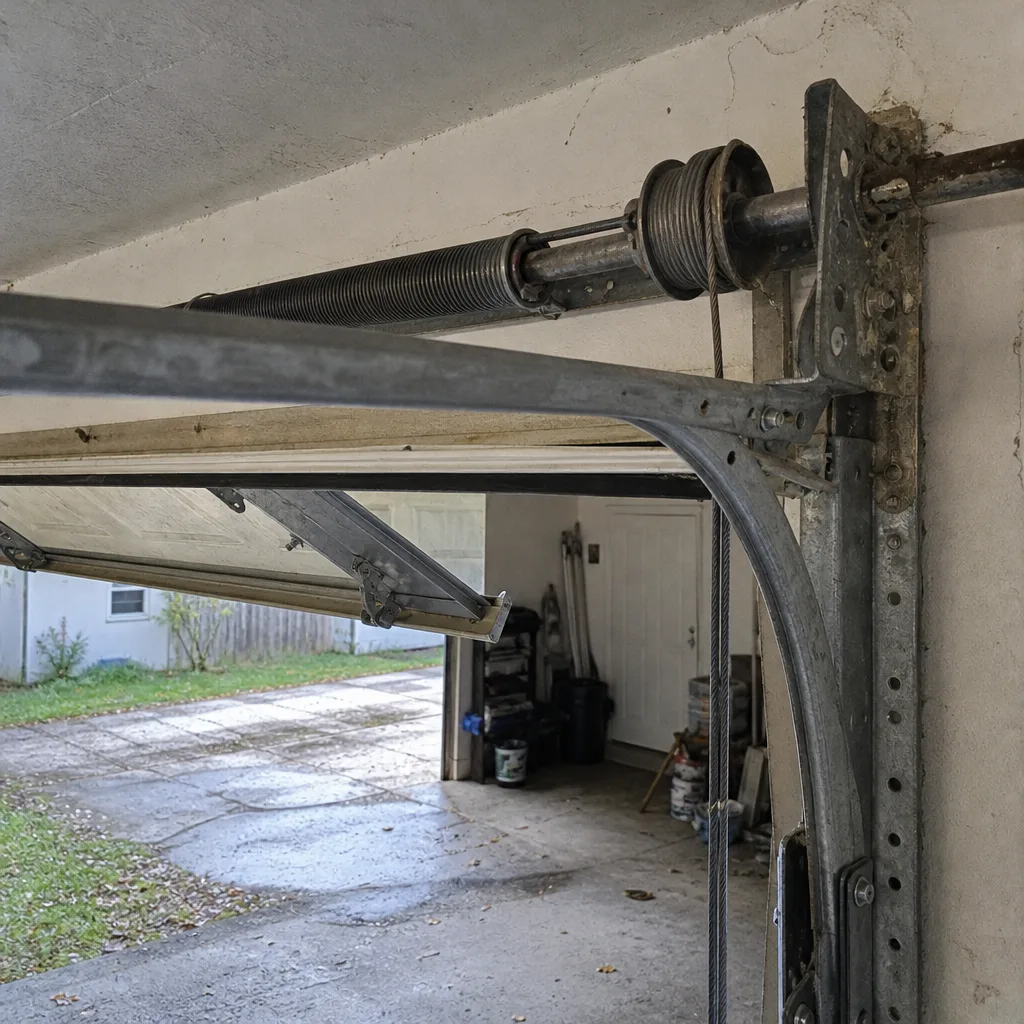
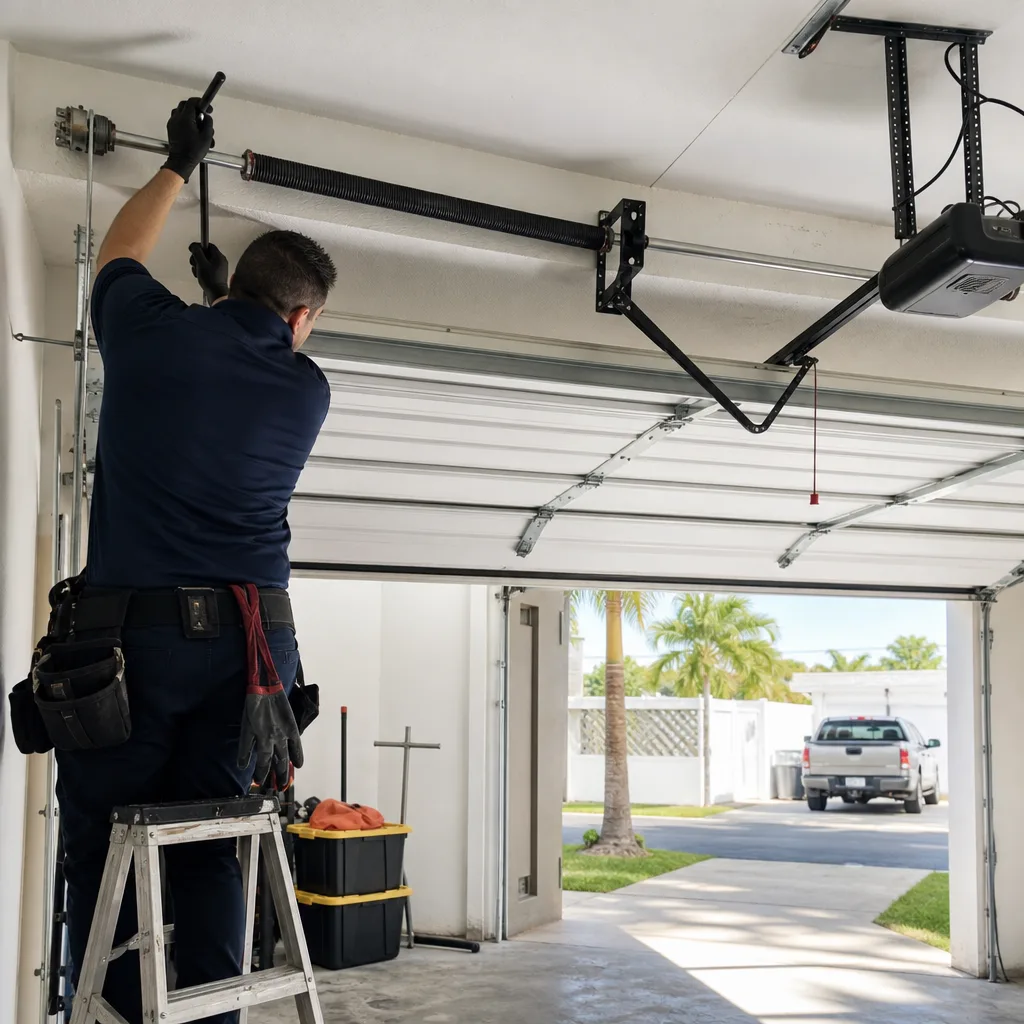 After
 Before
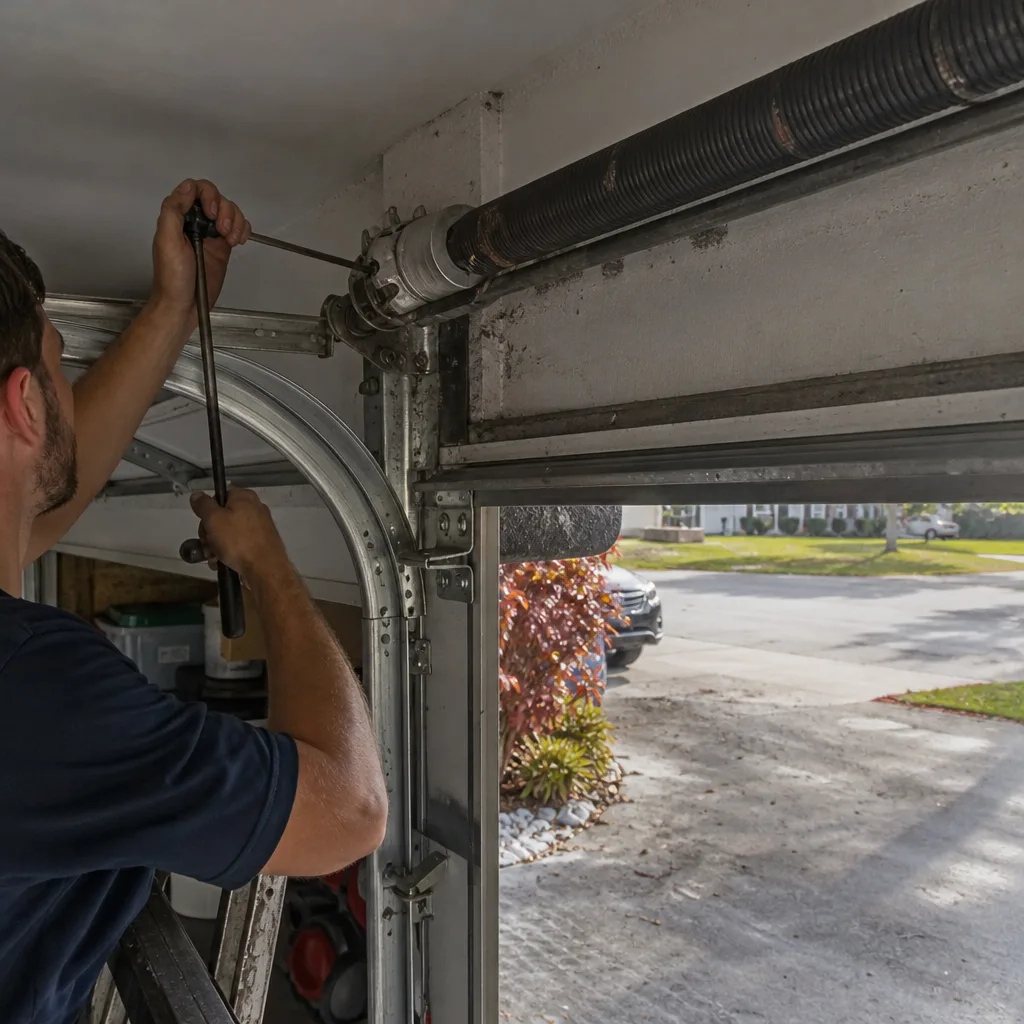
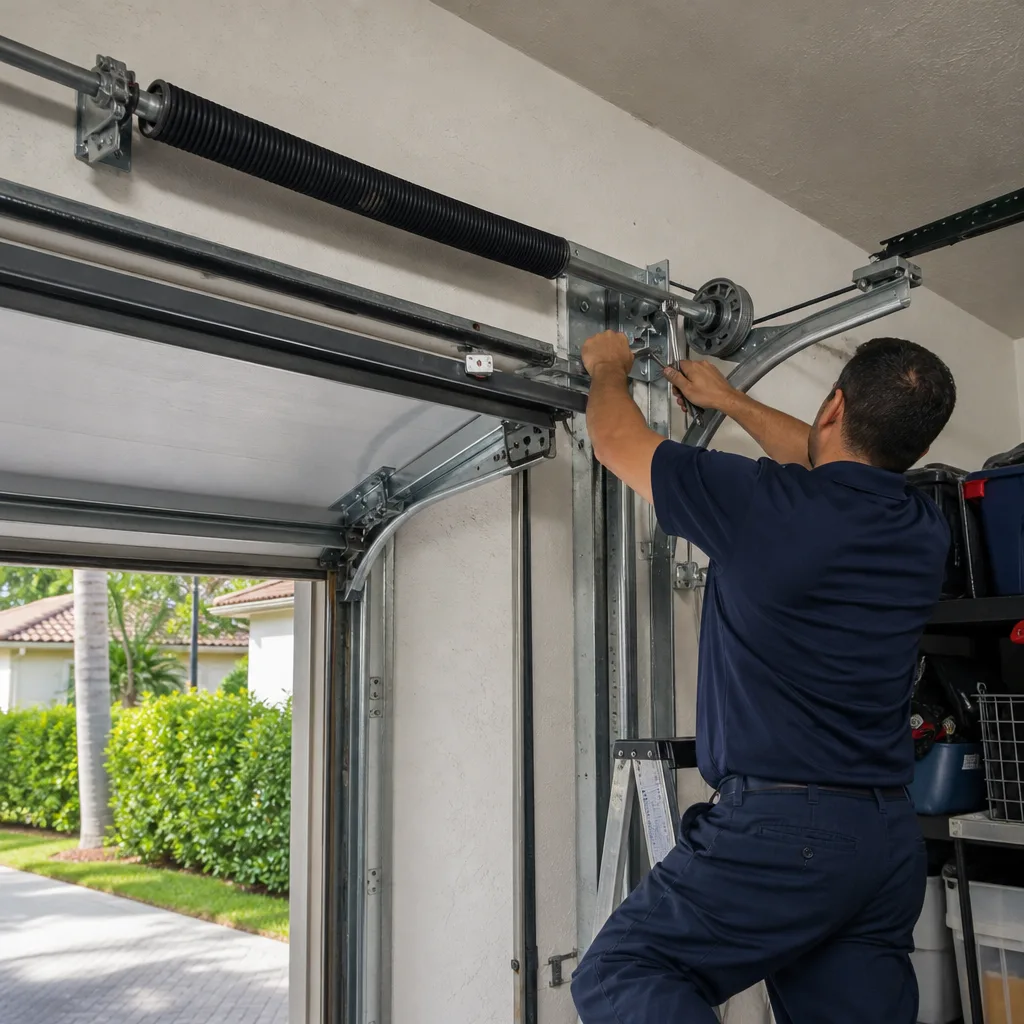 After
 Before
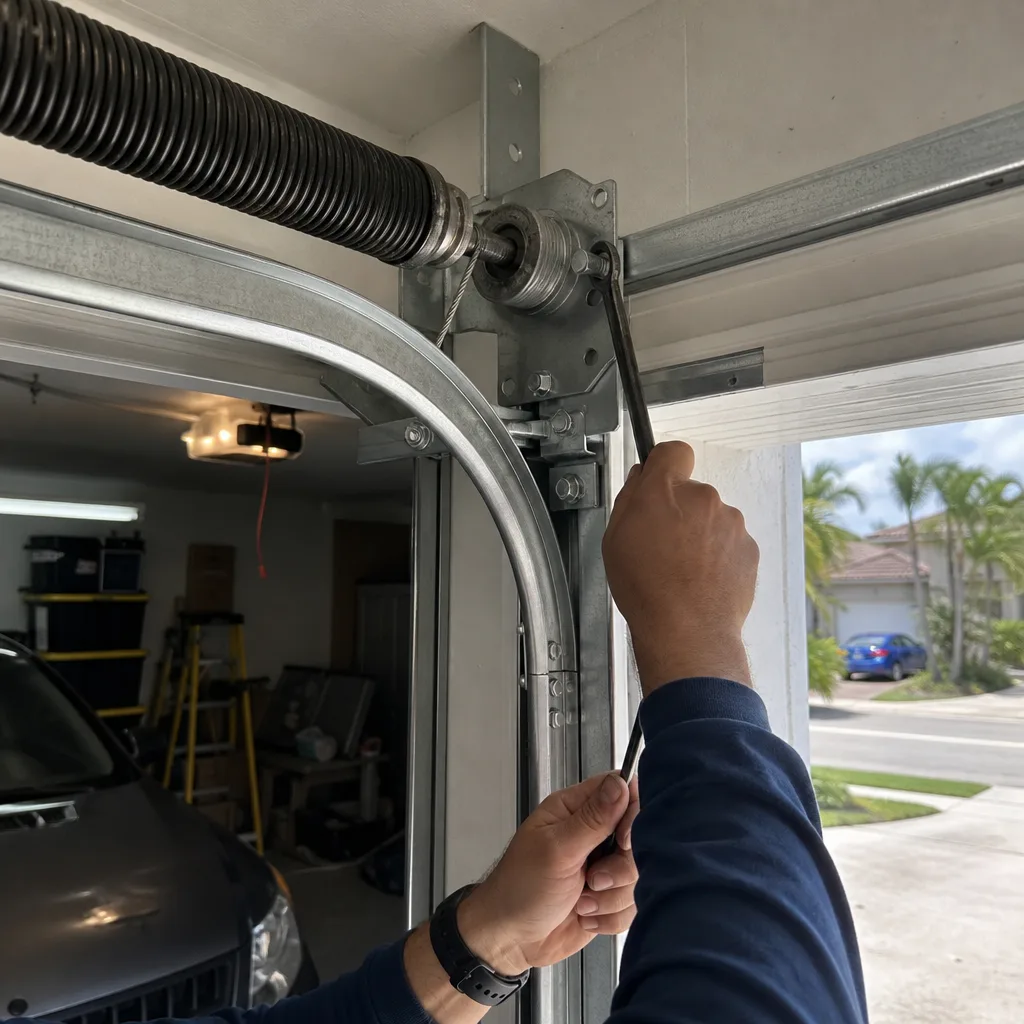 After
When to Call a Professional
Call a professional when you see cable fraying, hear spring popping, notice the door opening unevenly, or experience opener behavior that’s intermittent rather than completely dead. These are symptoms of failures that get worse rapidly. Call immediately if a spring has already snapped, because the door is now unbalanced and dangerous to operate manually. For smart-opener issues that involve the logic board or travel limits, professional diagnosis prevents replacing parts that aren’t actually the problem. Kingsway Garage Door offers free estimates in Miami. Call (866) 282-5541 and we’ll diagnose what’s actually wrong, on the door you already have, before recommending any work.
Frequently Asked Questions
Spring replacement in Miami typically costs $180-$280 for a single torsion spring and $280-$390 for a double spring on a standard residential door. The price varies by spring size, door weight, and whether the system uses conventional or torquemaster-style hardware. Call (866) 282-5541 for an exact quote before any work starts.
Yes, for spring failures and most roller, cable, and hinge repairs, same-day service is generally available across the Miami area if you call in the morning. After major storms, demand spikes and same-day may extend to next-day, so scheduling before a storm matters. Call early for the best availability.
Lubricate hinge pins and roller bearings every three months in Miami, using dry-film silicone or PTFE spray only, never grease. Coastal humidity and salt air break down lubricants faster than anywhere in the mainland US, so a quarterly schedule replaces the annual schedule most manuals recommend.
Yes. A Miami-Dade NOA rating covers wind-load performance, not the mechanical wear of springs, cables, rollers, and opener components. Hurricane-rated hardware still requires inspection and replacement on the Miami-accelerated timeline described in this guide. Post-storm inspection of struts and bracket anchors is especially important.
We work on what you have, across eight major manufacturers: LiftMaster, Chamberlain, Genie, Clopay, Amarr, Wayne Dalton, Craftsman, and Raynor. We diagnose and repair the equipment already installed rather than pushing replacement to fit a narrow brand catalog. For new installations, we offer options from multiple steel-panel manufacturers so you’re choosing from a real selection, not a single house brand.
Repair makes sense when the door panels are structurally sound and the track system is intact. Replacement makes sense when the panels themselves are corroded, warped, or no longer carrying their wind certification for your insurance. A professional inspection can tell you which side of that line your door is on. For new installation options, see our Garage Door Installation in Miami page. For repair diagnostics, start with our garage door repair service.
The Bottom Line
Miami’s garage doors fail differently, and faster, than garage doors anywhere else in the country. Salt air corrodes springs, cables, and hinges. Humidity kills opener logic boards. Hurricane wind flexes hardware in ways no mainland inspection catches. The solution is not just more maintenance; it’s the right maintenance, on the right schedule, with the right products, and a clear sense of which repairs are homeowner-safe and which require a trained professional. Document your door system now. Inspect on a Miami calendar, not a manufacturer’s calendar. And when a spring pops or a cable frays, know the number to call before the door’s already down. Kingsway Garage Door works on eight brands, diagnoses what’s actually failing, and quotes the full price before any work begins. Call (866) 282-5541 for a free estimate.
Written by the team at Kingsway Garage Door, serving Miami since 2015.