
Last updated October 30, 2026
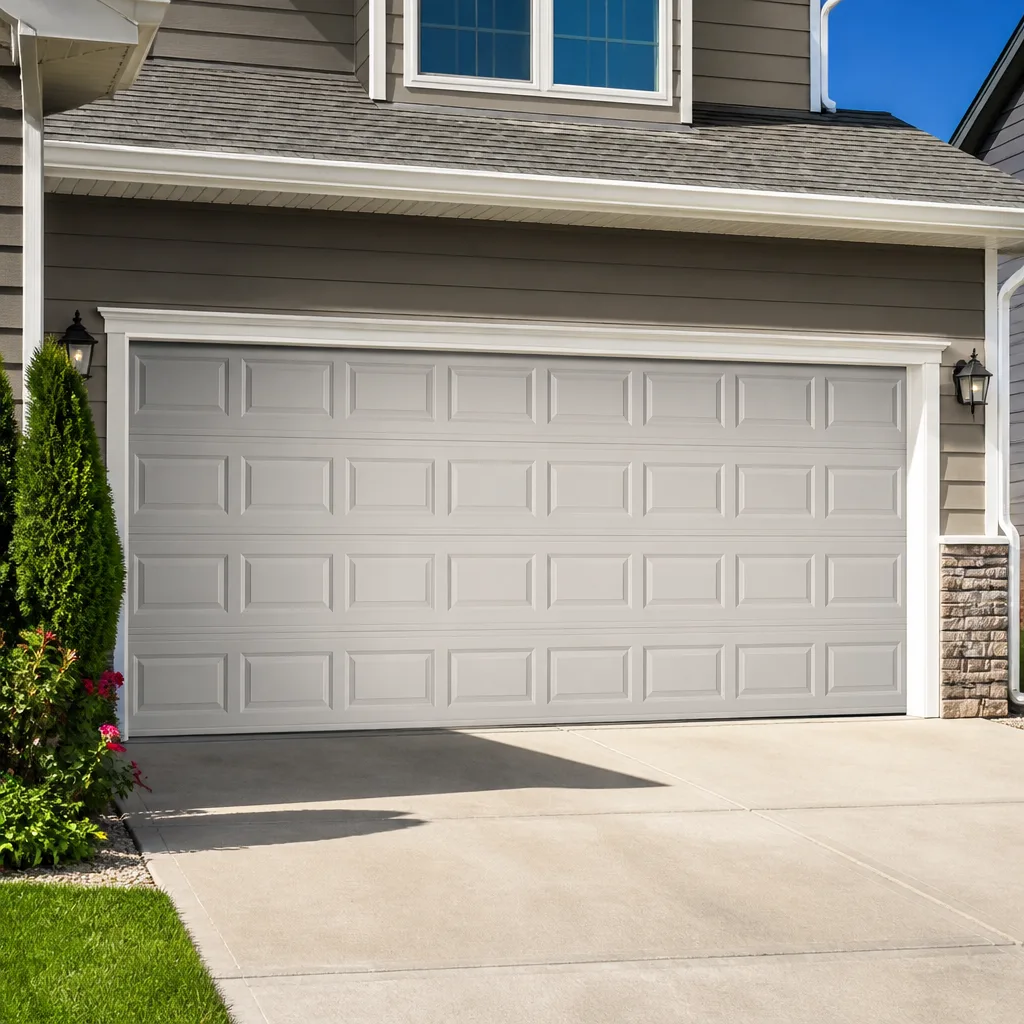 Raised-panel steel
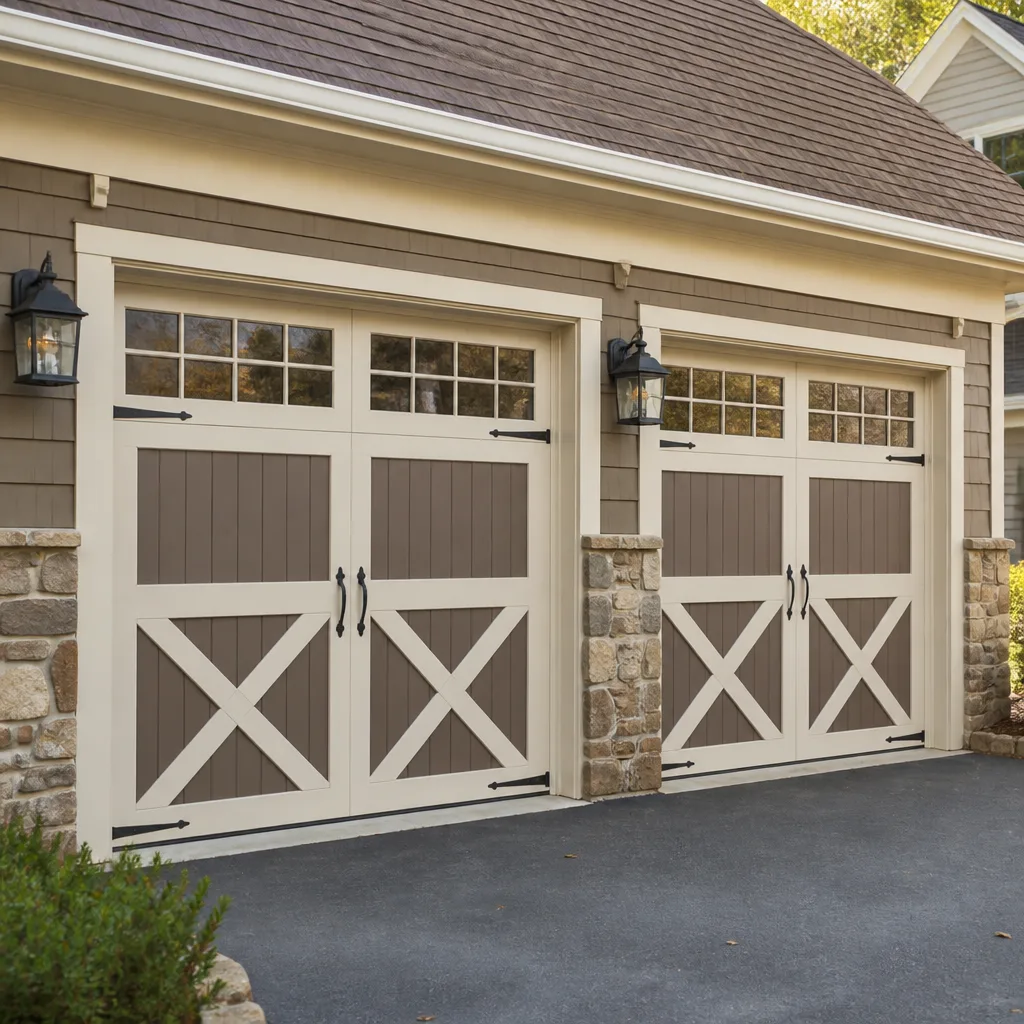 Carriage house
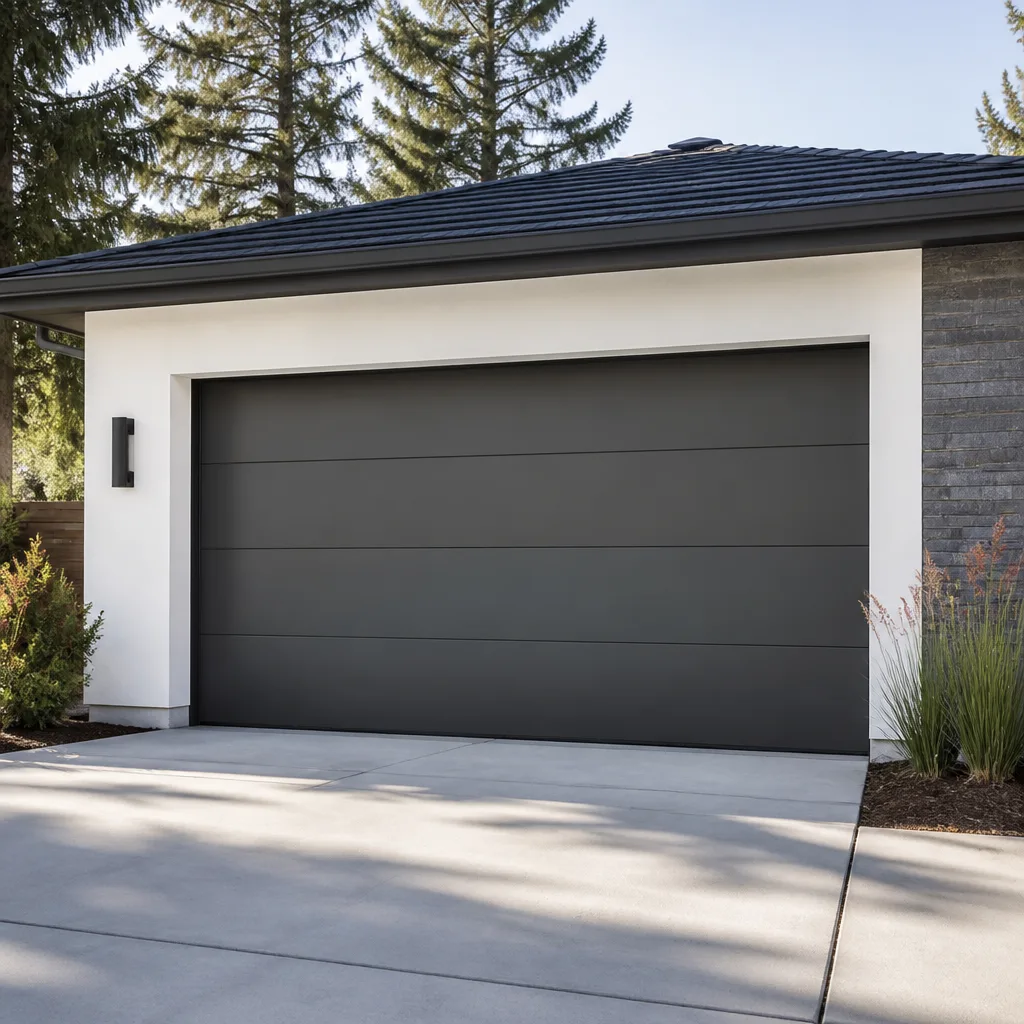 Modern flush
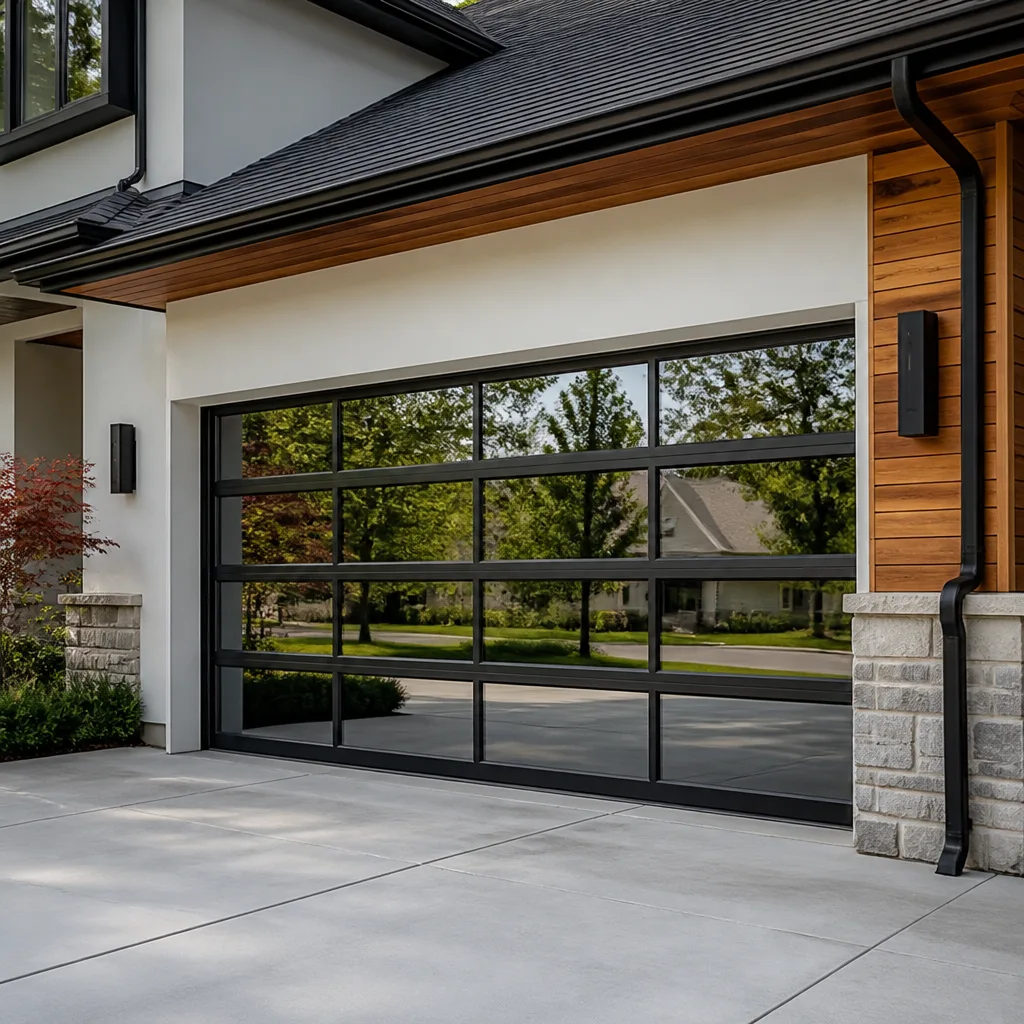 Full-view glass
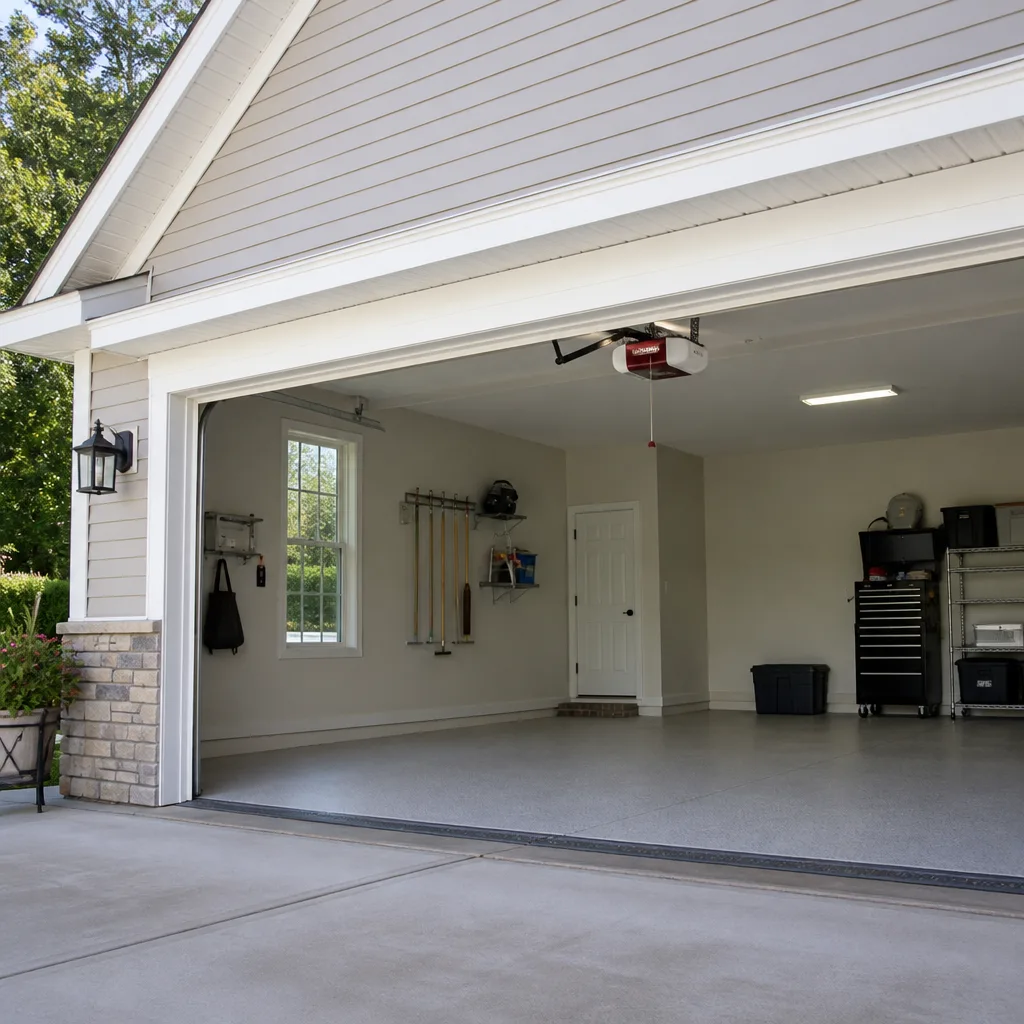 LiftMaster openers
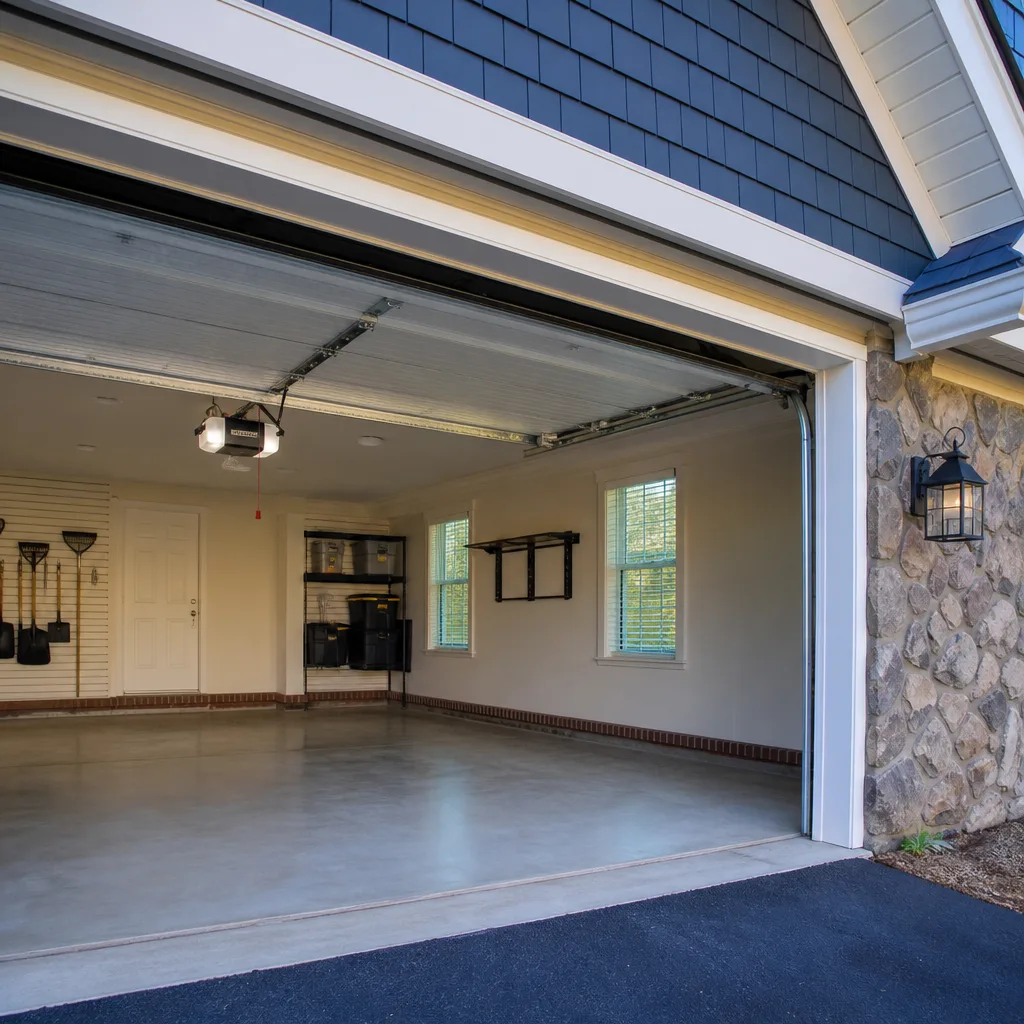 Chamberlain openers
Full 25-point door and opener safety check with every visit - springs, cables, rollers, tracks, and your LiftMaster or Chamberlain opener included
You get a price before we start. It does not change when the truck arrives.
Get your free estimateThe Complete Guide to Garage Door in Miami
Most garage door guides are written for Ohio. They talk about snow load, freezing lubricant, and rust from road salt. Miami homeowners are operating under one of the strictest wind-load requirements in the country, and generic advice can leave them with a door that fails a permit inspection, or worse, fails during a storm. This guide is different. It is written specifically for the climate, code environment, and market realities of South Florida. You’ll learn what actually matters when buying, maintaining, and repairing a garage door in Miami, from Miami-Dade Product Approval to salt-air corrosion and the brands that hold up when the wind starts blowing. For more guides & resources, explore our blog.
Quick Answer
The right garage door for a Miami home must carry Miami-Dade County Product Approval (NOA) to meet Florida Building Code wind-load requirements, resist the corrosion and UV damage unique to South Florida’s coastal climate, and be installed by someone who understands the difference between a wind-rated door and a code-compliant one. Material choice, opener selection, and maintenance habits all change when you are building 12 miles from the Atlantic instead of 1,200 miles from it. At Kingsway Garage Door home, we work across eight manufacturers so our guidance is based on what performs in Miami, not what one brand’s catalog says.
Styles & brands we work with
Table of Contents
- Why Miami-Dade Product Approval Is the First Filter
- How Salt Air, Humidity, and UV Shorten Material Lifespans
- Wind-Rated vs. Miami-Dade Approved: What Installers Get Wrong
- The 2023 Florida Building Code and Your Garage Door
- Brand and Material Performance in Miami’s Coastal Environment
- Garage Door Openers in Miami: Smart Features and Salt-Air Reality
- A Maintenance Schedule Built for South Florida
- What Garage Door Work Costs in Miami
Why Miami-Dade Product Approval Is the First Filter
Before you look at color, insulation value, or price, you need to know whether a garage door is approved for installation in Miami-Dade County. The county maintains its own product approval system, often called an NOA (Notice of Acceptance), and it is stricter than anything else in the country. A door that is legal in Broward, in Palm Beach, or anywhere else in the United States may not be legal in Miami.
The reason is wind. Miami-Dade sits in a High Velocity Hurricane Zone (HVHZ), and the Florida Building Code requires that any garage door installed here be tested to withstand the positive and negative wind pressures generated by a Category 5 hurricane. That testing is done on the entire assembly: the panels, the track, the hardware, and the anchoring. A door can have wind-rated panels and still fail the assembly test because the track pulled out of the wall or the hinges sheared.
What this means for you as a homeowner is simple:
- If you are installing a new door, demand the NOA number. It should be printed on the product or available from the manufacturer.
- If a contractor tells you a door is “hurricane rated” but cannot produce an NOA, walk away. The term “hurricane rated” has no legal meaning in Miami-Dade.
- If you have an existing door that predates the current code, you are generally not required to replace it unless you are doing a major renovation, but any new installation must comply.
The permit process enforces this automatically. No licensed contractor in Miami will pull a permit for a non-approved door, because the inspection will fail on the spot. The NOA is not a marketing badge. It is the document that says your door was actually tested, actually held, and actually belongs on a house in this county.
How Salt Air, Humidity, and UV Shorten Material Lifespans
Every garage door material has a national average lifespan. Ignore those numbers in Miami. The combination of salt air, persistent humidity, and intense year-round UV exposure changes how each material ages, and the differences are dramatic enough that they should influence what you buy.
Steel is the most common garage door material in the country, and it works in Miami, but only if the finish is right. Salt air attacks steel at the edges first: the bottom of each panel, the cut edges around windows, and anywhere the paint or powder coat has been scratched. Once rust starts at a seam, it creeps under the finish. We regularly see steel doors in coastal neighborhoods like Key Biscayne and Coral Gables develop rust blooms within four to five years when the door was not manufactured with a marine-grade primer. Inland neighborhoods like Kendall or Doral get more time, but the humidity still works on any exposed steel.
Aluminum does not rust, which makes it a popular choice near the coast, but it has its own issue: galvanic corrosion. When aluminum hardware or panels come into contact with dissimilar metals in the presence of salt water, one metal eats the other. The fix is proper isolation with nylon washers and coated fasteners, which not every installer bothers with, because that level of care is not required in most of the country.
Wood doors are a statement, and they exist in Miami, but they demand a finish schedule that most homeowners will not keep up. Refinishing every 12 to 18 months is realistic, not conservative. Even then, the bottom section gets hit with splash-back from rain and salt spray, and the joints swell and contract with the humidity cycle.
Fiberglass and composite doors handle the environment better than wood and do not corrode like steel, but UV exposure fades and embrittles cheaper fiberglass panels over time. The material matters less than the grade. In our experience across eight brands, the finish quality and factory sealing matter more than the panel material itself. A properly treated steel door from a quality manufacturer will outlast a cheap fiberglass panel that has been baking in Miami sun for five years.
Wind-Rated vs. Miami-Dade Approved: What Installers Get Wrong
There is a distinction that even some contractors blur: a wind-rated door is not automatically a Miami-Dade approved door. Wind-rated means the manufacturer designed the door to withstand a certain design pressure, usually expressed in pounds per square foot (psf). Miami-Dade approval means the entire assembly, including the installation method, was tested by an independent lab and accepted by the county.
The difference shows up in the field. We have been called to reinspect doors where the panels carried a wind-load sticker, but the track was mounted with standard lag screws into a stucco wall with no reinforcement. That installation would never have passed testing, because the testing does not just look at the door: it tests the connection to the structure.
Here is how to check without becoming a code expert:
- Ask for the NOA number and look it up on the Miami-Dade County website. It is public and searchable.
- Confirm that the installer is following the NOA installation details, not just hanging the door the way he has always hung them. The NOA typically specifies anchor type, spacing, and jamb reinforcement.
- Be suspicious if a quote seems surprisingly low. Properly installing an approved door in a masonry home takes longer than a standard install because the anchoring requirements are stricter.
The practical consequence of this distinction is that replacement doors in existing Miami homes sometimes require more work than the homeowner expected. If the original door was installed under an older code, the opening may not have the jamb reinforcement or anchor spacing the new NOA requires. That is not an upsell. That is the difference between a door that is legal and a door that is just decorative.
The 2023 Florida Building Code and Your Garage Door
The 2023 Florida Building Code, which Miami-Dade enforces with local amendments, changed how garage doors are handled in a few specific ways that affect homeowners. The most relevant changes involve impact resistance, anchoring, and the treatment of existing structures.
For new construction, garage doors must meet the same impact protection requirements as windows and entry doors. In practice, this means either a door with impact-rated glazing and panels, or a door that is protected by a separately approved impact screen or shutter system. The door itself, if it is the protection, must be tested for both large and small missile impact, which is why Miami-Dade approved doors cost more than standard doors: a 2×4 was fired at the panel at hurricane speeds, and the panel held.
For replacements in existing homes, the rule is more forgiving but not absent. The 2023 code continues to require that any replacement garage door meet current wind-load requirements for the home’s specific location and exposure category. A home right on the water in a high-exposure zone has a higher design pressure requirement than a home farther inland. A competent installer pulls the design pressure from the permit documents, confirms the door meets it, and installs to the NOA.
What has not changed: the code does not require you to replace a functioning pre-code garage door just because the code was updated. You can repair an existing door without triggering a full code upgrade, as long as the repair does not amount to a full replacement. That line is drawn by the building department, and it is why Garage Door Repair in Miami sometimes means a panel replacement on an existing door rather than a code-compliant full swap. Knowing which is which requires a diagnostic eye, not a sales script.
Brand and Material Performance in Miami’s Coastal Environment
We service and install across eight manufacturers: LiftMaster, Chamberlain, Genie, Clopay, Amarr, Wayne Dalton, Craftsman, and Raynor. That breadth gives us an honest read on what holds up in Miami, because we see how each brand ages after five and ten years of salt and sun, not just how it looks on day one.
Among steel panel doors, the finish system is the single biggest predictor of lifespan in our climate. Doors with a thicker factory-applied finish, sealed edges, and rust-resistant hardware outlast doors with thin finishes by a wide margin, and the difference shows fastest in neighborhoods within a mile of Biscayne Bay, where salt spray is a constant. Wayne Dalton and Raynor both offer galvanized steel track and hardware as standard on many lines, which matters here more than it does inland.
Amarr and Clopay both offer doors tested for Miami-Dade conditions, with models covering the range from basic non-insulated panels to fully insulated sandwich construction. The insulated doors, in addition to thermal performance, are significantly more resistant to denting from wind-borne debris, which is a real consideration when a storm sends a palm frond at your door at 90 mph.
For openers, the dominant brands in Miami are LiftMaster and Chamberlain, which share a parent company and the myQ platform, and Genie, which runs the Aladdin app for smart-home users. The electronics and motors are largely comparable in reliability. The differentiator in our experience is how the remote and logic board handle the heat. Garage interiors in Miami regularly exceed 100 degrees in the summer, and opener logic boards that sit in direct sun on a west-facing garage wall fail faster than those in shaded or insulated spaces. This is a Miami-specific failure mode that national review sites rarely mention.
The brand-agnostic advice is this: choose your door based on the NOA and the finish quality, not the name on the panel, and choose your opener based on which smart ecosystem you already use. A LiftMaster myQ opener works seamlessly with Chamberlain and Craftsman myQ accessories, while Genie’s Aladdin system is its own platform. We work on all of them, so our recommendations are based on your home and your setup, not on a sales quota.
Garage Door Openers in Miami: Smart Features and Salt-Air Reality
Garage door openers fail in predictable ways in South Florida, and most of those failures have nothing to do with the motor. The motor is the reliable part. What fails in Miami is the logic board, the remote receiver, and the wall console, all of which are more sensitive to heat, humidity, and power surges than the manufacturer’s national marketing materials suggest.
Power surges are a significant factor in Miami thanks to summer thunderstorms. An opener plugged directly into the wall with no surge protection can lose its logic board in a single storm. The symptom is usually a completely dead opener, no lights, no response, or a motor that runs but will not respond to remotes. A quality surge protector or a whole-home surge device is cheap insurance, and it should be standard practice for any Miami garage. For a complete plan, see our Garage Door Emergency Preparedness Guide for Miami Homes.
Wi-Fi connectivity has become standard on new openers, and both of the major ecosystems, LiftMaster/Chamberlain with myQ and Genie with Aladdin, work well for most Miami homeowners. The practical consideration is that a smart opener in a detached garage with weak Wi-Fi will drop connection, and no app can fix a weak signal. If your router is at the front of the house and your garage is at the back of a CBS-block home, expect to add a range extender or mesh node.
Salt air does not typically kill opener motors directly; the motor housing is sealed well enough on quality units. What it attacks are the exposed metal parts: the rail, the chain, and the hardware. A chain-drive opener installed within sight of the ocean will develop surface rust on the chain within a couple of years. That does not mean it is about to break, but it does mean you should keep the chain lightly lubricated and clean, and you should expect to replace the chain or the entire rail assembly before the motor itself gives up.
If your opener is grinding, jerking, or refusing to respond, the right move is a proper diagnosis, because throwing a new remote battery at a logic board failure wastes time. Garage Door Opener Repair in Miami is one of our core services, and a diagnostic visit is faster and cheaper than buying a new opener you may not need.
A Maintenance Schedule Built for South Florida
Garage door maintenance advice written for northern climates recommends lubricating the rollers and hinges once a year. In Miami, the humidity and salt air make a twice-yearly schedule more realistic, and the most important tasks are slightly different than what the national guides emphasize.
Here is a practical schedule for a Miami garage door, based on what we actually see in the field:
- Every six months: Lubricate rollers, hinges, and springs with a lithium-based or silicone spray. Avoid WD-40; it displaces moisture but does not leave a lasting lubricant, and it can degrade nylon rollers.
- Every six months: Inspect the bottom seal for cracking, flattening, or salt crusting. A failed bottom seal lets water in during rain events, which in Miami means standing water on your garage floor and accelerated rust on the door’s bottom panel.
- Annually: Check all exposed hardware for rust, especially the track brackets, spring anchor plates, and hinge pins. Surface rust can be cleaned and coated. Deep rust on load-bearing hardware means replacement.
- Annually: Run the opener’s auto-reverse test with a roll of paper towels or a 2×4 block. If the door does not reverse on contact, the opener’s force settings are off, and that is a safety issue, not a maintenance issue.
- Every two years: Inspect the spring balance. Disconnect the opener and lift the door manually to half height. It should stay put. If it drops, the springs are losing tension and will fail, eventually.
- Before hurricane season each May: Reinspect all of the above, and consider a professional inspection if your door is more than 10 years old or has been through a major storm. Wind and debris take a toll that is not always visible from the inside.
One Miami-specific note: do not pressure-wash your garage door with salt water from a coastal canal or the bay. It seems harmless, but you are driving salt into the hardware and the panel seams. Rinse with fresh water if you must wash it at all, and keep the spray away from the seals and the opener sensor.
What Garage Door Work Costs in Miami
Costs in Miami run higher than national averages for a few structural reasons: the NOA requirement narrows the field of acceptable doors, the permitting process adds time and fees, and the labor market for qualified installers who actually know Miami-Dade code commands a premium. Understanding the ranges before you start shopping—see our Garage Door Cost Breakdown: The Miami Homeowner’s Reference for 2026—will save you from overpaying on one end or getting a dangerously cheap install on the other.
Here are realistic ranges for common projects in Miami, based on current market conditions:
- Single door spring repair: $180 to $340, depending on spring type (torsion vs. extension) and cycle rating. Torsion springs are standard on Miami-Dade approved doors and cost more, but they are also much safer when they fail.
- Full door replacement (non-insulated steel): $1,200 to $2,500 installed, assuming a Miami-Dade approved door and proper anchoring. Permit fees typically add $150 to $300.
- Full door replacement (insulated steel or composite): $2,200 to $4,500 installed, with the higher end covering better finishes and higher design pressure ratings for coastal exposure zones.
- Opener replacement: $350 to $750 installed, depending on drive type, motor rating, and smart features. A myQ or Aladdin-equipped opener sits at the higher end.
- Opener repair (logic board, gear, or sensor): $120 to $300, depending on the part and the opener’s age. Older Craftsman and Genie units often cost more to repair than a basic new Chamberlain, and we tell you that before you commit.
- Full installation of a new door and opener together: $1,500 to $5,000, which is the widest range because the variables are material, insulation, wind rating, and opener features.
These are broad ranges, not quotes. Your exact price depends on the size of the opening, the exposure category of your home, and the specific door you choose. What should not vary is the practice of agreeing on a price before any work begins. Any contractor who will not give you a firm written quote before starting is not a contractor you want on a structural component of your home. At Kingsway Garage Door, every quote is discussed and agreed upon before we touch your door.
Common Mistakes to Avoid
- Buying a door without checking the NOA. This is the single most common and most expensive mistake we see. A door ordered online or from a big-box store without Miami-Dade approval cannot be legally installed here, and returning it is on you.
- Treating “hurricane rated” as the same thing as code-compliant. Hurricane rated has no legal definition. The NOA is the only document that matters in Miami-Dade.
- Ignoring the bottom seal until water is already on the floor. Miami rain comes in sheets, and a failed seal can mean standing water, rust, and mold, all of which are more expensive than a $30 seal replacement.
- Pressure-washing the door with canal or bay water. Salt spray is bad enough without actively spraying salt water into the hardware.
- Replacing the whole door when only a panel or a spring failed. A competent diagnostic might save you $1,000 or more. Cheap technicians quote replacements because replacements are easier. We diagnose first.
- Skipping the permit on a new installation. Unpermitted work can come up in a home sale, an insurance claim, or a post-storm inspection, and it is always more expensive to fix afterward than to do right the first time.
- Choosing an installer based on price alone. A door installed to NOA standards in a Miami home takes longer and costs more than a generic install because the anchoring is different. The cheaper quote is often cheaper because the installer is skipping the anchoring, not because he is more efficient.
See the difference
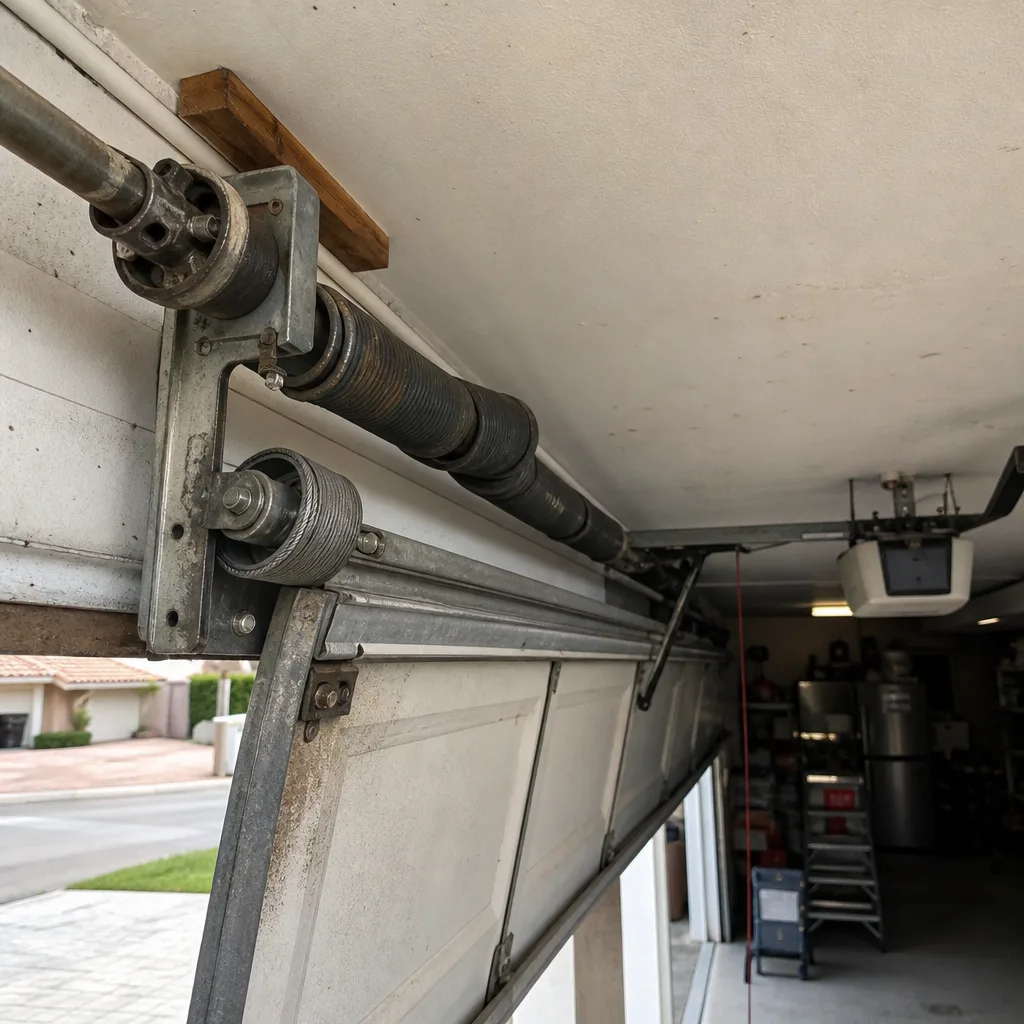 Before
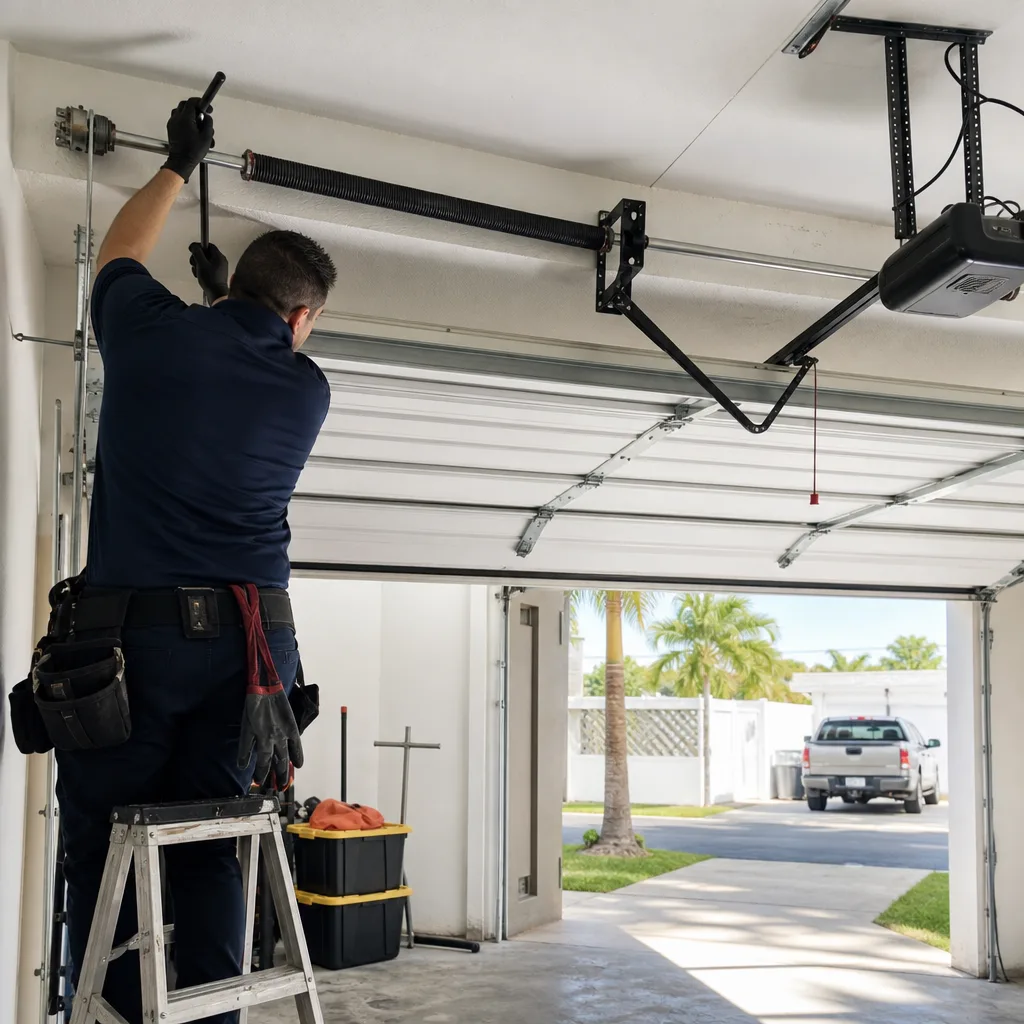 After
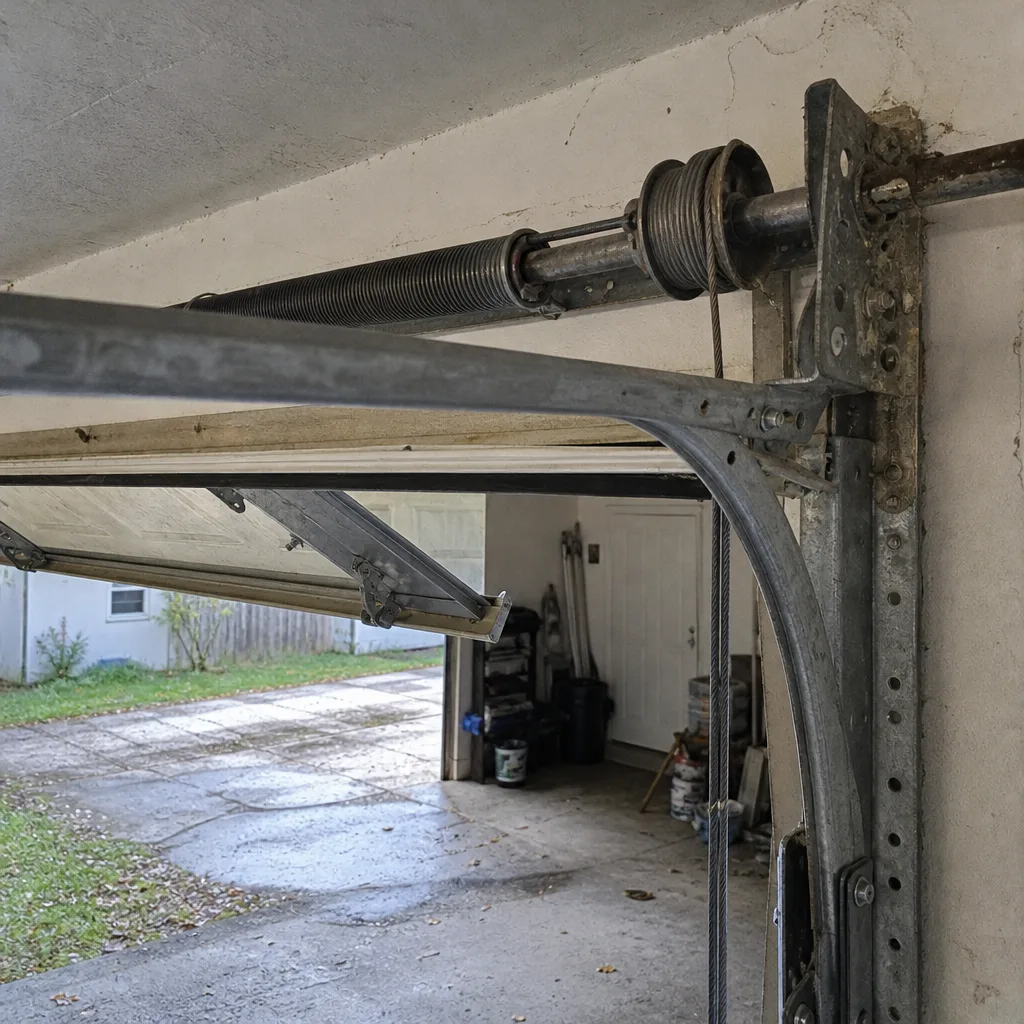 Before
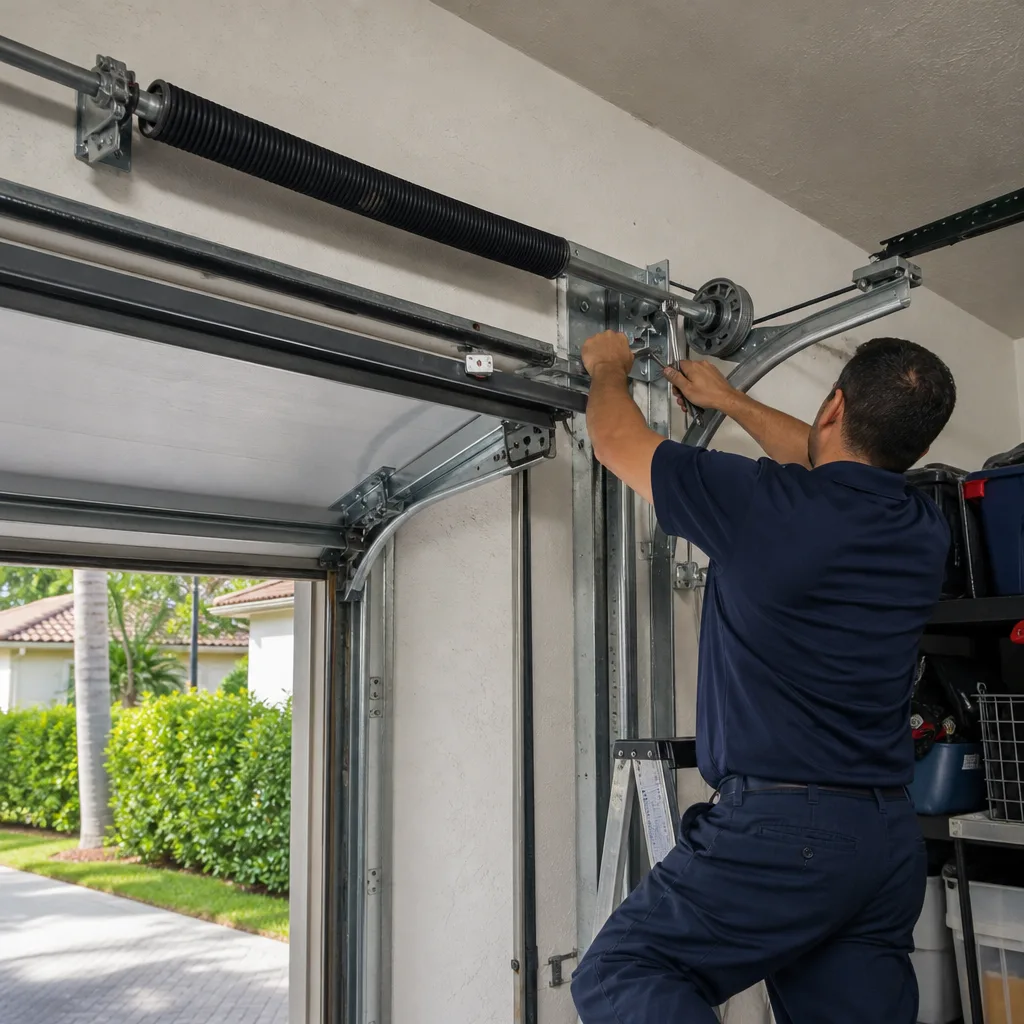 After
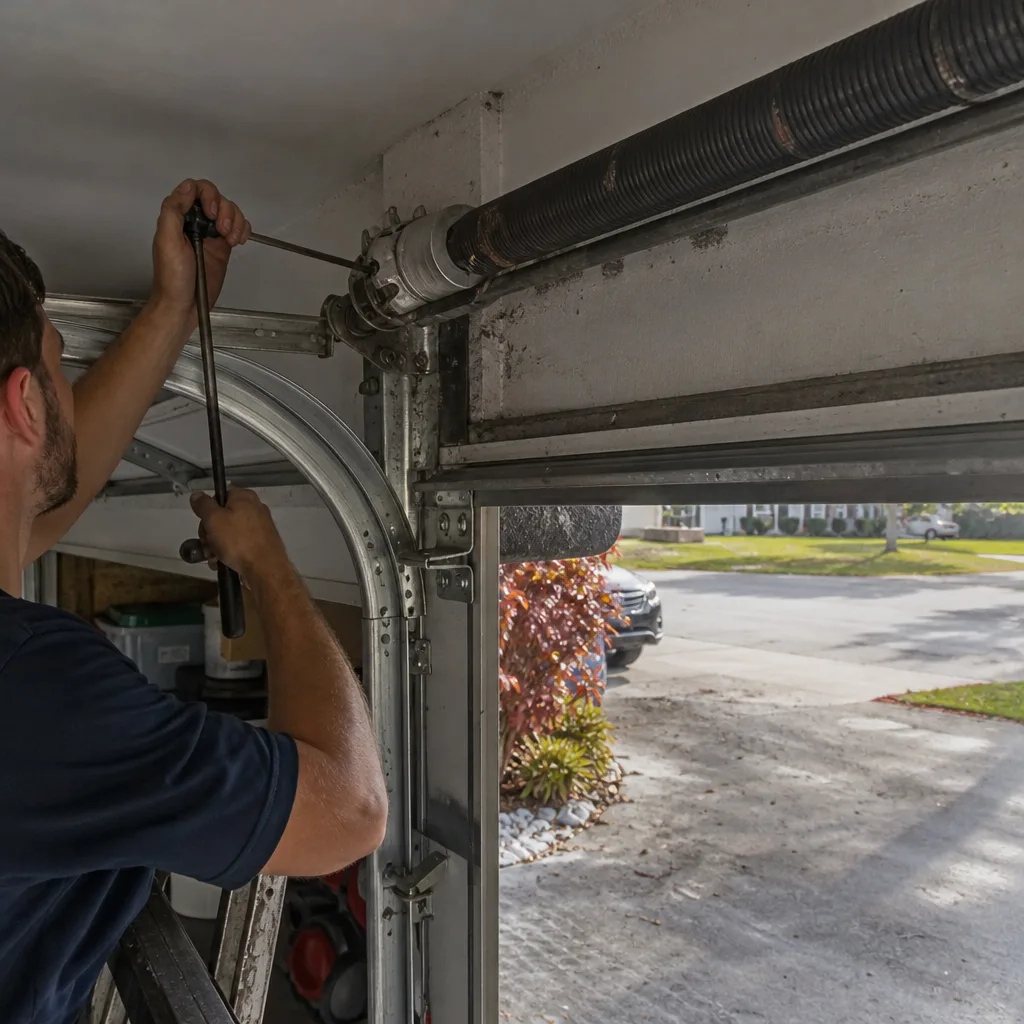 Before
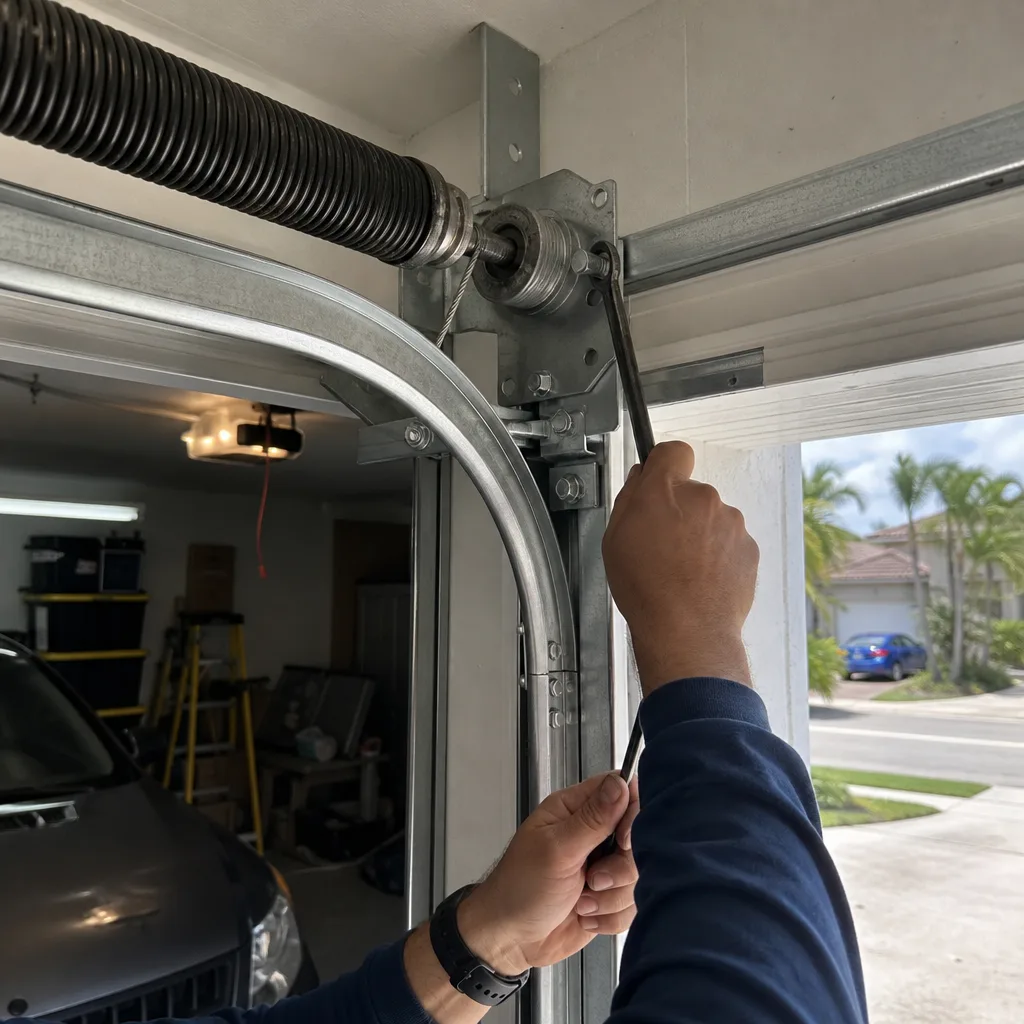 After
When to Call a Professional
A garage door is the largest moving object in your home, and the springs that counterbalance it are under enough tension to cause serious injury if they let go. If your door is off its tracks, if a spring has snapped, if the cables are frayed, or if the door will not open or close evenly, call a professional. Do not attempt to re-tension a spring or re-set a cable yourself; that is not a matter of convenience, it is a matter of not getting hurt. See our DIY vs Professional Garage Door: The Miami Homeowner’s Decision Guide for a fuller breakdown of what is safe to handle yourself.
You should also call a professional before buying a replacement door, because the NOA requirements and the exposure category of your specific home are not things a homeowner can determine from a product page. Kingsway Garage Door offers free estimates in Miami. Call (866) 282-5541 and we will assess your door, your opening, and your code requirements before you spend a dollar.
Frequently Asked Questions
Miami-Dade Product Approval, or NOA, is a county-level certification that a garage door assembly has been tested and approved to withstand the wind pressures required by the High Velocity Hurricane Zone code. Without it, a door cannot be legally installed in Miami-Dade, and no permitted installation will pass inspection. If you are replacing a door, the NOA is the first thing to confirm, before price, style, or material.
A Miami-Dade approved replacement door typically costs $1,200 to $4,500 installed, depending on material, insulation, and wind rating. The range is wider than national averages because NOA-compliant doors and proper anchoring add real cost. Call (866) 282-5541 for an exact quote on your specific opening; estimates are free.
No. The Miami-Dade NOA requirement applies countywide, not just to coastal properties. Homes farther inland have different design pressure requirements than homes on the water, but every new garage door installation in the county still requires an approved product. Your specific exposure category determines which approved doors are suitable for your address.
In Miami’s salt air and humidity, a quality steel door with a marine-grade finish typically lasts 15 to 20 years with proper maintenance, while a budget door with a thin finish may show significant rust and require replacement in 8 to 12. Aluminum and composite doors can last longer near the coast if installed with proper corrosion isolation, and wood doors require constant refinishing to reach even 10 years.
Most summer opener failures in Miami are caused by heat, humidity, or power surges, not motor wear. Logic boards fail faster in hot garages, especially west-facing walls, and lightning from thunderstorms can damage an unprotected unit in a single strike. If your opener has intermittent problems or just died, call us for a diagnostic before replacing it; many failures are repairable.
Yes, a new garage door installation in Miami-Dade requires a permit, and the inspection verifies that the door and its installation comply with the NOA and the Florida Building Code. Repairs to an existing door, such as spring replacement or panel repair, typically do not require a permit. If a contractor offers to install a new door without a permit, that is a red flag.
The Bottom Line
Your garage door in Miami is not a simple purchase, and treating it like one costs money. The NOA requirement, the salt air, the humidity cycling, and the 2023 Florida Building Code all shape what you should buy and how it should be installed. The brands that perform here are the ones with quality finishes and tested assemblies, not the ones with the biggest marketing budgets. And the installer you choose matters as much as the door, because a properly anchored, code-compliant installation is what separates a door that protects your home in a storm from a door that becomes a liability. Get the NOA right, maintain for salt and sun, and call a professional who installs to Miami-Dade code when it is time to replace.
Written by the team at Kingsway Garage Door, serving Miami since 2015.