Last updated October 30, 2026
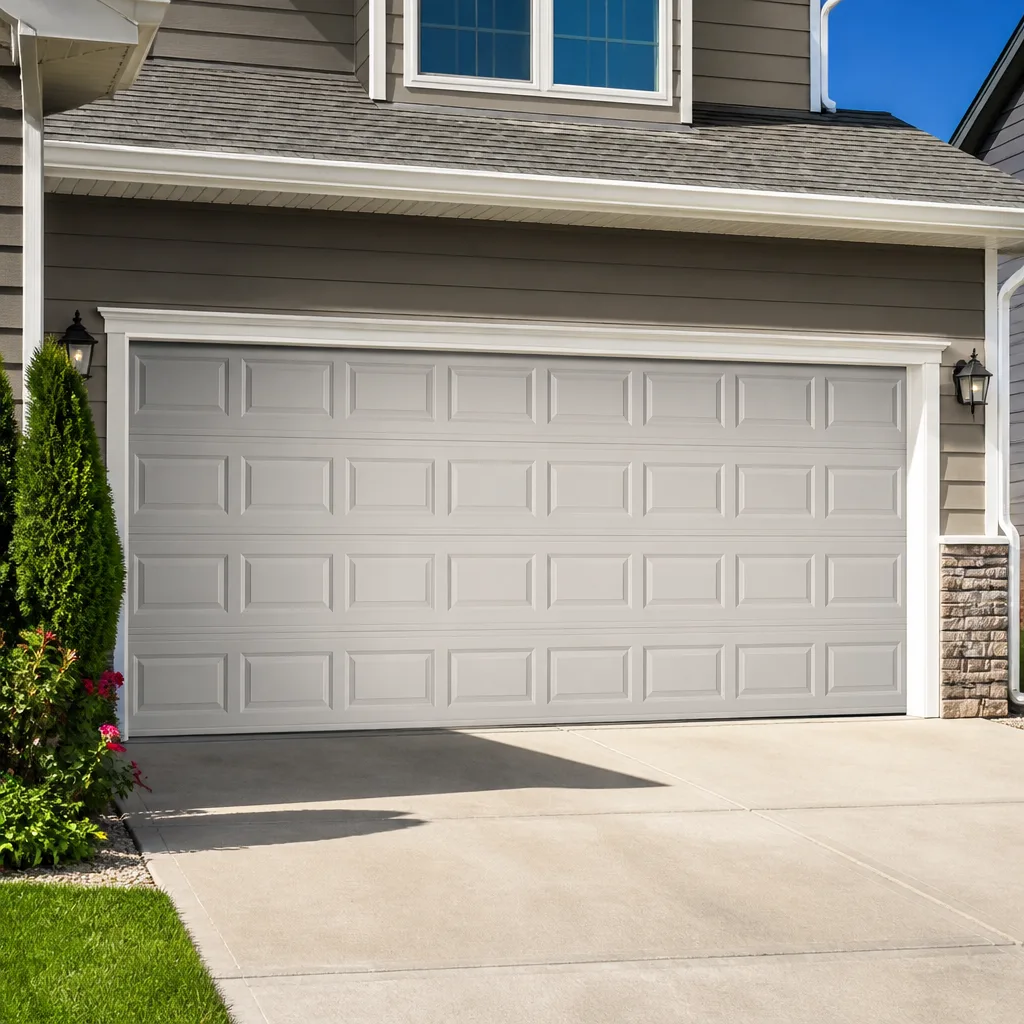 Raised-panel steel
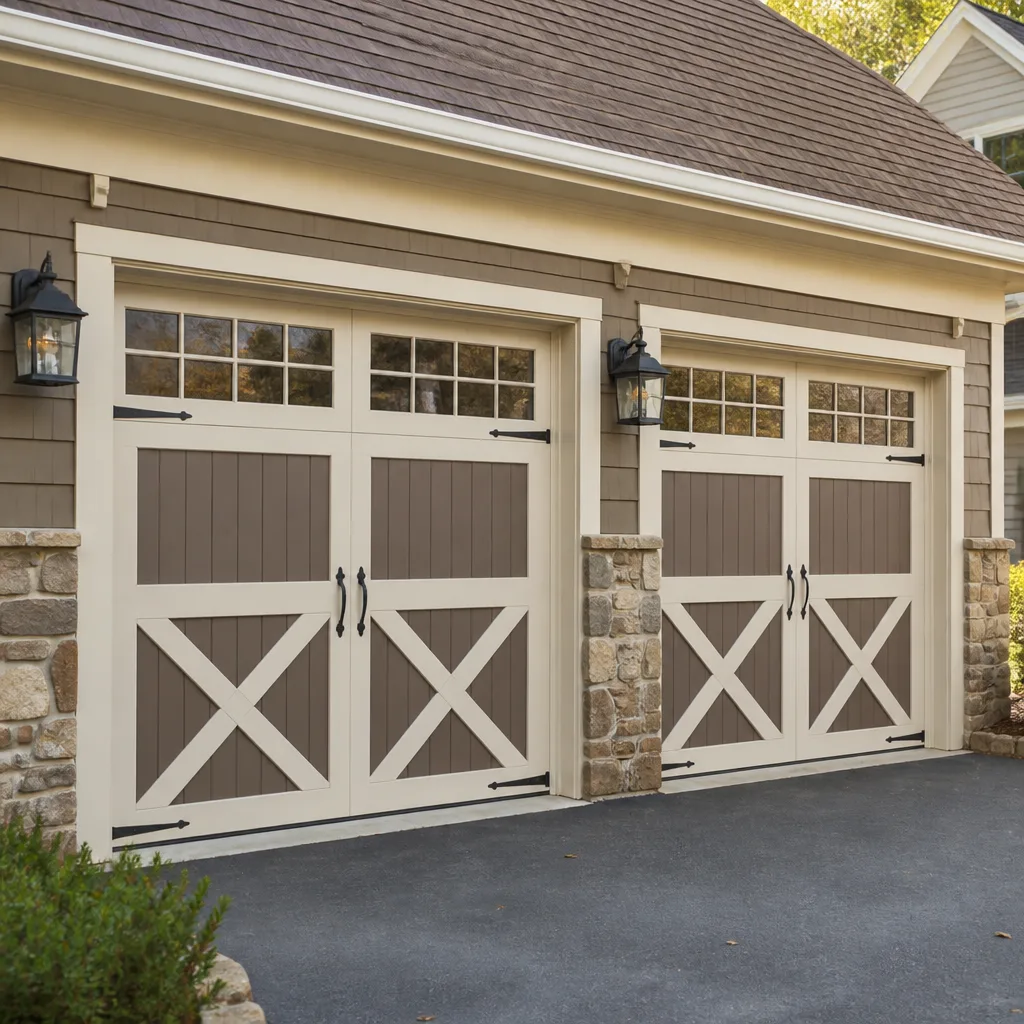 Carriage house
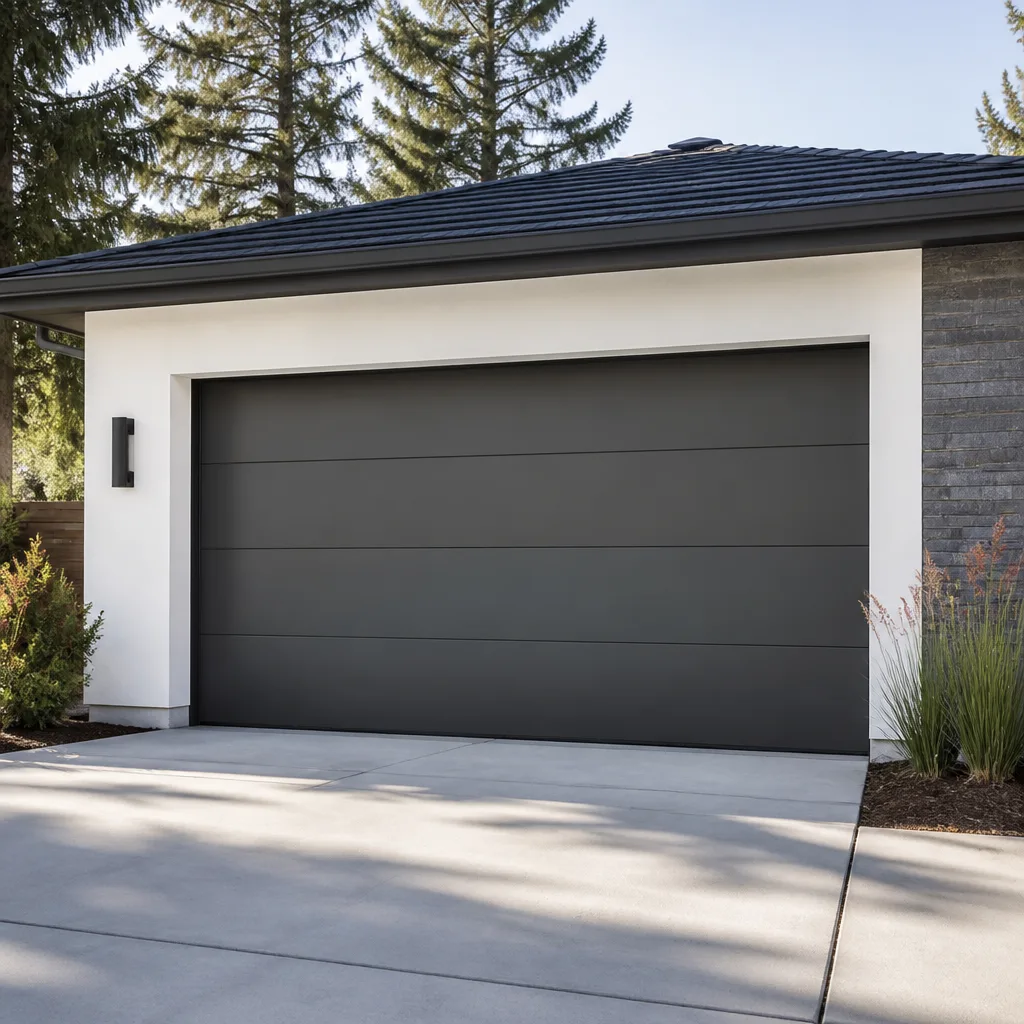 Modern flush
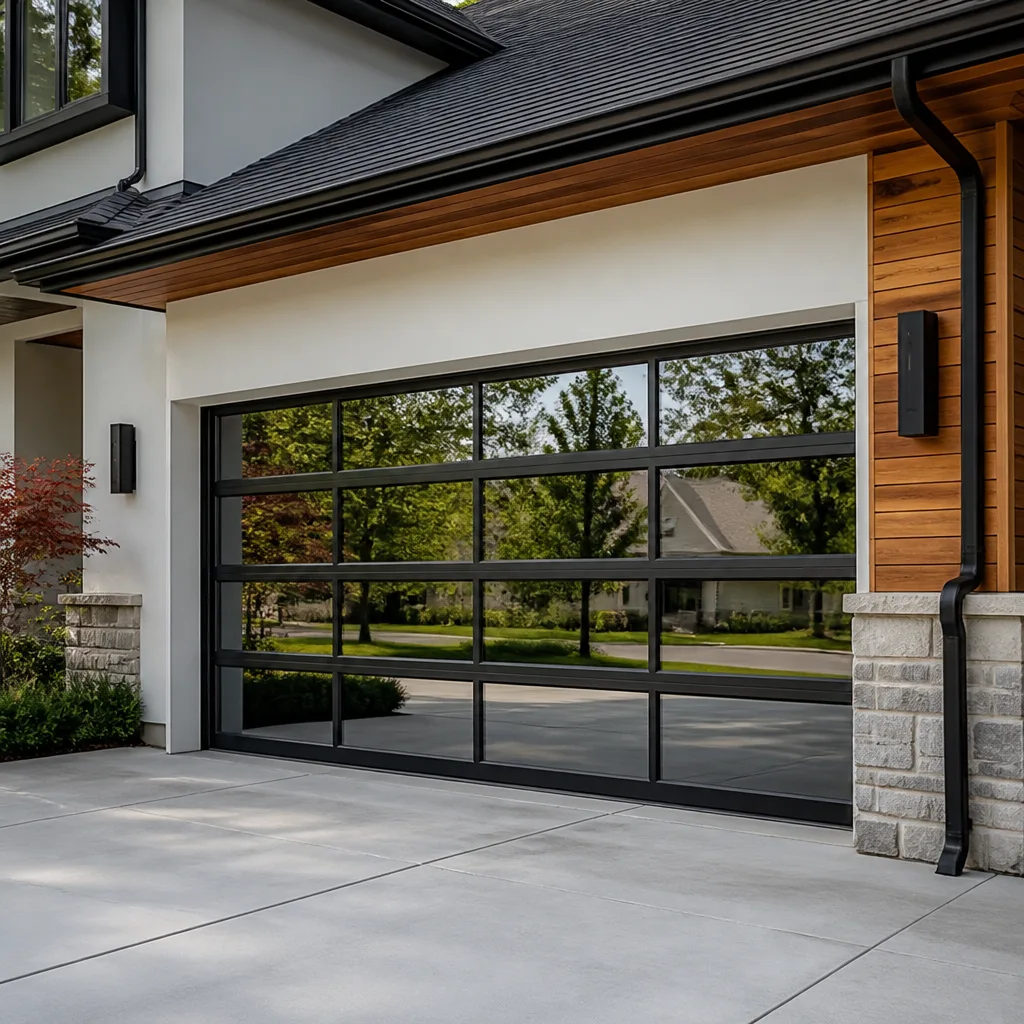 Full-view glass
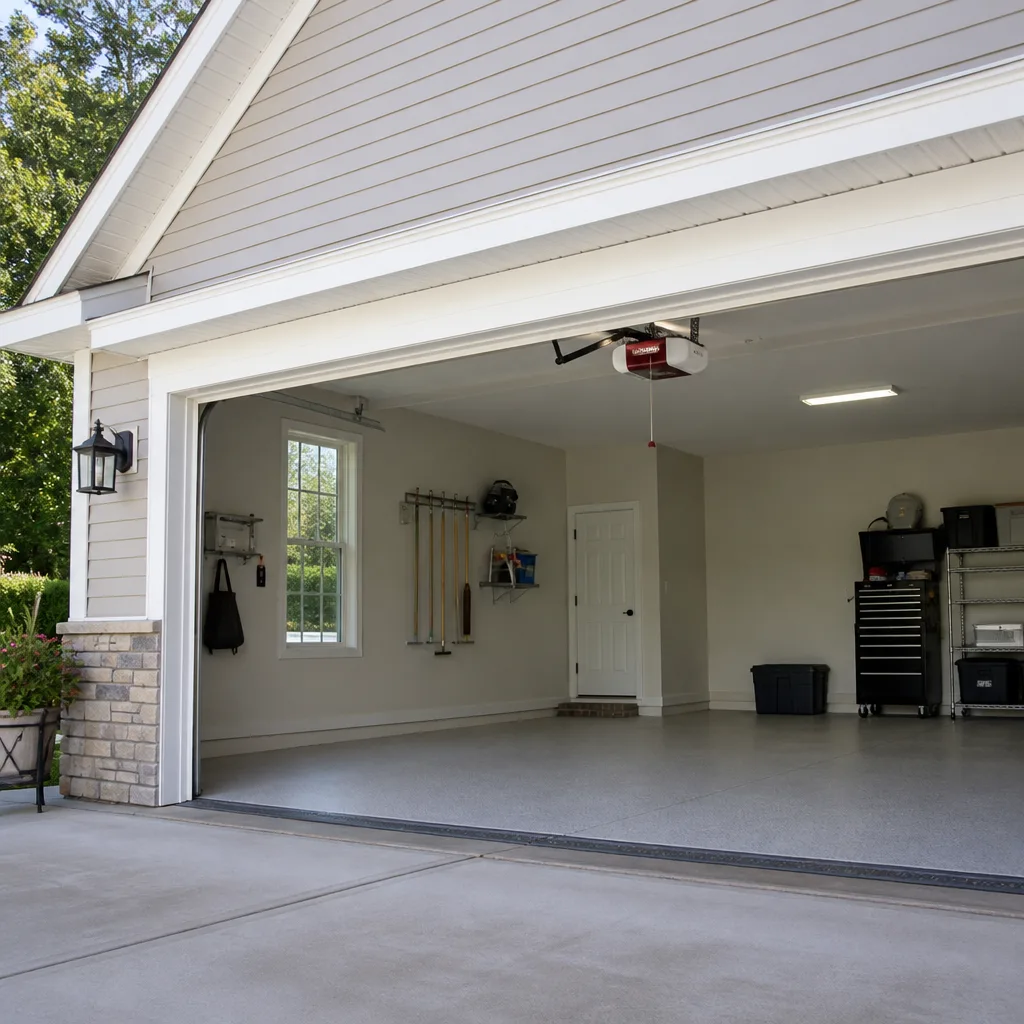 LiftMaster openers
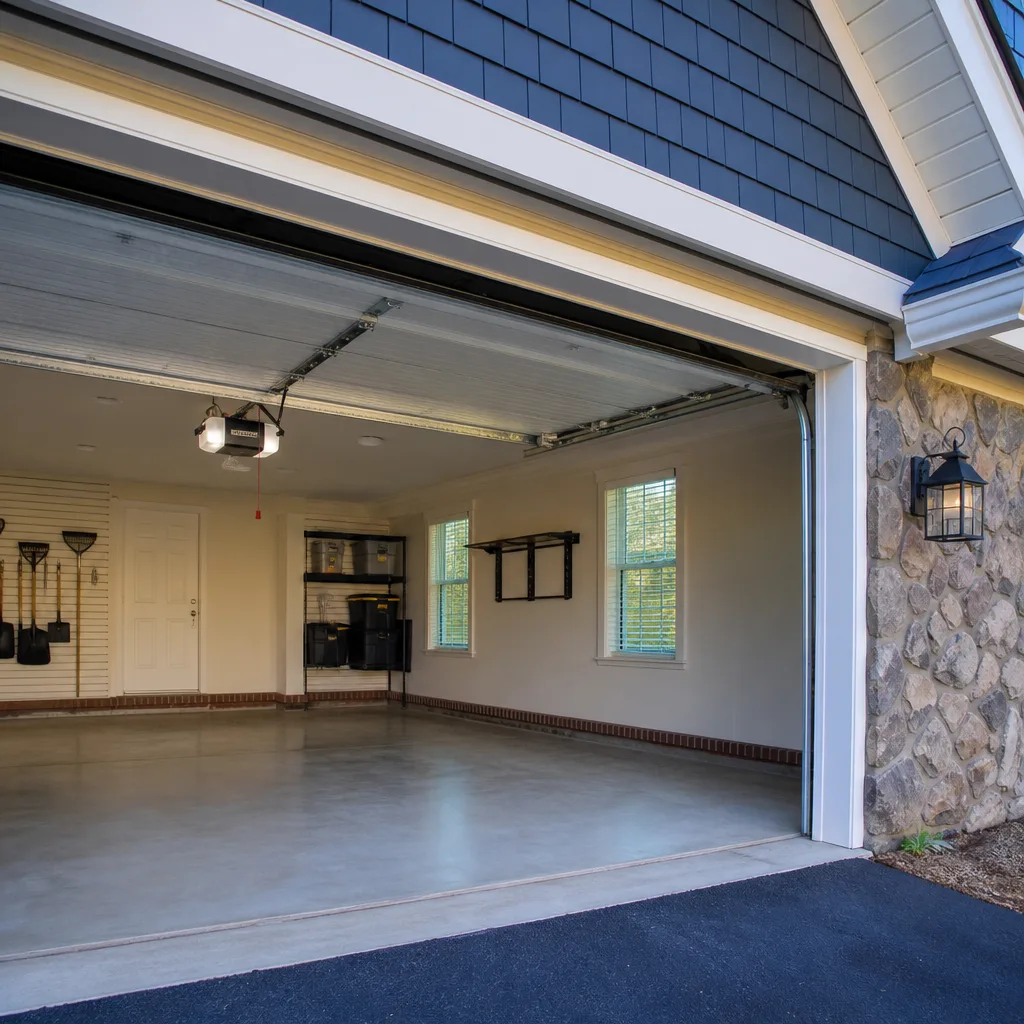 Chamberlain openers
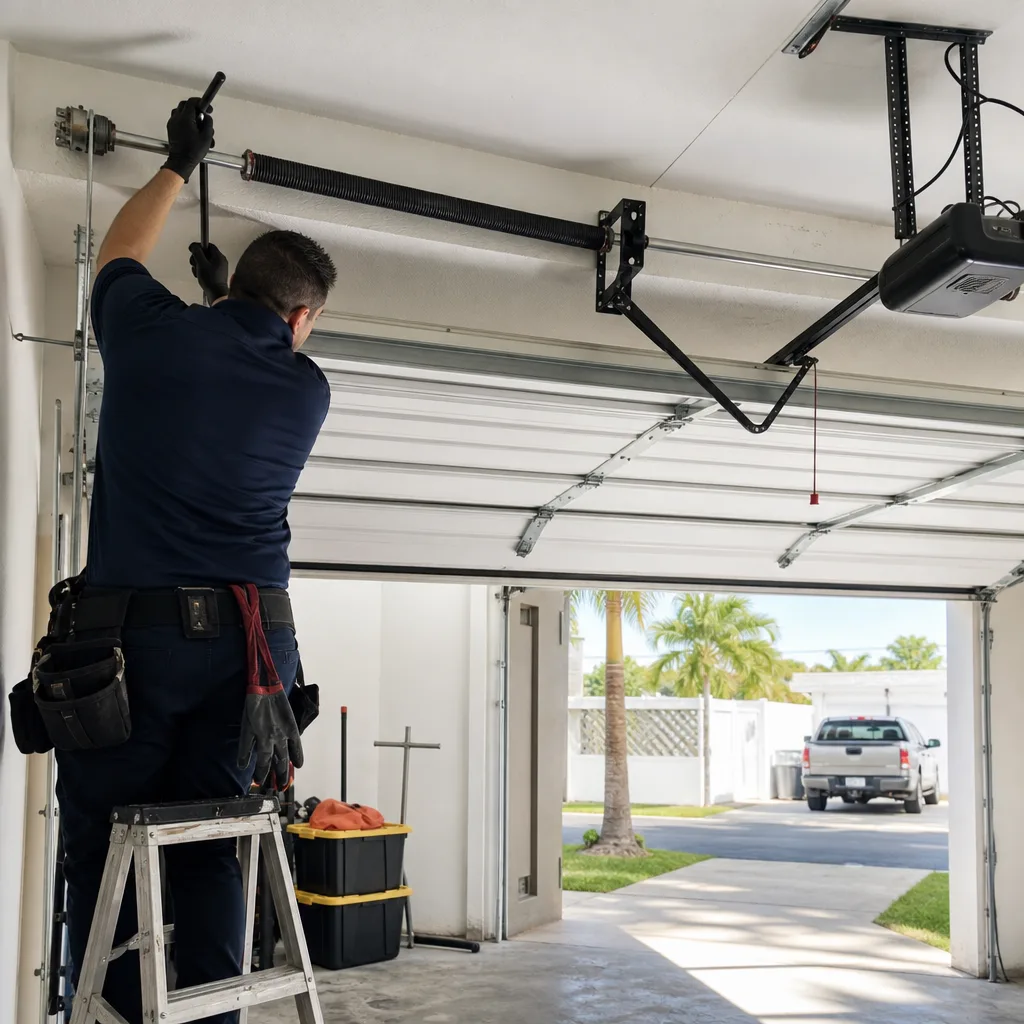
Full 25-point door and opener safety check with every visit - springs, cables, rollers, tracks, and your LiftMaster or Chamberlain opener included
You get a price before we start. It does not change when the truck arrives.
Get your free estimateHow to Hire a Garage Door Contractor in Miami: A Step-by-Step Guide
Here’s something most Miami homeowners don’t realize until it’s too late: Florida law requires garage door contractors to hold a specific state license, and yet a surprising number of handymen, general contractors, and trunk-slammer operations install and repair doors without one every single week across Miami-Dade County. When that happens, the homeowner is left holding unpermitted work, a voided manufacturer warranty, and no recourse when the door fails six months later. This guide walks you through exactly how to vet a garage door contractor in Miami so you hire a qualified pro the first time, not a cleanup crew the second time, and you can find more guides & resources on our blog.
Quick Answer
To hire a garage door contractor in Miami, verify their Florida DBPR license online, confirm they carry Miami-Dade County product approval for hurricane-rated doors where required, ask whether they work across multiple brands or push one captive line, and get a written quote that itemizes labor, parts, permit filing, and disposal before any work starts. A licensed contractor should pass this screen in under two minutes; anyone who balks at verification should be crossed off the list immediately.
Styles & brands we work with
Table of Contents
- Step 1: Verify the Florida Garage Door Contractor License
- Step 2: Check Miami-Dade Product Approval and NOA Compliance
- Step 3: Ask About Brand Experience, Not Just Availability
- Step 4: Read the Quote Line by Line
- Step 5: Understand Permits and Who Pulls Them
- Step 6: Interview Questions That Reveal Real Technical Knowledge
- Step 7: Spot Miami-Specific Red Flags Before You Sign
Step 1: Verify the Florida Garage Door Contractor License
Florida is one of the few states that treats garage door work as a distinct licensed trade. Contractors who install or repair residential garage doors must hold a license issued by the Florida Department of Business and Professional Regulation, or DBPR. A general contractor’s license does not automatically cover garage door installation, and a handyman advertising on a neighborhood app almost certainly doesn’t hold one. In Miami, where unlicensed work is common enough that the county runs active sting operations, this distinction matters more than most contractors want you to believe.
Here’s the two-minute verification process we recommend to every Miami homeowner before a single quote gets accepted:
- Ask for the license number. A legitimate contractor gives it to you unprompted. It should be printed on their vehicle, their business card, and their quote. If they hesitate, end the conversation.
- Go to the DBPR website. The Florida DBPR maintains a public license search database at myfloridalicense.com. Navigate to the license search tool and select “Garage Door” as the license category, or search by the contractor’s name or company name.
- Check the license status. The database shows whether the license is active, inactive, suspended, or revoked. It also shows complaint history and any disciplinary actions. A clean license is the baseline; a license with repeated complaints is a reason to move on.
- Confirm the license holder matches the person quoting. Some companies borrow or rent license numbers. The name on the license should match the name on the contract. If a salesperson quotes you and the license belongs to someone you’ve never heard of, ask who is legally responsible for the work.
- Verify insurance, not just the license. The DBPR doesn’t track liability insurance. Ask for a certificate of insurance directly from the insurer, and make sure it’s current. Miami homeowners associations sometimes require proof of insurance before work begins in gated communities and condo associations, so having this ready saves delays.
This step alone eliminates a meaningful percentage of the contractors advertising garage door work in Miami. We’ve spoken with homeowners in Kendall, Westchester, and Coral Gables who discovered mid-project that the person under their garage door wasn’t licensed, and the manufacturer later refused to honor a warranty claim because the installation wasn’t performed by a qualified contractor.
Step 2: Check Miami-Dade Product Approval and NOA Compliance
Miami-Dade County has the strictest building code in the state for a reason: a garage door is often the largest single opening in a home, and during a hurricane, it’s a structural weak point that can let wind pressure tear the roof off. This is not a hypothetical. After Hurricane Andrew in 1992, the failure of garage doors contributed to catastrophic roof damage in dozens of Miami neighborhoods, and the code changes that followed now require that exterior doors meet specific wind-load standards. See our Seasonal Garage Door Care for Miami: Year-Round Homeowner’s Guide for maintenance tips that protect against storm damage.
Here’s what this means for hiring a contractor in Miami:
- NOA matters. A Notice of Acceptance, or NOA, is the county’s certification that a specific garage door product has been tested and approved to meet Miami-Dade’s high-velocity hurricane zone standards. If you’re replacing a garage door on an exterior wall in Miami-Dade, the product needs an NOA, and the installer needs to know how to install it to the manufacturer’s specifications so that approval stays valid.
- The installer matters, not just the product. An NOA covers the product, but the installation has to match the approved drawings and fastening schedules. A contractor who doesn’t know how to read and follow an NOA can install a perfectly good hurricane-rated door in a way that voids its approval. In our experience, this is one of the least-understood parts of garage door work in Miami, even among contractors who have been working for years.
- Ask for the NOA number. A contractor quoting a new door in Miami should be able to tell you the NOA number for the specific door and model they’re proposing. If they can’t, or if they say the NOA doesn’t matter, that’s a red flag. You can verify NOAs through the Miami-Dade County product control database.
- Wind-load requirements vary by location. A home in Homestead has different wind-load requirements than a home in Aventura. A contractor who gives the same generic quote for every address without checking the specific wind zone probably isn’t doing the engineering homework this trade demands in South Florida.
This is also where brand-agnostic contractors have a structural advantage. A company that installs multiple manufacturers can match the right NOA-compliant product to your specific home and budget. Our Choosing the Right Garage Door Brand: A Buyer’s Guide for Miami explains how to evaluate your options. A captive dealer for one brand can only sell you what they carry, whether or not it’s the best fit for your wind zone or your opening dimensions.
Step 3: Ask About Brand Experience, Not Just Availability
Most contractors will tell you they can install any garage door. Very few can actually diagnose and repair across the range of brands already hanging in Miami garages. For a deeper look at common issues, see The Complete Garage Door Repair Guide for Miami Homeowners. The difference becomes obvious the moment a technician starts guessing at a problem instead of knowing the failure patterns of the specific opener or door in front of them.
Here’s the question we tell homeowners to ask: “Which brands do you work on the most, and which do you actually carry parts for?” A contractor who only installs one brand will typically answer with that brand. A contractor who works across LiftMaster, Chamberlain, Genie, and Raynor products has parts inventory and diagnostic knowledge that a single-brand shop doesn’t. This matters most on repair calls. An opener repair on a Chamberlain myQ system is different from a Genie Aladdin system, and a technician who doesn’t know the difference will start replacing parts until something works, billing you for every wrong guess.
It also matters for installation. A contractor who only offers one steel panel manufacturer limits your choices in insulation value, panel design, and price. Miami homes range from 1950s single-car garages in Shenandoah to newer three-car garages in Doral and Palm Springs North, and the right door for one isn’t the right door for the other. A contractor who carries Clopay, Amarr, or Wayne Dalton products alongside other lines can actually fit the door to the house rather than selling you whatever happens to be in the warehouse.
When you interview a contractor, ask directly: “If I already have a Raynor door and need a spring replacement, do you carry Raynor-compatible parts on the truck, or do you order them?” The answer tells you everything about whether you’re hiring a specialist or a scheduler.
Step 4: Read the Quote Line by Line
A garage door quote in Miami should look like an itemized invoice, not a single number scrawled on a business card. Here’s what to expect, what’s normal, and what should make you pause before signing:
- Labor. This is typically the largest line item on a repair or installation. It should be a fixed number for the job, not an hourly rate with no upper bound. A $90 hourly rate sounds cheap until the clock hits six hours on a job that should have taken two.
- Parts. The quote should specify the manufacturer and model of every part being replaced. “New spring” is not a specification. “Pair of torsion springs, .225 wire, 2-inch inside diameter, 24-inch length” is. This level of detail protects you from cheap aftermarket parts labeled as OEM.
- Permit filing. In Miami-Dade, many garage door replacements require a permit. The quote should state whether permit fees are included, and if so, how much. A contractor who quietly drops the permit to make the price lower is doing you a disservice that could surface during resale or an insurance claim.
- Haul-away and disposal. Removing an old door and its track should cost somewhere in the $75 to $150 range in Miami, depending on the size of the door and whether the old panels need special handling. It should not be a mystery fee added after the work is done.
- Unexpected repairs. Every good quote includes a line about what happens if the technician finds additional damage once the door is opened up. The right language is something like “any additional work will be quoted for approval before proceeding.” If that sentence isn’t in your quote, ask for it.
One more point worth saying plainly: the price you agree to should be the price you pay. A contractor who walks in with a quote and leaves with a price 40% higher because of surprises discovered after the fact didn’t do the diagnostic work up front. In Miami’s garage door market, quotes are competitive enough that there’s no reason to accept open-ended pricing.
Step 5: Understand Permits and Who Pulls Them
Permit requirements in Miami-Dade depend on the scope of work, and they aren’t something a homeowner should figure out alone in the middle of a project. Here’s the simplified reality:
- Full door replacements typically require a permit. Replacing the entire door assembly, including track and hardware, falls under Miami-Dade building permit requirements in most municipalities. The permit triggers an inspection that confirms the door was installed per the manufacturer’s NOA and meets wind-load requirements.
- Most repairs do not. Spring replacement, opener repair, cable replacement, and panel realignment are considered repair work and generally don’t require a permit. If a contractor tells you a permit is required for a spring replacement, that’s not standard in Miami, and you should ask for a written explanation.
- Who pulls the permit matters. The contractor should pull the permit in their name, using their license number. A contractor who asks you to pull the permit as the homeowner is shifting liability onto you. If the work fails an inspection, you’re now the one who permitted the project and hired an unpermitted sub. That’s the opposite of the protection a permit is supposed to provide.
During the interview, ask this question directly: “Who pulls the permit, and who’s responsible if it doesn’t pass inspection?” A licensed Miami contractor answers without hesitation, because the answer is obvious: they do, on both counts.
Step 6: Interview Questions That Reveal Real Technical Knowledge
Most homeowners don’t know enough about garage doors to evaluate a contractor on technical merit, so they default to price. That’s a mistake, because a slight difference in price often separates a technician who knows your specific opener from one who’s guessing. Here are five questions that separate the two groups in under ten minutes:
- “Can you diagnose my current opener, or do you only replace them?” A technician who works on LiftMaster, Chamberlain, and Genie systems knows that many opener failures are fixable: a bad capacitor, a stripped gear, a faulty travel module. A sales-first operation will say the opener needs replacement because replacements are more profitable.
- “What’s the difference between a torsion spring and an extension spring, and which one does my door use?” This is basic trade knowledge. Torsion springs sit above the door opening and wind on a shaft; extension springs stretch along the horizontal track. Miami homes built before the 1990s often have extension springs. A contractor who can’t answer this quickly and confidently isn’t a garage door specialist.
- “Do you carry springs, cables, and opener parts on the truck?” In Miami, where humidity accelerates rust on door hardware and salt air corrodes cables in coastal neighborhoods like Key Biscayne and North Beach, this matters. A technician who arrives with a full parts inventory fixes the problem the same day. One who has to drive to a supply house adds a day and a second trip fee.
- “How do you size a replacement spring?” The correct answer involves measuring wire gauge, inside diameter, spring length, and possibly door weight. A contractor who says they just match the old spring is oversimplifying; springs wear and sag over time, and the right replacement accounts for the door’s current weight, not its original spec.
- “Will you match my existing door’s color and panel profile, or do I choose from a catalog?” This reveals whether the contractor is replacing panels from a manufacturer’s current line or sourcing matched panels. It’s the difference between a repair that blends in and a visible patch job.
These questions aren’t gotchas. They’re the kind of thing a homeowner asks when they want to know they’re hiring a technician, not a salesperson with a truck. In our experience, the contractors who welcome these questions are the ones who do the best work. The ones who get defensive are telling you something useful.
Step 7: Spot Miami-Specific Red Flags Before You Sign
Every market has its own patterns of contractor misbehavior, and Miami’s are shaped by the city’s housing stock, its climate, and its permitting complexity. Here are the red flags we hear about most often from Miami homeowners recounting a bad hire:
- Quoting without measuring. A contractor who gives you a firm price over the phone for a door replacement without measuring the opening, checking the headroom, or looking at the current track configuration is guessing. Miami garage ceilings range from 7 feet in older Little Havana homes to 12 feet in new construction in Edgewater, and the wrong door won’t fit either.
- Skipping NOA verification. Any contractor who dismisses hurricane requirements or says the NOA is “just paperwork” is not someone you want touching your wind-rated opening. This is Miami-Dade code, not a suggestion.
- Discouraging permits. Some contractors will tell a homeowner the permit “isn’t really necessary” or “will slow the job down for no reason.” What they usually mean is that their work won’t pass inspection, or they’re not licensed to pull the permit in the first place. Either way, walk away.
- Pushing replacement over repair before diagnosis. If the first suggestion out of a technician’s mouth is a full door replacement when the problem is a broken hinge or a misaligned sensor, you’re talking to a commissioned salesperson. The right approach is to diagnose first, then discuss options.
- No written quote. In Miami’s high-volume repair market, some contractors quote verbally and then change the number when the job is done. A written quote with a breakdown is the minimum standard, and any contractor who won’t provide one is telling you how the transaction will go.
- Pressure to decide same-day. Urgency is sometimes legitimate, especially on emergency repairs. But a contractor who says a quote expires in four hours or that the price only holds if you sign right now is creating artificial pressure. Good contractors don’t need high-pressure tactics; their work speaks for itself.
Common Mistakes to Avoid
- Hiring on price alone. The cheapest quote in Miami is often from an unlicensed operator whose savings come from skipping permits, insurance, and proper training. You’ll pay twice when the work fails.
- Assuming a general contractor can do garage door work. Garage doors are a specialized trade. A great kitchen remodeler is not automatically qualified to install a wind-rated door in a Miami-Dade hurricane zone.
- Not checking the license before work starts. The DBPR lookup takes two minutes. Skipping it is the single most common mistake Miami homeowners make, and the one with the most expensive consequences.
- Accepting a quote without a parts list. “New door, installed” is not a specification. If the quote doesn’t list the manufacturer, model, insulation value, and wind rating, you don’t actually know what you’re buying.
- Ignoring the NOA. Even licensed contractors sometimes install doors that aren’t approved for Miami-Dade’s wind zone. A door without a valid NOA is a code violation and an insurance problem waiting to happen.
- Not asking about warranty terms. Manufacturer warranties often require proof of installation by a licensed contractor. If your installer isn’t licensed, you’ve voided your warranty before the door was hung. Ask how warranty claims are handled and who services the door if it fails.
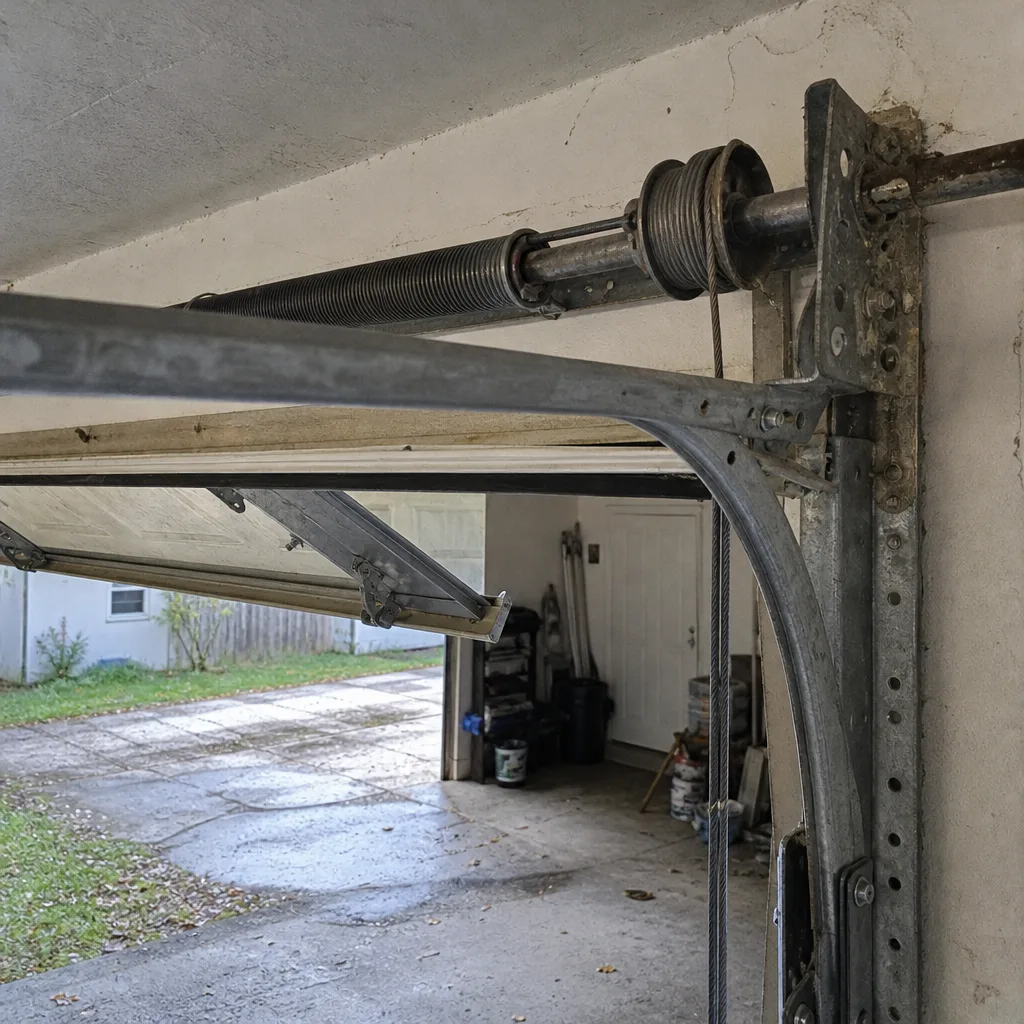
See the difference
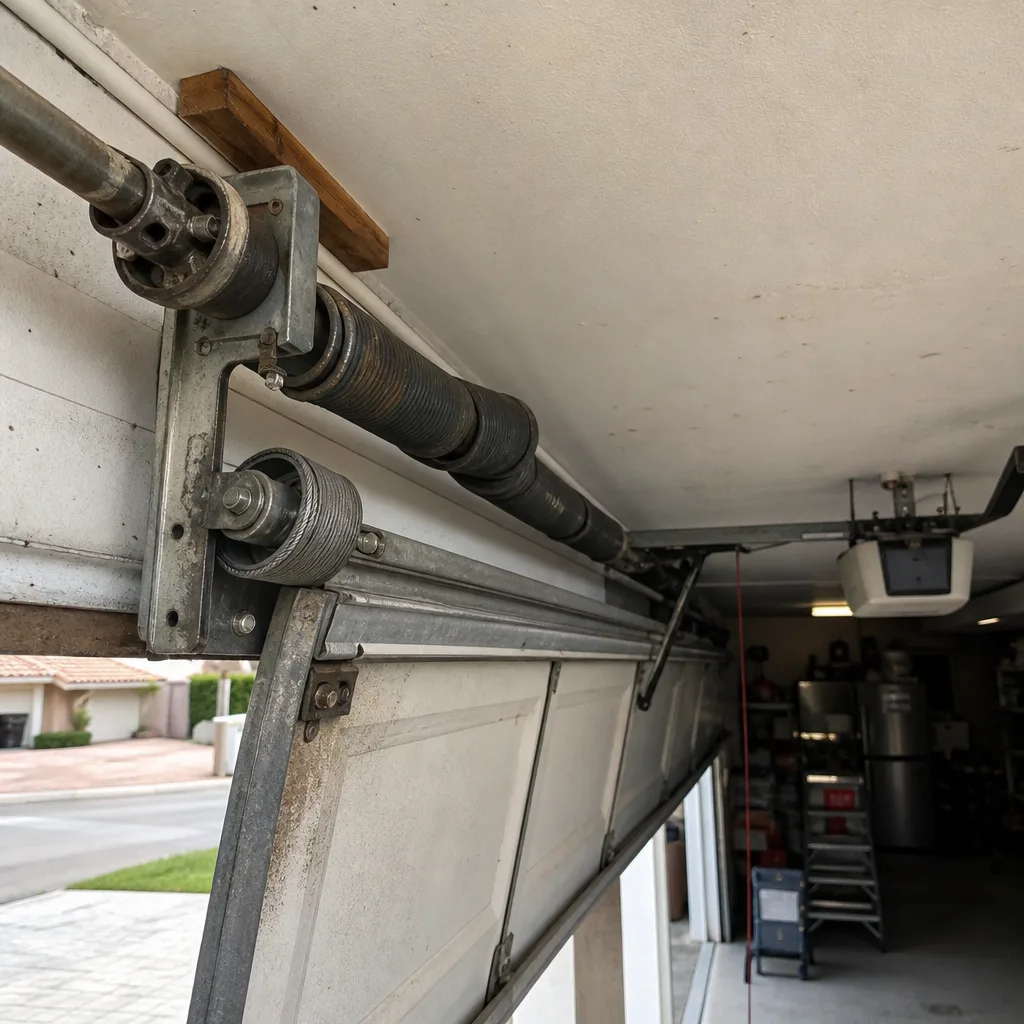 Before
 After
 Before
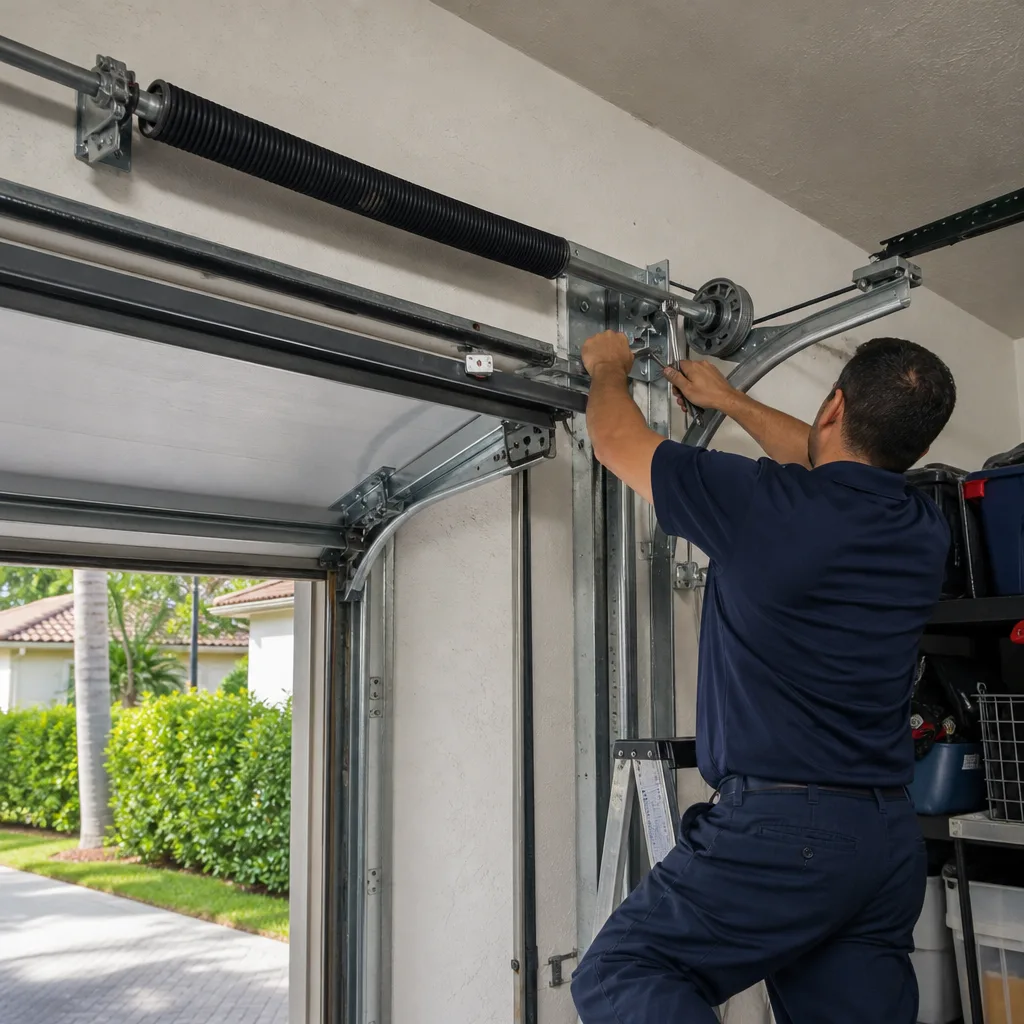 After
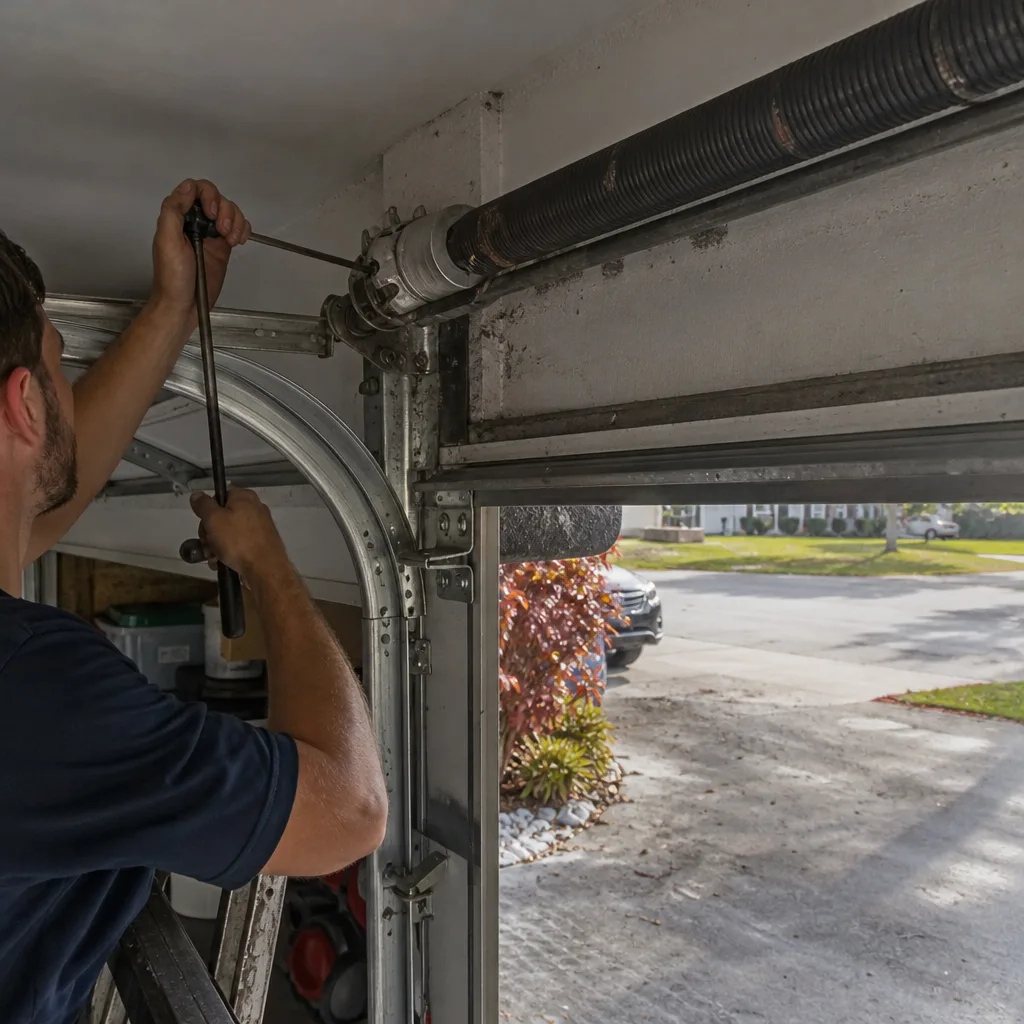 Before
 After
When to Call a Professional
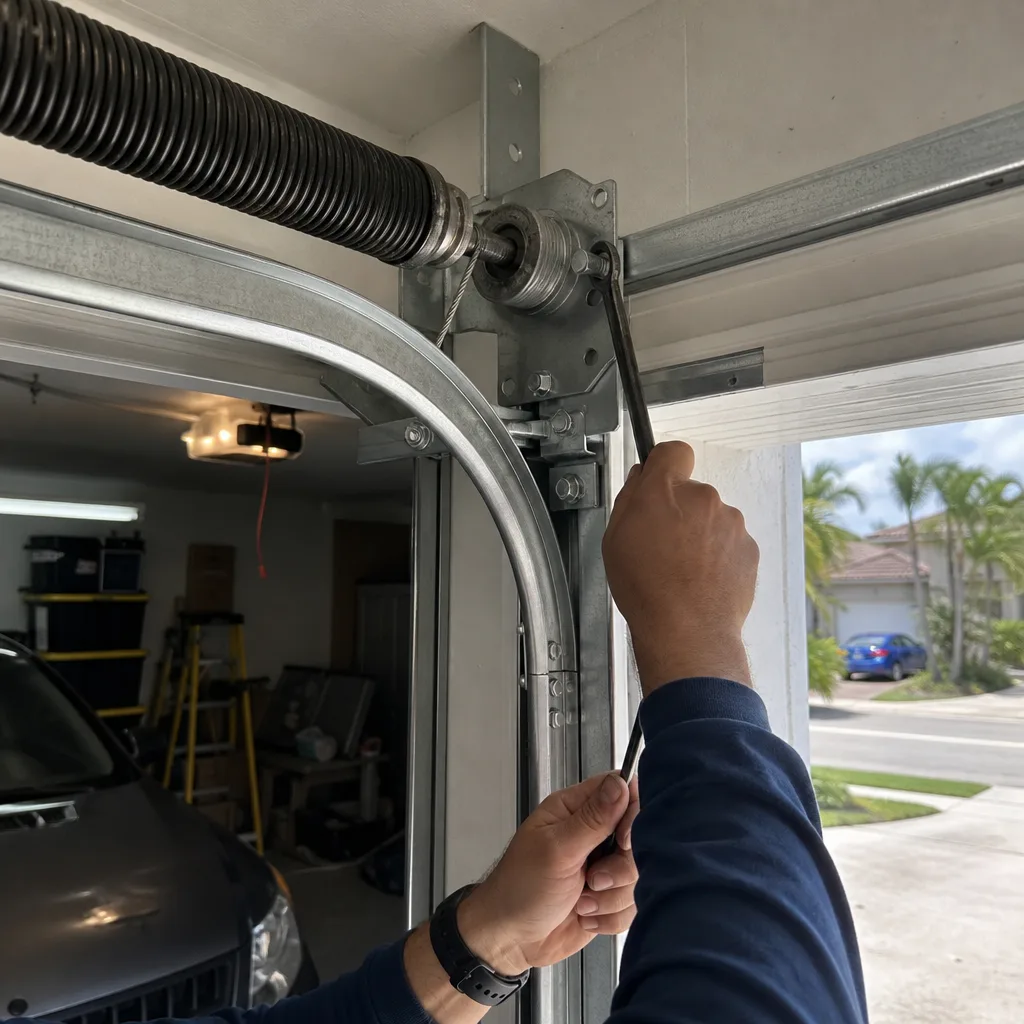
A garage door that won’t open is an inconvenience. A garage door with a snapped cable under tension is a safety hazard. If your door is making grinding noises, hanging unevenly, or refusing to reverse when something blocks its path, stop using it and call a licensed pro. These are not DIY repairs, and in Miami, where the humidity accelerates wear on hardware in ways that surprise even experienced homeowners, the failure points multiply quickly. Springs under torsion can release stored energy in an instant, and a door that comes off its tracks can weigh several hundred pounds. Kingsway Garage Door offers free estimates across Miami: call (866) 282-5541 and a technician will diagnose the problem before recommending any work. If you’re in the middle of a repair decision right now, our Garage Door Repair in Miami page breaks down what common problems cost and how quickly they can be resolved. If the opener itself is misbehaving rather than the door, our Garage Door Opener Repair in Miami page covers LiftMaster, Chamberlain, Genie, and other major brands.
Frequently Asked Questions
Yes, you absolutely need to check it, and it takes less than two minutes. Florida requires garage door contractors to hold a state license through the DBPR, and hiring an unlicensed contractor can void your manufacturer warranty, invalidate your insurance claim, and leave you responsible for code violations on your own home. Search the DBPR database before signing anything.
A basic single-car garage door replacement in Miami typically starts around $900 to $1,400 installed, while a hurricane-rated double door with insulation runs between $2,500 and $4,500 depending on the manufacturer, wind-load requirements, and whether new track and hardware are needed. These ranges account for Miami-Dade’s NOA requirements and the higher retrofit costs on older homes. Call (866) 282-5541 for an exact quote, estimates are free.
An NOA is a Notice of Acceptance issued by Miami-Dade County certifying that a specific garage door product meets the county’s high-velocity hurricane zone wind-load standards. It’s required for exterior garage door replacements in Miami-Dade, and the installation must follow the NOA’s approved drawings for the certification to remain valid. A contractor who doesn’t mention the NOA either isn’t planning to pull a permit or doesn’t understand Miami-Dade code.
No, a handyman cannot legally install a garage door in Miami unless they hold a Florida garage door contractor license through the DBPR. This is a specific Florida requirement that goes beyond general handyman or general contractor licensing. Hiring an unlicensed handyman for a garage door install leaves you financially responsible for any failures and voids most manufacturer warranties.
A multi-brand contractor gives you more options for matching your home’s style, insulation needs, and budget, while a single-brand dealer restricts you to whatever that manufacturer offers. Brand-agnostic contractors who carry parts for LiftMaster, Chamberlain, Genie, and Raynor products can also repair what you already have rather than pushing a replacement. This is especially important in Miami, where the right door for a 1950s ranch in Westchester isn’t the same as the right door for a new build in Doral.
It should not change, as long as the quote includes a written line stating that any additional work will be quoted for your approval before proceeding. A professional contractor does the diagnostic work upfront, writes a specific quote, and honors it. If a contractor frequently revises prices upward mid-job, that’s a pattern, not a coincidence. Get every quote in writing before work starts.
The Bottom Line
Hiring a garage door contractor in Miami is a verification process, not a guessing game. Check the Florida DBPR license, confirm NOA compliance for hurricane-rated openings, ask about brand-specific experience, and read the quote line by line before signing. The right contractor welcomes these questions and answers them in two minutes. The wrong one deflects, discounts, or disappears. Miami’s building code exists because the city’s climate punishes shortcuts, and your garage door is the first thing the wind finds. That’s not a reason to fear the process. It’s a reason to do it carefully, and to hire a specialist rather than a salesman. If you want a Kingsway Garage Door home experience on your next repair, replacement, or new installation, we make the process straightforward: a technician who knows your brand, a written quote you’ll actually understand, and no pressure to overspend. For projects that are clearly installs rather than repairs, our Garage Door Installation in Miami page walks through the full replacement process including NOA verification and permit handling. Call (866) 282-5541 to get started.
Written by the team at Kingsway Garage Door, serving Miami since 2015.